What It Feels Like to Freedive for the First Time
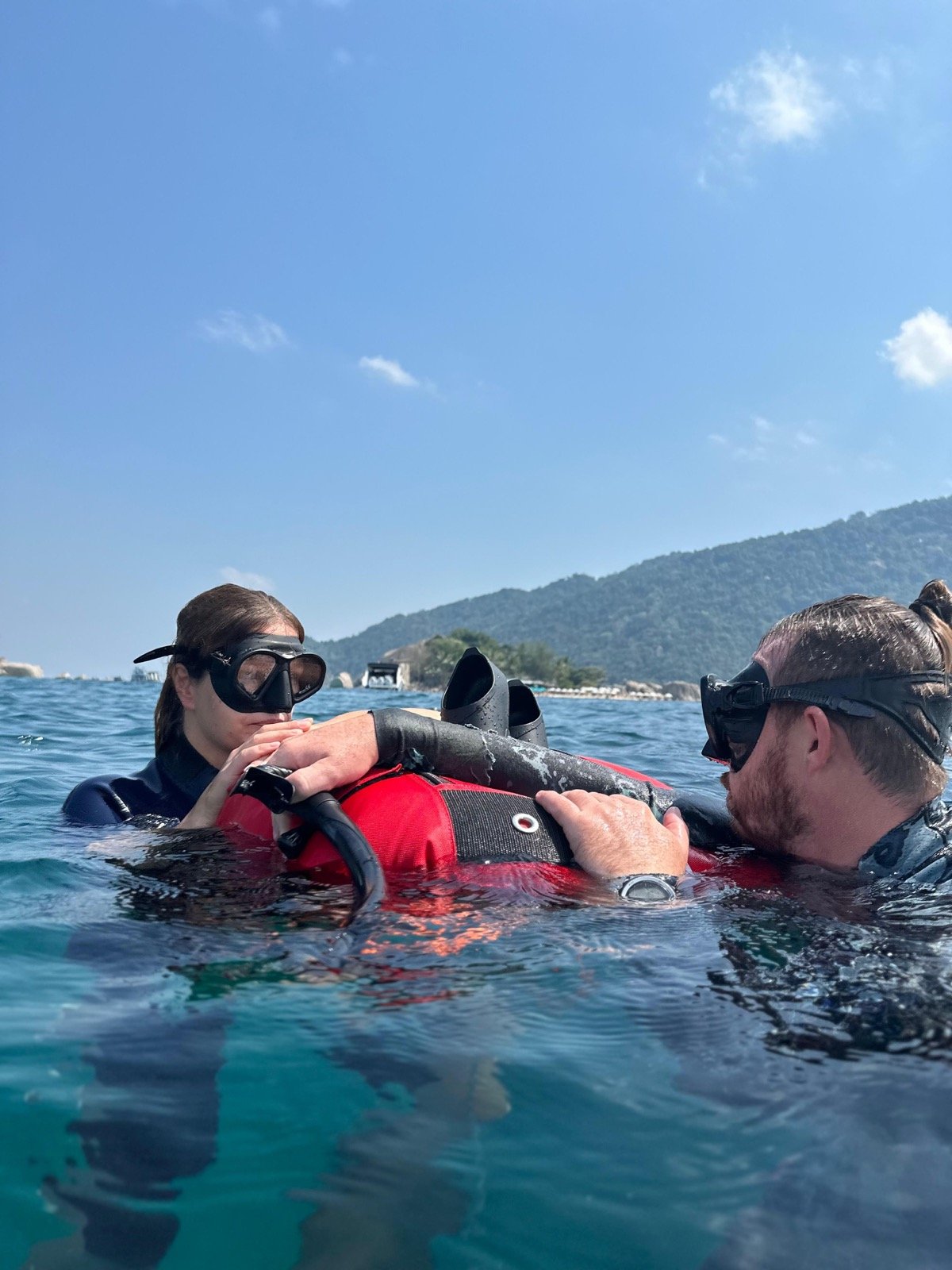
You are floating face down in warm salt water. Your arms hang loose at your sides. Your eyes are closed behind the mask. The instructor says nothing. You breathe slowly and wait.
Then you take one final breath, tip forward, and go under.
This is what the first freedive feels like. Not what you imagine. What it actually feels like.
Before You Get in the Water
The morning of Day 1, most people feel a version of the same thing: a low level anxiety that is hard to name. Not fear of drowning. Not fear of the ocean. Something closer to the feeling before a job interview or a first date. Anticipation mixed with the knowledge that you are about to do something you have never done before.
The theory session helps. When your instructor explains what the mammalian dive reflex is, how your spleen releases red blood cells when you submerge, how your heart rate drops automatically in cold water, the nervousness gets replaced by something more useful. Curiosity.
You also discover that you already know how to freedive. Not the technique. The basics. Your body has been doing the mammalian dive reflex since you were born. You just never had a name for it or understood how to work with it rather than against it.
By the time you put on the wetsuit and walk to the water, the nervousness is still there. But underneath it is something else. The feeling that this might be the most interesting thing you have done in years.
The First Breath Hold
Static apnea is the first real exercise of a freediving course. You float face down at the surface, relaxed, breathing through a snorkel, and then you hold your breath and do nothing.
Nothing. That is the instruction. Float. Do not move. Do not think about the time. Let your body be still.
This is harder than it sounds for the first 60 seconds. Your brain wants to be doing something. It looks for problems to solve. It wonders how long it has been. It sends small signals of discomfort to your attention and asks whether everything is okay.
You learn to let those signals pass without responding to them. The urge to breathe arrives at a predictable point, usually around 90 seconds to 2 minutes for a beginner, and it feels more urgent than it actually is. Your instructor told you this in theory. Now you are learning it in your body.
When you lift your head and breathe again, you look at the time and feel something that catches you off guard: pride. A real, uncomplicated pride at having done something your body told you not to do. You held your breath for 2 minutes and 10 seconds. You did not know you could do that. And you did it on Day 1, before any depth training, before any technique beyond breathing correctly.
The First Duck Dive
Duck diving looks simple from above the water. You bend at the waist, point your legs straight up, and let gravity do the work. The weight of your legs against the air in your lungs drives you down. Then you kick and follow the line toward the bottom.
The first attempt is rarely graceful. You bend, your legs go up, and then one of several things happens: you sink unevenly, your legs separate, you kick too early, or you manage a reasonable dive but your body position is all wrong for the descent.
This is fine. The duck dive takes a handful of attempts before it feels natural. By the third or fourth try, something clicks. You feel the moment when your body tips past vertical and the weight of your legs takes over. Gravity is working for you. All you have to do is follow the line.
The water closes over your head. The surface disappears above you. The sound changes.
The Silence
This is the moment most people talk about afterward, and the one hardest to describe before you experience it.
The ocean at the surface is noisy. Boats, waves, other swimmers, the sound of your own breathing through a snorkel. You do not notice how much noise there is until it stops.
The moment you go under and start descending, the silence arrives all at once. Not the absence of sound exactly. More like a different kind of sound. The water moving past your ears. The small creaks of the training line. Your heartbeat, which slows within the first few meters as the dive reflex engages. And then, for a moment, nothing.
People describe this differently. Some call it peace. Some call it pressure. Some say it feels like a held breath in a crowd, that single second of quiet before something begins. What they all agree on is that it is not what they expected. It is more.
The Ears
At 3 meters, you feel the pressure in your ears. A building tightness, like being on a descending airplane. If you do not equalize, this becomes pain quickly.
You pinch your nose through the mask and push with your tongue against the back of your mouth. The pressure releases in a click or a pop. Your ears clear. You keep going.
At 5 meters, you equalize again. At 7 meters, again. This rhythm, descend a meter, equalize, descend, equalize, becomes the beat of every freedive. Once you learn it, it becomes automatic. On your first dive it requires conscious attention at every step.
When equalization works, you feel it as relief. The pressure builds and then releases in a single clean moment. When it does not work, you stop. You ascend a meter or two. You try again. Your instructor is watching the whole time, giving small signals or adjusting your technique from above. Nothing about the equalization process feels rushed or pressured. You go as deep as equalization allows. Nothing more.
Neutral Buoyancy
At around 10 meters, something changes.
Near the surface, your wetsuit and the air in your lungs make you positively buoyant. You have to work against that buoyancy on the way down, pulling yourself along the training line to keep descending.
At 10 to 12 meters, the wetsuit has compressed under the pressure and your lungs have shrunk. The upward force disappears. You are neither sinking nor floating. You are weightless in a way that has no equivalent on land.
Below neutral buoyancy, you begin to sink. The ocean is pulling you deeper without any effort on your part. You stop kicking. You let your arms rest at your sides. You simply fall, slowly, through blue water toward a depth that a week ago you would not have believed you could reach.
This is the moment most first time freedivers remember most clearly. Not the depth number on the line. The feeling of falling in slow motion through silence with nothing around you but blue.
The Turn
At some point in the descent you reach your target depth or your equalization stops working. You touch the plate at the bottom of the training line, or you stop at a plate marker, and you turn yourself around.
The ascent is different from the descent. You are now positively buoyant again (your lungs expand as the pressure decreases) and the water is carrying you upward. You do not need to kick hard. A slow, relaxed kick is enough. The surface gets closer. The light brightens. The noise of the world above you comes back in stages.
Your face breaks the water. You take your recovery breaths, three or four strong exhales and inhales while your instructor watches and waits for your OK signal. You give the OK. They give it back.
Then you look at the line marker to see how deep you went.
What You Feel at the Surface
The most common reaction after a first depth dive is a kind of quiet surprise. Not euphoria exactly, though that comes later. First, just surprise that you did it and that it felt like that.
There is also a physical feeling that is hard to name. A looseness in the chest. A slight giddiness. The combination of having held your breath for a minute or more while your body went through a physiological process it knows how to do but rarely gets to do.
Some people laugh immediately. Some go quiet. Some look at the training line for a long moment as if they need to verify that the depth they felt matches the number they can see.
By the second and third dives of the day, the surprise fades and is replaced by something you might call comfort. You know what the silence feels like now. You know the moment when neutral buoyancy arrives. The dive stops being an event you are enduring and becomes a movement you are making.
What First-Timers Are Usually Surprised By
How long they can hold their breath. The most common reaction to a first static breath hold is disbelief at the time. Most beginners expect to manage 45 seconds. Most manage 1 minute 30 to 2 minutes 30 on the first attempt, simply by breathing correctly and staying still.
How quiet it is. People who have snorkeled or scuba dived know the ocean. They are not expecting the quality of silence that comes with a breath hold dive. The absence of exhaled bubbles changes the experience completely.
How calm they feel at depth. The anxiety from the morning tends to disappear once you are underwater. The mammalian dive reflex is real. Your heart rate slows, your focus narrows to the line and your ears, and the mental chatter that runs constantly on the surface goes quiet. This happens to almost everyone, even those who were visibly nervous before getting in.
How much technique matters. Breath hold time is not about lung capacity or fitness. Equalization depth is not about ear anatomy. Both are almost entirely about technique, and technique can be learned in an afternoon. Students who arrive convinced that they will be the one person freediving does not work for almost always surprise themselves by the end of Day 1.
How much they want to go again. The standard reaction after a first depth dive is to immediately want to repeat it. Not to go deeper necessarily. Just to do it again. To feel the silence again, the weightlessness, the turn at the bottom. This is how the addiction starts.
By Day 3
By the third day of the Beginner Course, most students are at 15 to 20 meters. Some deeper. They are doing certification dives at Sail Rock, swimming through schools of barracuda, and looking at the bottom of a 40 meter pinnacle from 15 meters above it.
The person who walked into the water nervous about their first duck dive is now a freediver. Not a competitive freediver, not someone who will dive to 40 meters next year (though some will). A freediver. Someone who knows what the silence at 15 meters feels like, what neutral buoyancy does to your sense of your own body, and what it means to be in open water with nothing keeping you there except your own breath.
That is the change that happens in 3 days. It is not small.
Ready to Find Out for Yourself
The Beginner Freediving Course on Koh Samui runs Monday to Wednesday, maximum 3 students. You do not need experience. You do not need to be fit. You need to be able to swim comfortably in open water and be willing to try something that will not feel like anything you have done before.
Send a WhatsApp message to check availability for your dates. No deposit required to hold a spot. Just a quick conversation about when you are arriving and what you are looking for.
The silence is waiting. It is worth it.
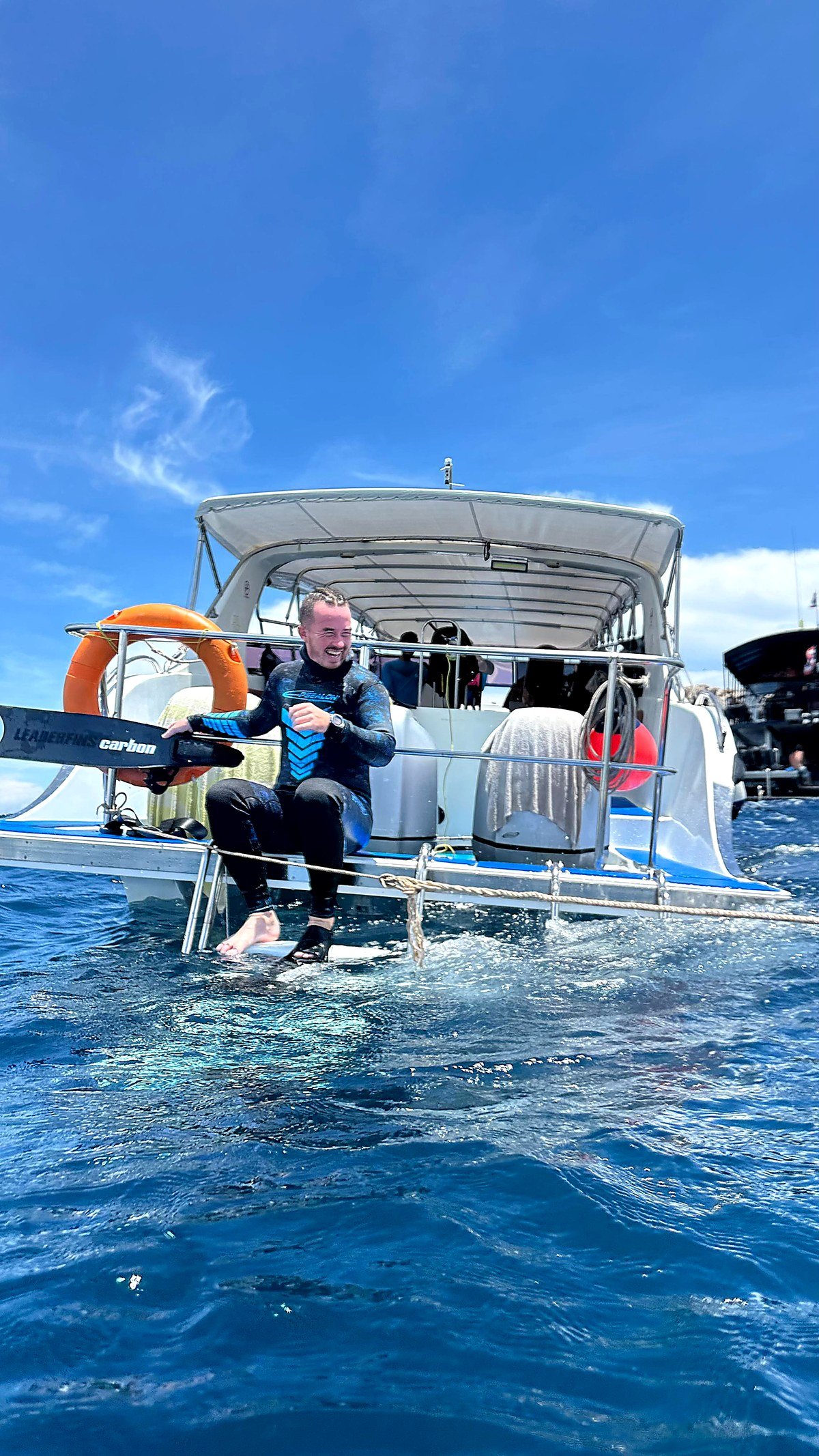
About Diego Pauel
Diego has been teaching freediving from Koh Samui since 2021. He holds instructor certification from Apnea Total and additional credentials across six certification bodies: Oxygen Advantage, Breatheology, International Breathwork Foundation (IBF), Breathing Cold, and GPBA. Plus emergency oxygen administration and first aid.
Learn More →Ready to try freediving?
Message Diego on WhatsApp to check availability for your dates. No deposit needed.
Check Availability on WhatsAppContinue reading
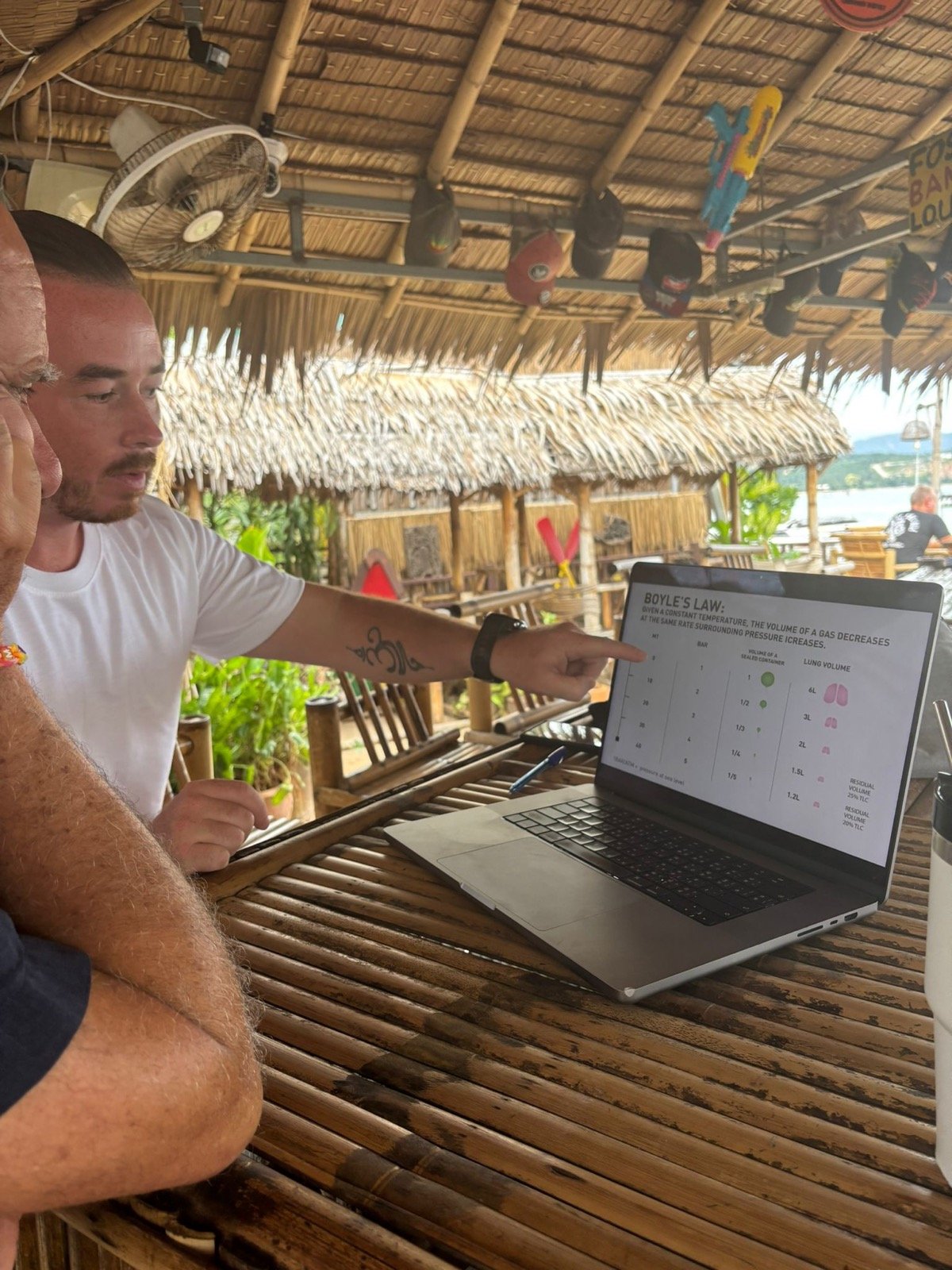
What a Freediving Course Day Actually Looks Like, Hour by Hour
Wondering what a day on a freediving course really looks like? Here is the honest hour by hour rundown from a Koh Samui
Read More →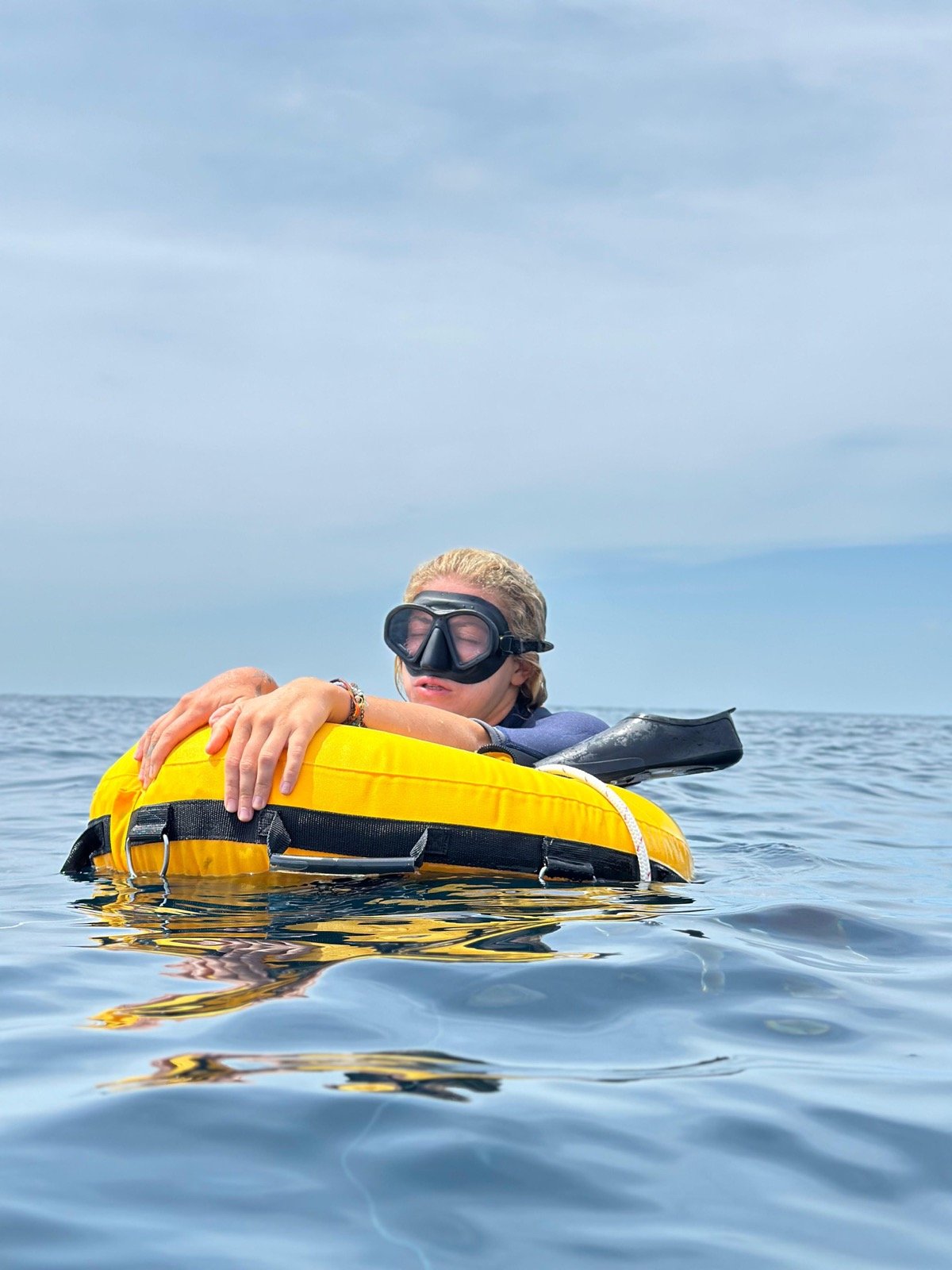
How Yoga and Breathwork Actually Help Your Freediving
Do yoga and breathwork really help your freediving? Honest take from a Koh Samui instructor: yes, but not in a mystical
Read More →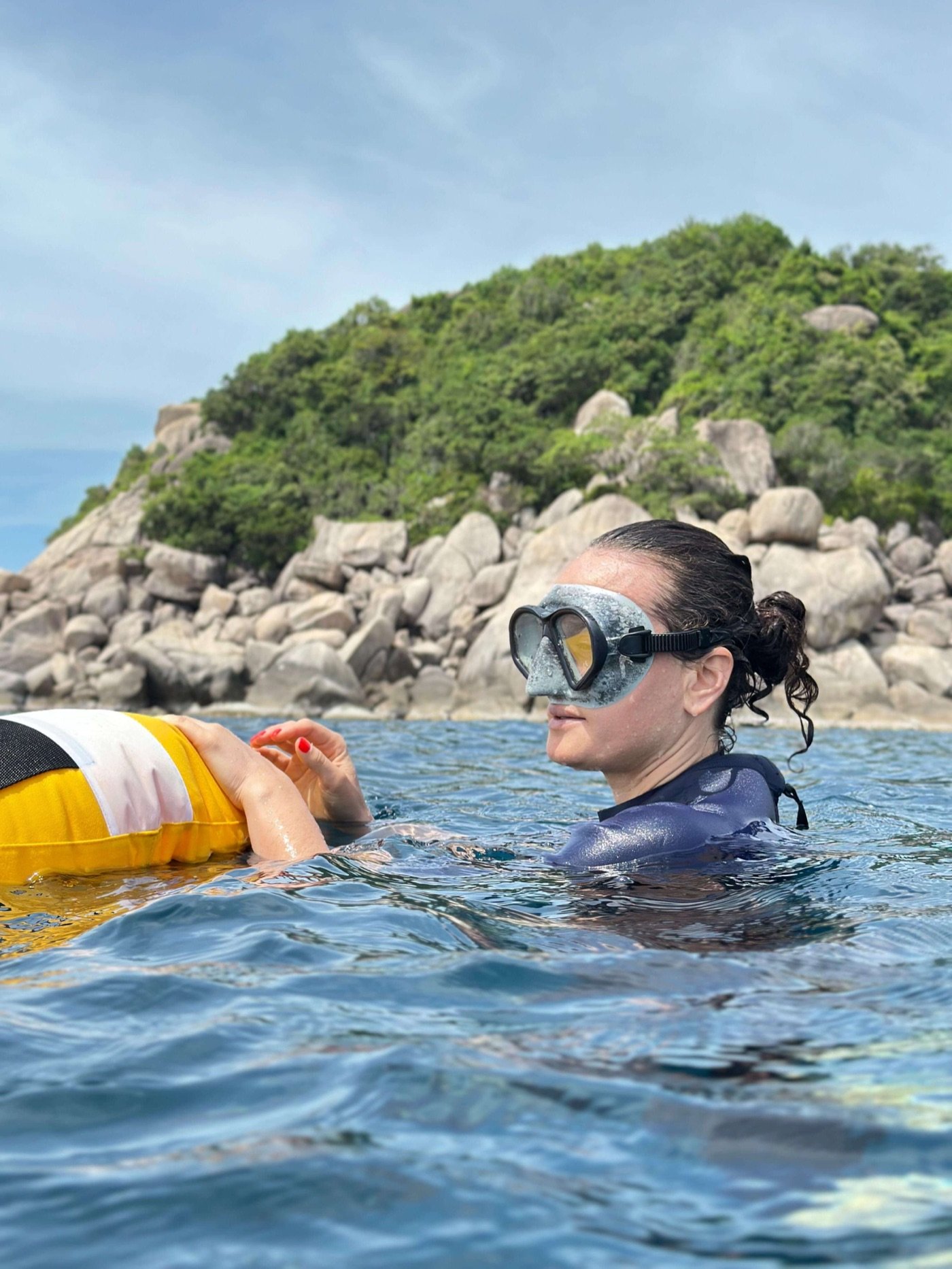
Can You Freedive If You Are Not a Strong Swimmer?
Can you freedive if you are not a strong swimmer? Honest answer from a Koh Samui instructor: you need basic comfort in d
Read More →