Freediving vs Snorkeling: What's the Difference and Which Should You Try?
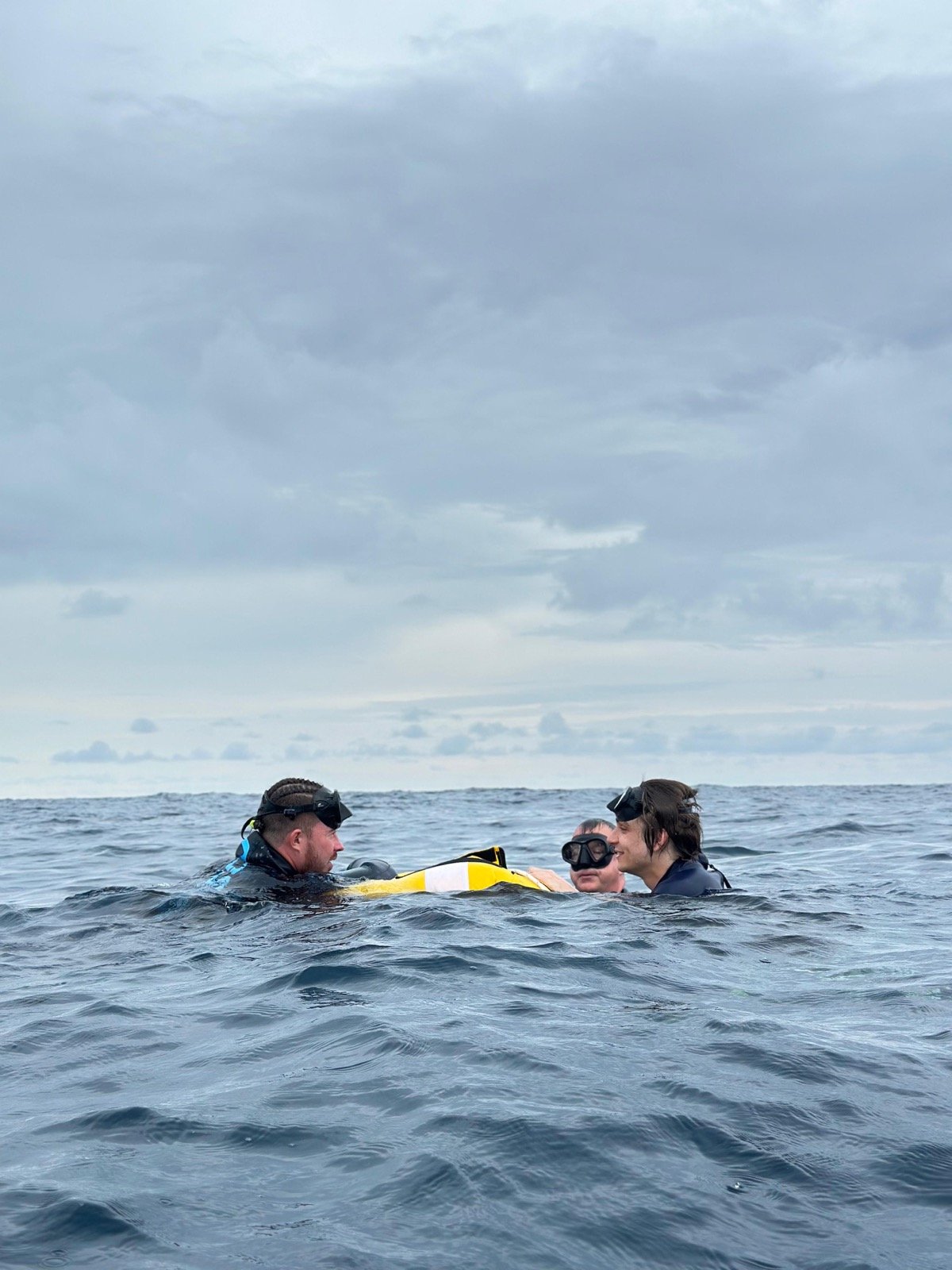
You are already planning a snorkeling trip in Koh Samui when someone mentions freediving. You are not sure what the difference is. You know one involves a tank and one does not, but beyond that, it is blurry.
This is the question most people on Koh Samui have before they try freediving for the first time. This post answers it clearly so you can decide which activity is right for your time on the island.
What Snorkeling Is
Snorkeling is surface swimming with a mask and a tube. You float face down on the surface of the water and breathe through the snorkel while looking down at whatever is below you. Your face is in the water but your body stays at the surface.
Most snorkelers go on group boat trips to coral reef sites. You put on a mask, a snorkel, and sometimes fins, and you drift above the reef for an hour or two. The experience depends entirely on what is below you, because you are always looking down from above it.
Snorkeling requires no training. You can snorkel on your first day in the ocean. The barrier to entry is essentially zero.
What Freediving Is
Freediving is diving underwater on a single breath. You take one breath at the surface, go below the surface, and stay underwater for as long as you can before returning to breathe again. No tank. No regulator. No equipment between you and the ocean.
On a beginner freediving course in Koh Samui, you will reach 15 to 20 meters depth by Day 3. At that depth, you are not looking at the coral from above. You are swimming through it, alongside it, at the same level as the fish. The perspective shift is significant.
Freediving requires a basic course. The technique is learnable. The discipline is built on relaxation, not physical strength. But you do need instruction before diving to depth on your own.
The Key Differences
Depth
A snorkeler sees the reef from the surface, typically 1 to 3 meters above it. A freediver swims through the reef at depth. At Sail Rock, that means diving alongside the pinnacle at 10 to 20 meters, hovering above the chimney swim-through, watching barracuda circle below you in open water.
The difference in perspective is not incremental. Floating above a coral reef and being inside it at depth are categorically different experiences. The fish behave differently, the light is different, and the sounds of the reef are different when you are part of it rather than observing it from above.
Breath Hold
Snorkeling does not require breath holding. You breathe through the snorkel continuously at the surface. If you want to duck dive briefly to get closer to something, you can, but it is not the activity itself.
Freediving is built entirely around one breath. Everything you do underwater starts and ends with a single exhale at the surface. The training teaches you how to make that one breath last longer and go deeper. By the end of a 3 day beginner course, most students comfortably hold their breath for 2 to 3 minutes.
Equipment
A snorkeler needs a mask and a snorkel. Some add fins. The gear is simple and available at every dive shop on Koh Samui for 200 THB a day.
A freediver uses a low-volume freediving mask, long blade freediving fins, a wetsuit, and a weight belt calibrated for neutral buoyancy at depth. The equipment is specialized. On a guided course or experience, all equipment is included in the price. You show up and it is provided.
The Experience Quality
Snorkeling is accessible and pleasant. For many tourists in Thailand, a snorkeling trip to a coral reef site is a highlight of the trip. The activity is relaxing, it requires no commitment, and it lets you see marine life you would not see otherwise.
Freediving is a different category of experience. The complete silence when you descend below the surface, the physical sensation of pressure building as you go deeper, the stillness of hovering at 15 meters without equipment keeping you there, and then the ascent and the first breath at the surface. Students regularly describe their first open water freedive as one of the most memorable experiences of their life.
The difference is not that snorkeling is bad. The difference is that freediving asks more of you and gives more in return.
Learning Curve
Snorkeling has no learning curve. You can do it on your first day in the ocean with zero instruction.
Freediving takes one to three days of structured instruction before you dive safely to depth. The techniques are not complex, but they require a competent instructor to teach them correctly. Equalization, duck dive form, relaxation breathing, and the buddy safety system are all teachable in a short course, but not self-taught safely.
Who Snorkeling Is For
Snorkeling is the right activity if you are not a confident swimmer, if you are traveling with children, or if you want a low-commitment way to see marine life with no preparation. It is also the right choice if you genuinely prefer staying at the surface and have no interest in going underwater.
There is nothing wrong with snorkeling. Not everything needs to be pushed to the next level. If a relaxed morning on the surface suits your trip, that is the right choice.
Who Freediving Is For
Freediving is the right activity if you are comfortable in open water, curious about what it feels like to go below the surface on a single breath, and willing to spend one to three days learning the basics properly.
You do not need to be fit. You do not need to be an experienced swimmer. You do not need to have held your breath underwater before. The one thing that predicts success in a beginner freediving course more than anything else is the willingness to follow instruction and stay calm. Both of those are choices, not abilities.
Most people who try freediving for the first time are surprised by how accessible it is. The gap between snorkeling and freediving is smaller than it appears from the outside.
Can a Snorkeler Try Freediving?
Yes. And Koh Samui has a product designed specifically for this.
Discovery Freediving is a one day introduction to freediving for people who have never done it. No prior experience required. No certification required at the end. The point is to try it, learn the basics safely, and see if it is something you want to pursue further.
The day runs in two parts. The first part covers the fundamentals on land and in shallow water: breathing technique, duck dive form, basic equalization, and the safety rules. The second part takes you to open water where you practice what you learned and do your first real underwater freedives with an instructor in the water with you.
Most Discovery Freediving participants reach 5 to 10 meters on their first day. Some go deeper. The depth is not the goal. The goal is to experience what freediving actually feels like and leave the water having done something most people never try.
The price is 7,500 THB for 2 days, all inclusive. Compare that to a snorkeling group boat trip at 1,500 to 3,000 THB for a few hours floating on the surface. For someone who is curious about freediving, Discovery is the most direct path to finding out whether it is for them.
After Discovery: What Comes Next
If you try Discovery Freediving and want to go further, the Beginner Freediving Course is the natural next step. It runs over 3 full days, covers everything a Discovery session introduces in much greater depth, and ends with an internationally recognized Apnea Total Level 1 certification.
The Beginner Course takes you to Sail Rock on Day 3. At that site, in March through May, whale sharks are a real possibility. By the end of the course, you will be freediving to 15 to 20 meters independently, with a buddy, under instructor supervision. That is a complete transformation from surface snorkeling in 3 days.
Some people take Discovery Freediving on a Tuesday and start the Beginner Course the following Monday. Others take the Discovery session and decide that one day was exactly the right amount and they enjoyed it without wanting to go further. Both outcomes are fine. Discovery is designed to give you the information you need to make that call yourself.
The Short Answer
Snorkeling puts you above the ocean. Freediving puts you inside it.
If you are on Koh Samui and you are comfortable in open water and the least bit curious about what it would feel like to hold your breath and go underwater on your own, try freediving. One day. Discovery Freediving. That is all the commitment required.
Check the Discovery Freediving page for full details on what the day covers and what is included. Message us on WhatsApp to check available dates. There is no deposit required to hold a spot.
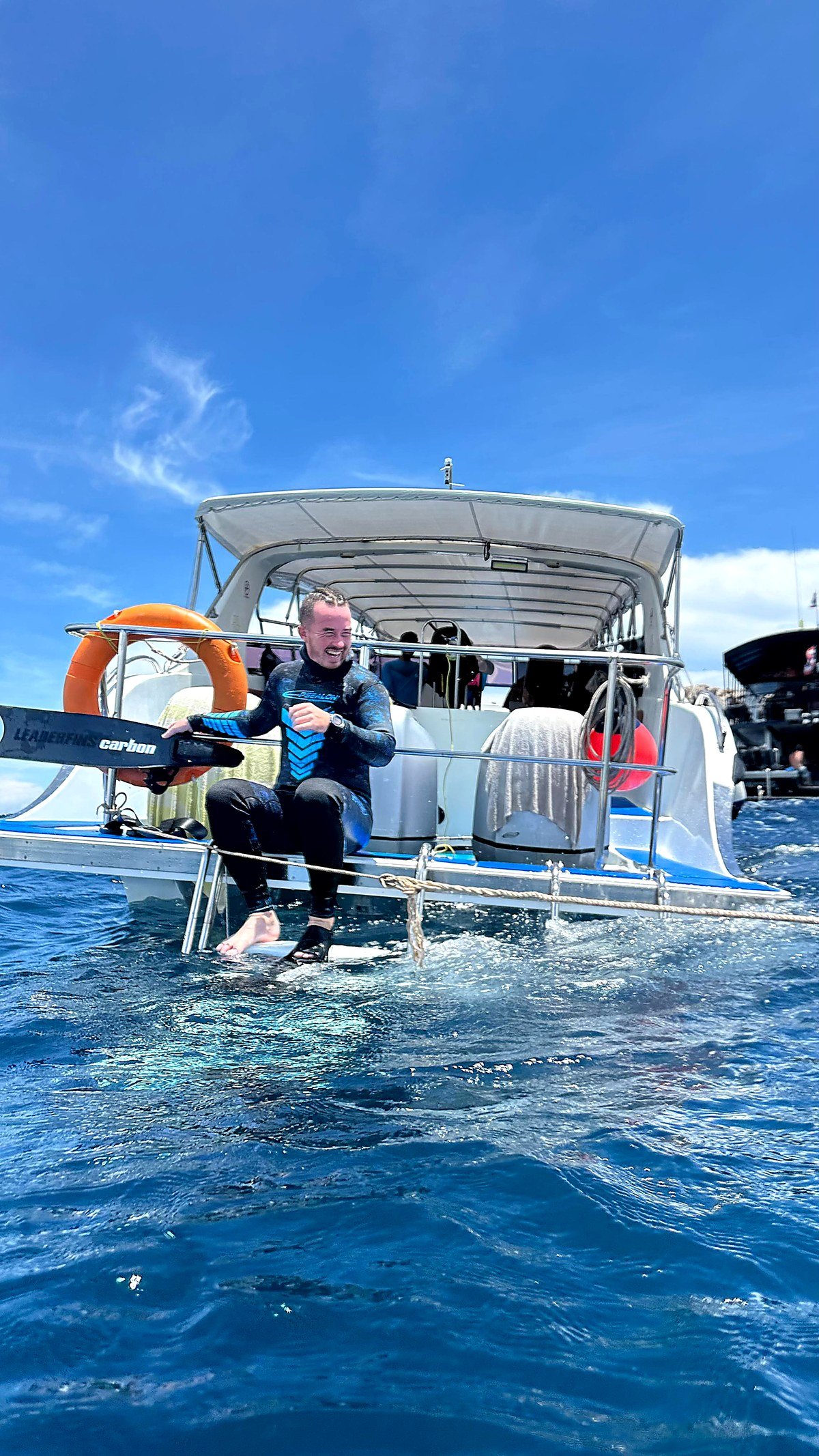
About Diego Pauel
Diego has been teaching freediving from Koh Samui since 2021. He holds instructor certification from Apnea Total and additional credentials across six certification bodies: Oxygen Advantage, Breatheology, International Breathwork Foundation (IBF), Breathing Cold, and GPBA. Plus emergency oxygen administration and first aid.
Learn More →Ready to try freediving?
Message Diego on WhatsApp to check availability for your dates. No deposit needed.
Check Availability on WhatsAppContinue reading
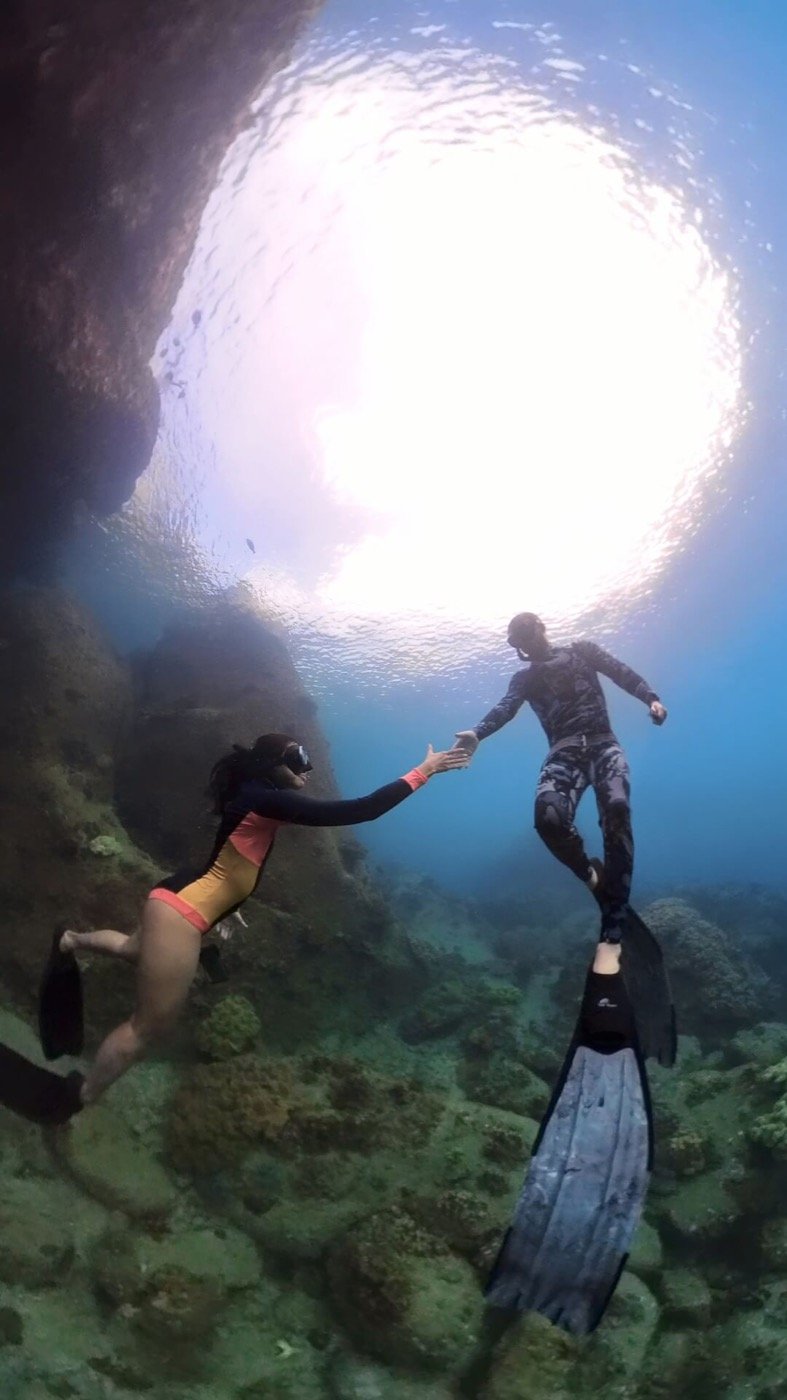
Is Koh Samui Good for Freediving?
Yes. Koh Samui has warm 28-29C water year round, sits closer to Sail Rock than Koh Tao does, and has one dedicated freed
Read More →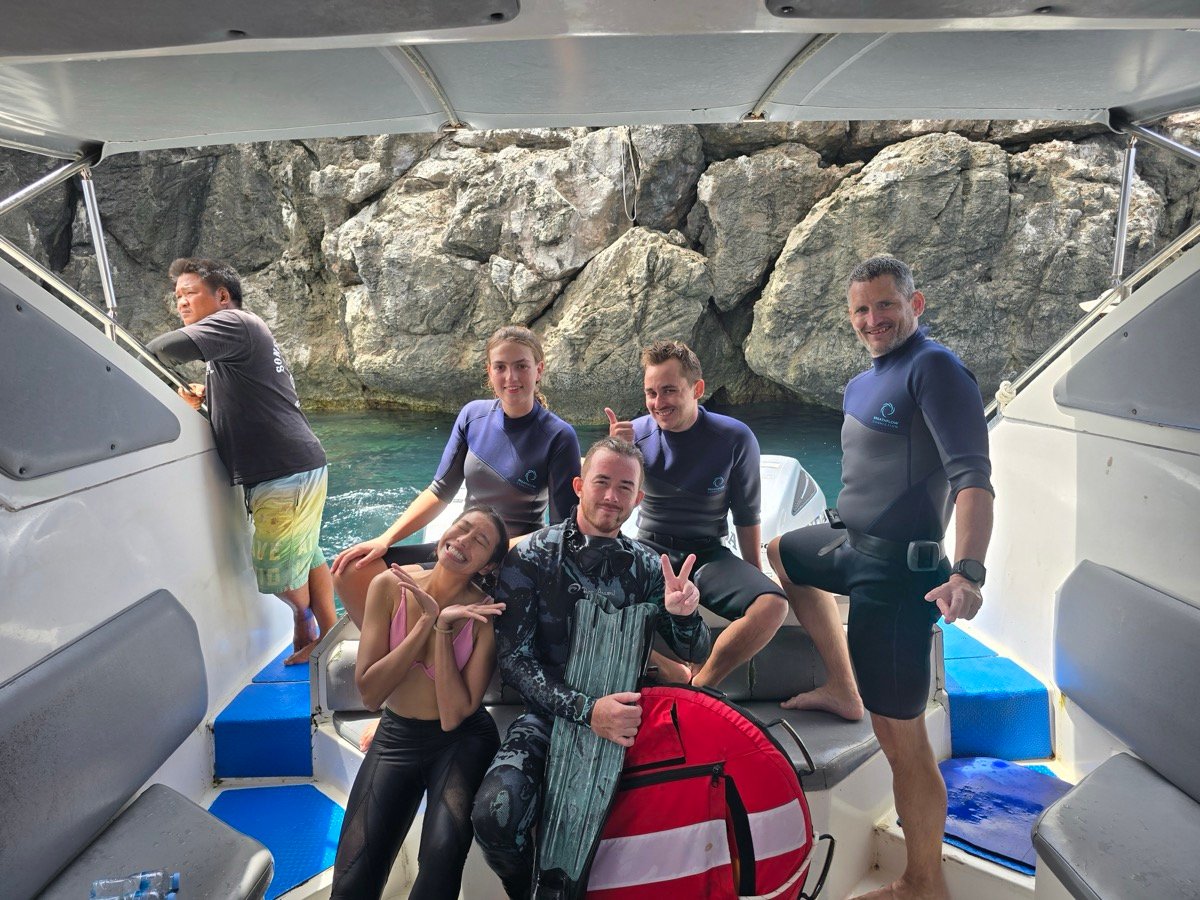
Freediving Certifications Compared: AIDA vs PADI vs Apnea Total
AIDA vs PADI vs Apnea Total: a detailed comparison of the three major freediving certification agencies. Course structur
Read More →
What Is Apnea Total and Why It Matters
What is Apnea Total? Learn about this freediving certification agency, how it compares to AIDA, SSI, and PADI, and why i
Read More →