What Is Apnea Total and Why It Matters
When you start researching freediving courses, you will see a lot of acronyms. AIDA, SSI, PADI Freediver, Molchanovs, and Apnea Total. Each one is a certification agency that trains and certifies freedivers. They all teach the same fundamental skills. But they differ in philosophy, structure, and what they prioritize during your training.
This post explains what Apnea Total is, how it compares to other agencies, and why it matters when you are choosing a freediving course.
Apnea Total: The Basics
Apnea Total is a freediving education agency founded in 2004 by Lotta Ericson. Based in Sweden originally, it has trained instructors and students worldwide with a particular presence in Asia, Europe, and Latin America.
The name translates roughly to "complete apnea" or "total breath hold." The agency focuses on creating well rounded freedivers who understand the sport from multiple angles: physiology, technique, safety, and mental preparation.
Apnea Total certifications are recognized internationally. A Level 1 certificate from Apnea Total is accepted at dive centers and freediving schools worldwide, just as an AIDA 2 or SSI Level 1 would be.
Certification Levels
Apnea Total offers a structured progression of certification levels:
Level 1 (Beginner): The entry level course. You learn freediving fundamentals including breathing techniques, equalization (Frenzel method), duck dive, body position, finning, and safety procedures. Open water training takes you to depth with instructor guidance. This is comparable to AIDA 2 or SSI Level 1.
Level 2 (Advanced): For certified freedivers who want to go deeper. Covers Frenzel mastery with individual coaching, exhale diving, static apnea, advanced constant weight technique, and deep rescue procedures. Comparable to AIDA 3 or SSI Level 2.
Level 3 (Master): Advanced training for experienced freedivers. Covers mouthfill equalization, FRC (functional residual capacity) diving, competition preparation, and instructor level safety skills.
Instructor levels: Apnea Total trains instructors through a separate certification path. Instructor candidates must demonstrate both personal diving ability and teaching competency.
How Apnea Total Differs from Other Agencies
The biggest difference between Apnea Total and agencies like AIDA is the approach to assessment. This is where the philosophy diverges and it matters for your experience as a student.
No performance tests. AIDA requires you to reach specific depths to pass. AIDA 2 certification requires a 16 meter constant weight dive and a 40 meter dynamic apnea swim. If you cannot hit those numbers, you do not get the card. Apnea Total does not use minimum depth requirements for certification. The instructor assesses your technique, safety knowledge, equalization ability, and comfort level. You are certified based on demonstrated competence, not a number on a depth gauge.
This matters because equalization is the limiting factor for most beginners. Some students equalize beautifully on Day 1 and reach 20 meters by Day 3. Others need more time. Under an AIDA system, the slower equalizer might not pass despite having excellent technique and safety awareness. Under Apnea Total, that student receives their certification because they have learned the skills and can dive safely.
Emphasis on equalization coaching. Apnea Total places heavy emphasis on Frenzel equalization from the very first level. Many agencies introduce Frenzel at the beginner level but do not spend enough time on individual coaching. Because Apnea Total courses typically run with smaller groups, the instructor can dedicate significant time to troubleshooting each student's equalization challenges.
Safety first philosophy. All agencies teach safety, but Apnea Total builds its curriculum around it. Rescue skills are integrated throughout the course rather than concentrated in a single session. Buddy protocols, blackout recognition, and emergency procedures are practiced repeatedly across multiple days.
Instructor autonomy. Apnea Total gives instructors more flexibility to adapt the course to student needs. If a student needs an extra hour of equalization practice, the instructor can adjust the schedule. If conditions change and a different dive site would be more appropriate, the instructor makes that call. This flexibility means your course responds to you, not to a rigid checklist.
Apnea Total vs AIDA: A Direct Comparison
AIDA (Association Internationale pour le Developpement de l'Apnee) is the oldest and most widely recognized freediving agency. It was founded in 1992 and governs competitive freediving worldwide. AIDA certifications are the most common globally.
AIDA strengths: global recognition, standardized curriculum, large instructor network, governs competition freediving. If you want to compete, AIDA is the governing body.
AIDA limitations: depth requirements create pressure to perform during a learning environment. Larger class sizes at many AIDA schools (6 to 8 students is common). Less flexibility for instructors to adapt the course.
Apnea Total strengths: no performance pressure, emphasis on individual coaching, smaller groups typical, instructor flexibility, strong equalization focus.
Apnea Total limitations: smaller global network, less name recognition in some regions, not the governing body for competition.
For most recreational freedivers who want to learn the sport safely and enjoyably, the practical difference is minimal. Both certifications are recognized internationally. Both teach the same core skills. The choice often comes down to the instructor and the school rather than the agency name on your card.
Apnea Total vs SSI, PADI, and Molchanovs
SSI (Scuba Schools International): SSI added freediving to its curriculum and leverages its massive scuba infrastructure. The training is solid but often taught at scuba dive centers where freediving is a side offering rather than the primary focus. Instructor freediving experience can vary.
PADI Freediver: Similar to SSI in that it builds on an existing scuba infrastructure. PADI's freediving program is newer and has been growing steadily. The curriculum is well structured. Same consideration applies: check whether your instructor is primarily a freediver or primarily a scuba instructor who added freediving.
Molchanovs: Founded by Alexey Molchanov, one of the greatest competitive freedivers in history. Molchanovs courses are technically excellent, particularly at advanced levels. The curriculum includes the Molchanovs Wave system and is popular among competitive freedivers. Instructor quality is generally very high.
Each agency produces competent freedivers when the instructor is good. The agency sets the minimum standard. The instructor determines the actual quality of your training.
Why Certification Agency Matters Less Than You Think
Here is what actually determines the quality of your freediving course:
The instructor. Their experience, teaching ability, patience, safety record, and how well they communicate. A great instructor under any agency will give you an outstanding course. A mediocre instructor under the most prestigious agency will give you a mediocre course.
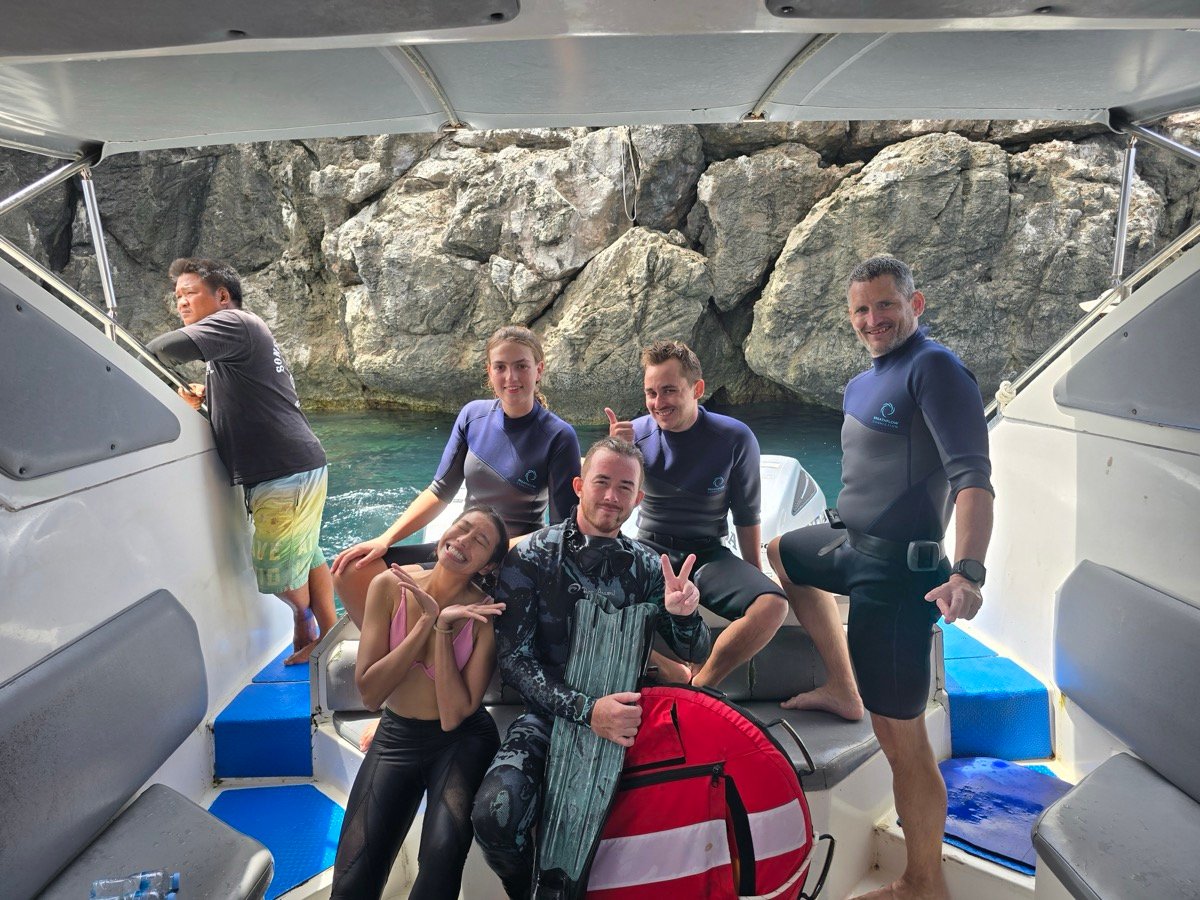
The group size. Whether you have 3 students or 8 students matters more than which agency logo is on your certificate. With 3 students, your instructor watches every single dive, corrects your technique in real time, and coaches your equalization individually. With 8 students, you wait in line.
The dive sites. Training at Sail Rock is a different experience from training in a swimming pool or a shallow bay. The dive site affects your depth progression, your comfort level, and how much you enjoy the process.
The safety standards. Emergency oxygen on the boat, proper buddy protocols, conservative depth progression, and an instructor who stays within arm's reach. These things save lives and they vary more by school than by agency.
Apnea Total on Koh Samui
The Beginner Freediving Course on Koh Samui awards an Apnea Total Level 1 certification. The course runs 3 days (Monday to Wednesday) with a maximum of 3 students per session. Training takes place at Sail Rock and Koh Tao.
The Advanced Freediving Course awards an Apnea Total Level 2 certification. Same format: 3 days, max 3 students, with pool training on Day 1 and open water dives on Day 2 and Day 3.
Your instructor is Diego Pauel, who holds Apnea Total instructor certification along with credentials from the Oxygen Advantage, Breatheology, International Breathwork Foundation, and Breathing Cold programs. Emergency oxygen is on every boat.
The certification you receive works everywhere. You can use it to join fun dives in Bali, training sessions in Dahab, or courses anywhere in the world. No dive center will turn away an Apnea Total certification.
Does Certification Agency Affect Insurance or Travel
A common question from students planning trips after their course: will my certification be accepted everywhere? The answer is yes, with a minor caveat.
All major agencies (AIDA, Apnea Total, SSI, PADI Freediver, Molchanovs) issue certifications that are recognized at dive centers and freediving schools globally. If you show an Apnea Total Level 1 card to a dive center in Bali, Dahab, the Philippines, or anywhere else, they will accept it. The certification proves you have completed a structured freediving course and can dive safely.
For travel insurance, most policies that cover scuba diving also cover freediving within recreational depth limits. The certification agency does not affect your insurance coverage. What matters is that you hold a certification from a recognized body and dive within the limits of your training.
If you plan to compete in freediving, AIDA is the governing body for international competition. Apnea Total, SSI, and PADI certifications do not restrict your entry into competitions, but you may need to register with AIDA separately. For recreational freediving, which is what 99% of students do, the agency name on your card makes no practical difference.
Making Your Choice
If you are reading this post, you are probably deciding between freediving schools rather than between certification agencies. That is the right way to think about it. Choose the school that offers the best combination of instructor quality, group size, dive sites, and safety standards. The certification follows naturally.
Read the complete guide to freediving in Koh Samui for full logistics. Or message us on WhatsApp to check available dates for your certification course.
About Diego Pauel
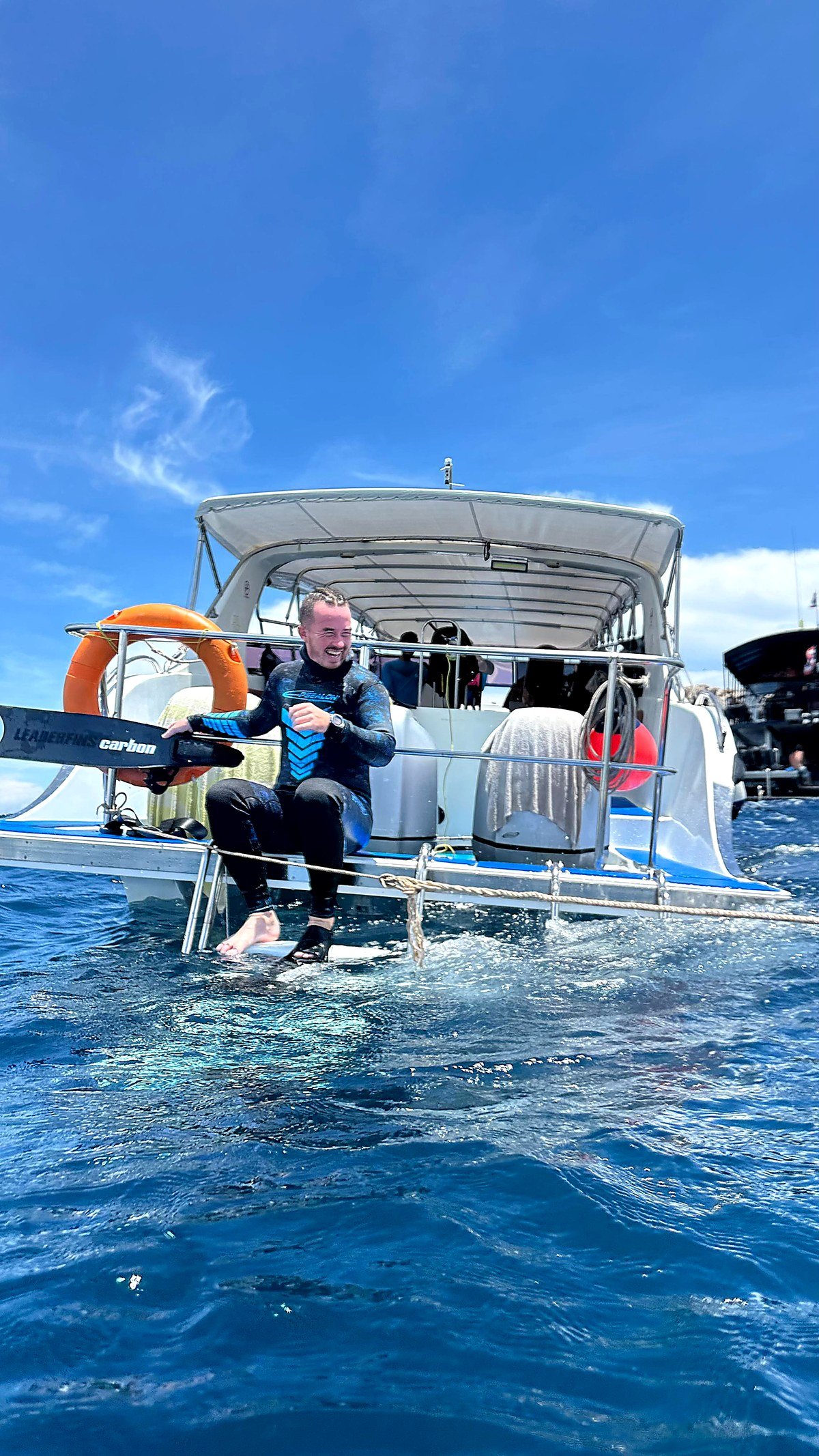
Diego has been teaching freediving from Koh Samui since 2021. He holds instructor certification from Apnea Total and additional credentials across six certification bodies: Oxygen Advantage, Breatheology, International Breathwork Foundation (IBF), Breathing Cold, and GPBA. Plus emergency oxygen administration and first aid.
Learn More →Ready to try freediving?
Message Diego on WhatsApp to check availability for your dates. No deposit needed.
Check Availability on WhatsAppContinue reading
Freediving Certifications Compared: AIDA vs PADI vs Apnea Total
AIDA vs PADI vs Apnea Total: a detailed comparison of the three major freediving certification agencies. Course structur
Read More →
Best Freediving School in the Gulf of Thailand
How to choose the best freediving school in the Gulf of Thailand. Compare Koh Samui, Koh Tao, and Koh Phangan schools by
Read More →
Freediving in Koh Samui vs Koh Tao: An Honest Comparison
An honest comparison of freediving in Koh Samui versus Koh Tao. Prices, group sizes, dive sites, travel time, and which
Read More →