Freediving in Koh Samui: The Complete Guide
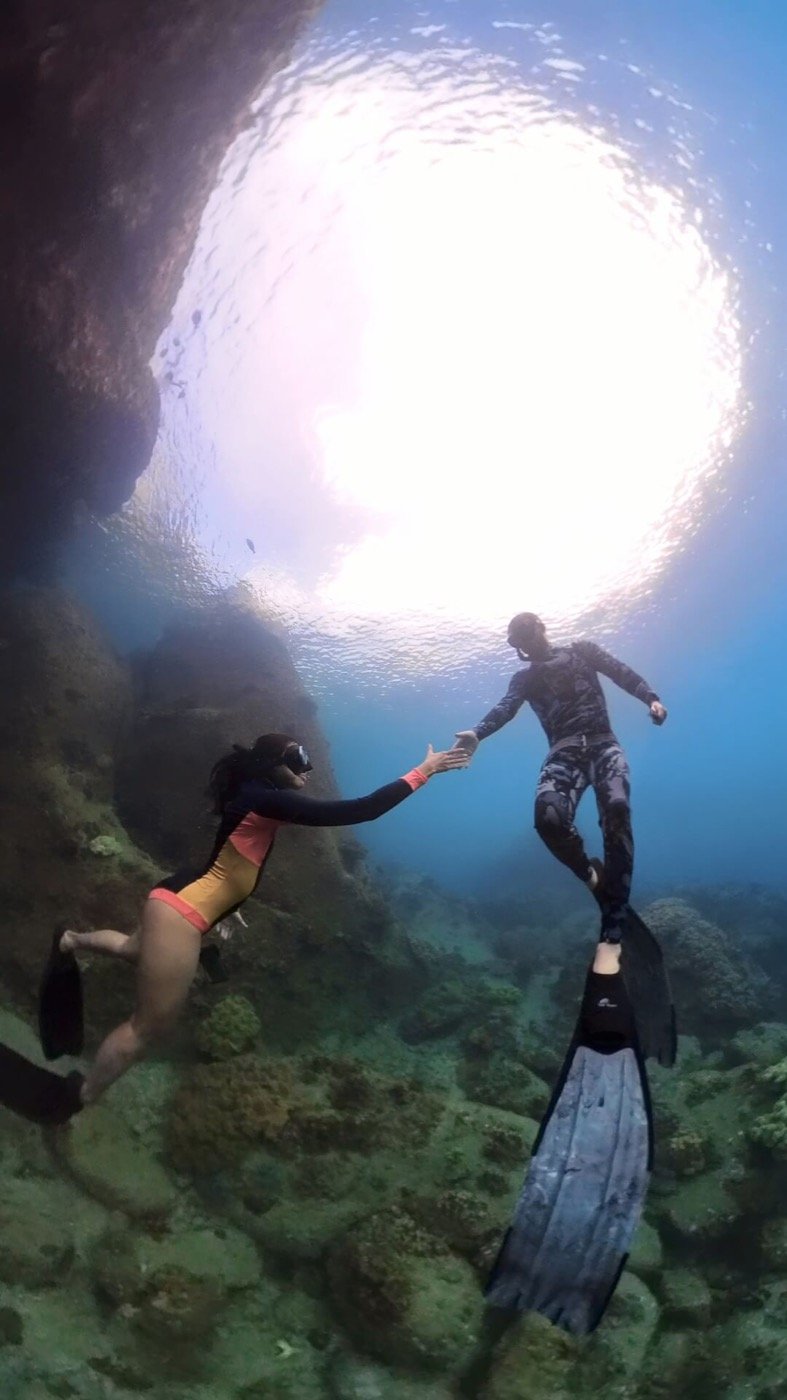
You are on Koh Samui. The water is 29 degrees. Sail Rock is 90 minutes away by boat. And there is a freediving school with a maximum of 3 students per instructor waiting for you to show up.
This guide covers everything you need to know about freediving on Koh Samui. Whether you are a complete beginner who has never held their breath underwater or a certified freediver looking for guided fun dives at world class sites, this is your starting point.
Why Koh Samui for Freediving
Most people assume you need to go to Koh Tao for freediving in Thailand. Koh Tao has 10+ competing schools, crowded training lines, and groups of 6 to 8 students per instructor. It is a factory.
Koh Samui offers a different experience. You train at the same dive sites, including Sail Rock and Koh Tao itself, but in groups of no more than 3. You stay on an island with proper restaurants, reliable wifi, international hospitals, and direct flights from Bangkok. No 2 hour ferry ride each way. No sharing a training line with 40 other students.
The dive sites are less crowded because fewer schools operate from Samui. Sail Rock, the Gulf of Thailand's most spectacular dive site, is actually closer to Koh Samui than to Koh Tao. And when conditions are right, you can access Koh Tao's southern sites within 45 minutes by speedboat.
What Is Freediving
Freediving is diving on a single breath. No tank, no regulator, no BCD. You take one breath at the surface, turn upside down, and swim toward the bottom of the ocean using only your body.
It sounds extreme. It is not. Freediving is closer to meditation than it is to extreme sports. The entire discipline is built on relaxation. You learn to slow your heart rate, conserve oxygen, and move efficiently through the water. Panic is the enemy. Calm is the skill.
A typical beginner reaches 15 to 20 meters depth by the end of a 3 day course. That is deep enough to swim alongside schools of barracuda at Sail Rock, hover above coral gardens, and feel what it is like to be weightless in open water with nothing but your own breath keeping you there.
The Dive Sites
Sail Rock
Sail Rock is a submerged pinnacle rising from 40 meters depth to just above the surface. It sits roughly in the middle of the Gulf of Thailand between Koh Samui and Koh Tao. Divers regularly encounter barracuda, batfish, trevally, giant grouper, and between March and May, whale sharks.
The site features a vertical chimney, a natural swim through that drops from 5 meters to about 18 meters. Freedivers use Sail Rock for both training dives along the anchor line and exploration dives around the pinnacle. Visibility on a good day reaches 20+ meters.
From Koh Samui, Sail Rock is about 90 minutes by longtail or speedboat. You arrive before the Koh Tao dive boats. You have the site to yourself in the early morning when the water is calmest.
Koh Tao Dive Sites
When conditions favor it, you can access Koh Tao's southern dive sites from Koh Samui. Japanese Gardens, Twins, and White Rock are shallow coral sites perfect for freediving training. The boat ride is longer but the advantage is diving these sites without the crowds of Koh Tao's shore based schools.
Local Koh Samui Sites
Koh Samui has sheltered bays ideal for the confined water sessions that make up Day 1 and Day 2 of a freediving course. Calm, warm, shallow water where you can practice breath holds, duck dives, and equalization technique before heading to open water.
Freediving Courses Available
Beginner Freediving Course (Level 1)
This is where most people start. The Beginner Course runs 3 full days, Monday to Wednesday, and assumes zero experience. If you can swim comfortably in open water, you are ready.
What you will learn:
- Freediving physiology and how your body adapts to breath holding
- Diaphragmatic breathing and relaxation techniques
- Equalization (the technique that lets you descend without ear pain)
- Duck dive technique for efficient descents
- Safety protocols including buddy breathing and rescue skills
- Static apnea (breath holding face down in the water)
- Constant weight freediving to 15 to 20 meters depth
Day 1 covers theory and confined water. You learn how the mammalian dive reflex works, practice breathing techniques, and do your first static breath holds in shallow water. Most students surprise themselves by holding their breath for 2+ minutes on the first day.
Day 2 moves to open water. You practice duck dives along a line, work on equalization at increasing depths, and learn the rescue protocol. By the end of Day 2, most students reach 10 to 15 meters.
Day 3 takes you to Sail Rock or Koh Tao. You put everything together with depth dives and exploration dives at a real dive site. This is the day students remember. The combination of depth, marine life, and blue water makes everything click.
You receive an Apnea Total Level 1 certification, recognized internationally and equivalent to AIDA 2 or SSI Level 1.
Price: 9,500 THB (approximately $280 USD). Includes all equipment, certification, boat trips, and photos.
Advanced Freediving Course (Level 2)
For certified freedivers who want to go deeper. The Advanced Course runs Tuesday to Thursday and requires an existing Level 1 certification from any agency.
The focus shifts to mouthfill equalization (the technique that lets you equalize below 20 meters where Frenzel stops working), advanced constant weight technique, and deeper rescue protocols. Target depth is 25 to 30+ meters depending on your starting point.
Price: 12,000 THB (approximately $355 USD). Same inclusions as the Beginner Course.
Fun Dives and Coaching
Already certified? Book a guided fun dive at Sail Rock or Koh Tao. You get personalized depth coaching, safety coverage, and access to sites that would be difficult to freedive independently.
Price: 4,500 THB per person. Half day trip including equipment and boat.
What Makes This School Different
There is one freediving school on Koh Samui. This is it. But the decision to train here should not be about convenience. Here is what actually matters.
Maximum 3 students per instructor. This is not a marketing line. It is a hard cap. Three students means your instructor watches every single dive, corrects your technique in real time, and never has to split attention across a crowd. Most Koh Tao schools run groups of 4 to 8.
Emergency oxygen on every boat. Every training boat carries emergency oxygen equipment and your instructor holds both emergency first aid and oxygen administration certifications. Safety is not an afterthought.
6 certification bodies. Your instructor holds credentials from Apnea Total, the Oxygen Advantage, Breatheology, the International Breathwork Foundation, Breathing Cold, and GPBA. That breadth of training means you get one instructor with the combined knowledge of multiple disciplines.
3 full days, not 2. Many budget schools compress their beginner course into 2 days. That works if you are ticking a box. It does not work if you want to actually become a competent freediver. The third day at Sail Rock is where the course goes from "I learned some skills" to "I had an experience that changed how I think about the ocean."
Best Time of Year to Freedive in Koh Samui
Koh Samui has a different monsoon cycle than Thailand's west coast. The best freediving conditions fall between February and September, with peak visibility and calm seas from March to June.
The Gulf of Thailand monsoon season runs from October to January, bringing heavier rain and occasional swells. Courses still run during these months, but boat trips to Sail Rock may be rescheduled depending on sea conditions.
Water temperature stays between 27 and 30 degrees Celsius year round. You will dive in a thin wetsuit or a rashguard. No dry suits, no cold water shock, no 5mm neoprene.
The whale shark season at Sail Rock runs roughly from March to May. If encountering a whale shark on a single breath is on your bucket list, plan your trip accordingly.
How Much Does Freediving in Koh Samui Cost
Here is the full pricing breakdown.
- Beginner Freediving Course (3 days): 9,500 THB (~$280 USD)
- Advanced Freediving Course (3 days): 12,000 THB (~$355 USD)
- Fun Dives / Coaching: 4,500 THB per person (~$133 USD)
All prices include equipment rental, boat trips to dive sites, certification fees (for courses), and photos/videos of your training. There are no hidden fees.
How does this compare to Koh Tao? Most Koh Tao schools charge between 7,000 and 10,000 THB for a 2 day beginner course with groups of 4 to 8 students. When you factor in the extra day of training, the smaller group size, and the fact that you skip a 1,500 THB round trip ferry, the Koh Samui price is competitive.
How to Prepare for Your Freediving Course
You do not need to be an athlete. Freediving is about relaxation, not fitness. If you can swim 200 meters without stopping and float comfortably in deep water, you have the physical requirements covered.
Before you arrive:
- Get comfortable in the ocean. Snorkeling, swimming, or just floating in open water helps you relax on Day 1.
- Practice breathing through your diaphragm. Place one hand on your belly and breathe so your hand rises and falls. That is diaphragmatic breathing.
- Avoid alcohol for 24 hours before your course. Dehydration makes equalization harder.
- Get a good night of sleep. Fatigue is the biggest enemy of a good breath hold.
What to bring:
- Swimsuit and towel
- Reef safe sunscreen
- Water bottle
- A light snack for the boat
All diving equipment (mask, snorkel, fins, wetsuit, weight belt) is provided. You do not need to buy or bring any gear.
Common Questions
Do I need experience to take a freediving course?
No. The Beginner Course is designed for people who have never freedived before. Day 1 covers all theory and breathing techniques before you enter the water. If you can swim comfortably, you are ready.
Is freediving dangerous?
Freediving with a certified instructor following proper safety protocols is very safe. Every boat carries emergency oxygen. The maximum group size is 3 students so you are always closely supervised. All courses follow Apnea Total safety standards. The biggest risk in freediving is diving alone without training, which is exactly what this course prevents.
Why not go to Koh Tao instead?
You can. Koh Tao has more schools and slightly lower prices for 2 day courses. But you will train in a group of 6 to 8, share training lines with other schools, and spend 4 hours round trip on a ferry. Koh Samui gives you the same dive sites with smaller groups, a better base island, and no ferry hassle. If you are already on Koh Samui, there is no reason to leave.
What certification do I receive?
Apnea Total, recognized internationally. It is comparable to AIDA, SSI, and PADI Freediver certifications and allows you to freedive at schools and dive sites worldwide.
When do courses run?
The Beginner Course runs every Monday to Wednesday. The Advanced Course runs every Tuesday to Thursday. Fun dives are available on request. Message on WhatsApp to check availability for your dates.
Your Complete Freediving Koh Samui Reading Guide
This page is the overview. When you want to go deeper on any part of it, these are the best guides we have written, grouped by what you are trying to work out.
- Is it safe? Is freediving safe? · Is freediving dangerous? An honest answer · The 5 fears every beginner has
- Learning the technique: How to equalize · Frenzel explained simply · Breathing techniques for beginners · How deep can a beginner go?
- Choosing where to learn: Koh Samui vs Koh Tao · Best freediving school in the Gulf · AIDA vs PADI vs Apnea Total
- Planning the trip: The 5-day itinerary · Best time of year · What to pack · Freediving for digital nomads
- What it is actually like: What it feels like the first time · Trying freediving for the first time
- The dive sites and marine life: Sail Rock · Whale sharks at Sail Rock · Marine life you will see
- Going further: Spearfishing in the Gulf · Freediving vs scuba · Freediving vs snorkeling
Book Your Freediving Course
You are on Koh Samui. The water is warm. Sail Rock is waiting. The group size is capped at 3 students and spots fill quickly during high season.
Send a WhatsApp message to check availability for your dates. No deposit required to hold a spot. Just a quick message to confirm dates and group size.
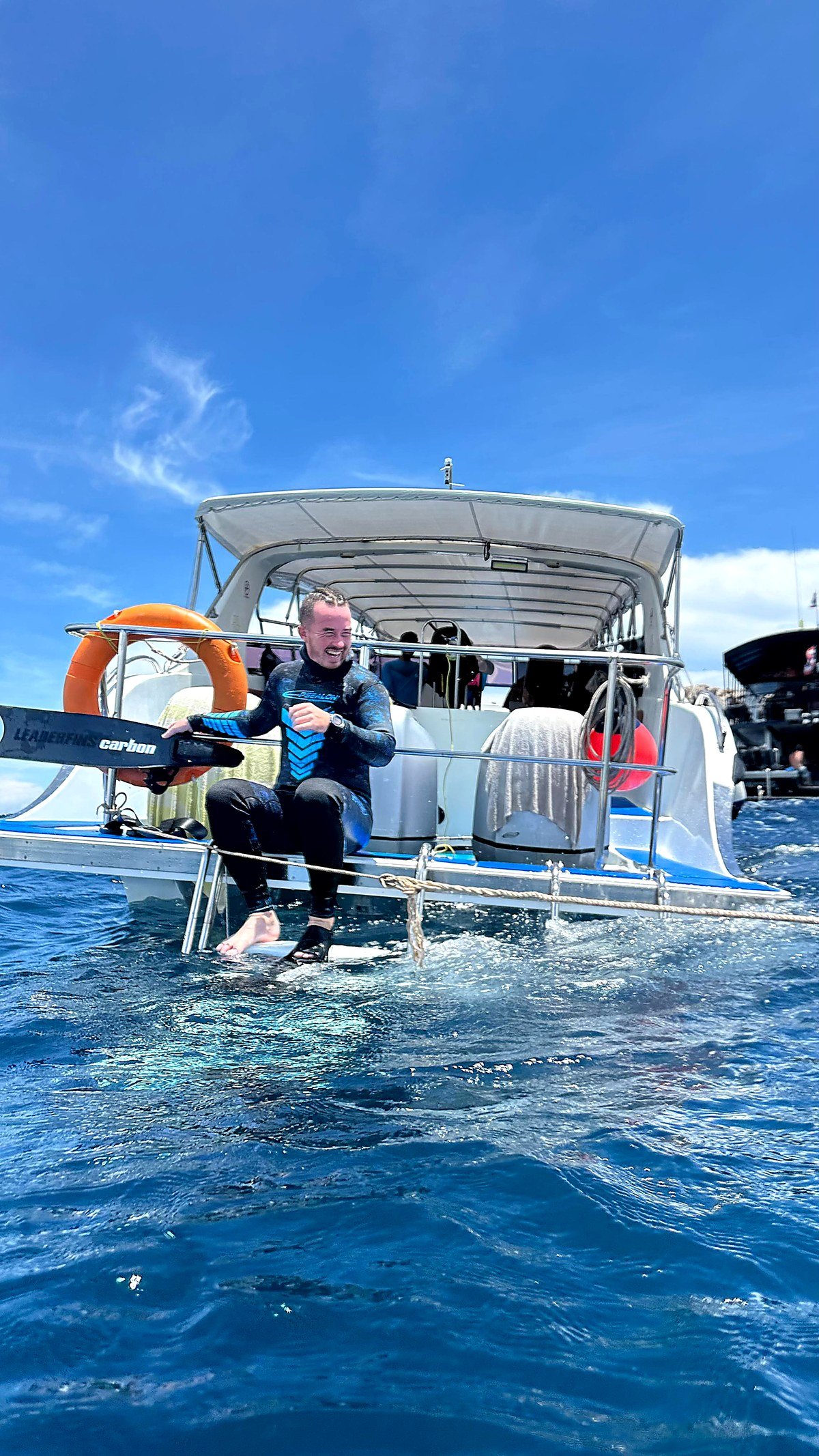
About Diego Pauel
Diego has been teaching freediving from Koh Samui since 2021. He holds instructor certification from Apnea Total and additional credentials across six certification bodies: Oxygen Advantage, Breatheology, International Breathwork Foundation (IBF), Breathing Cold, and GPBA. Plus emergency oxygen administration and first aid.
Learn More →Ready to try freediving?
Message Diego on WhatsApp to check availability for your dates. No deposit needed.
Check Availability on WhatsAppContinue reading
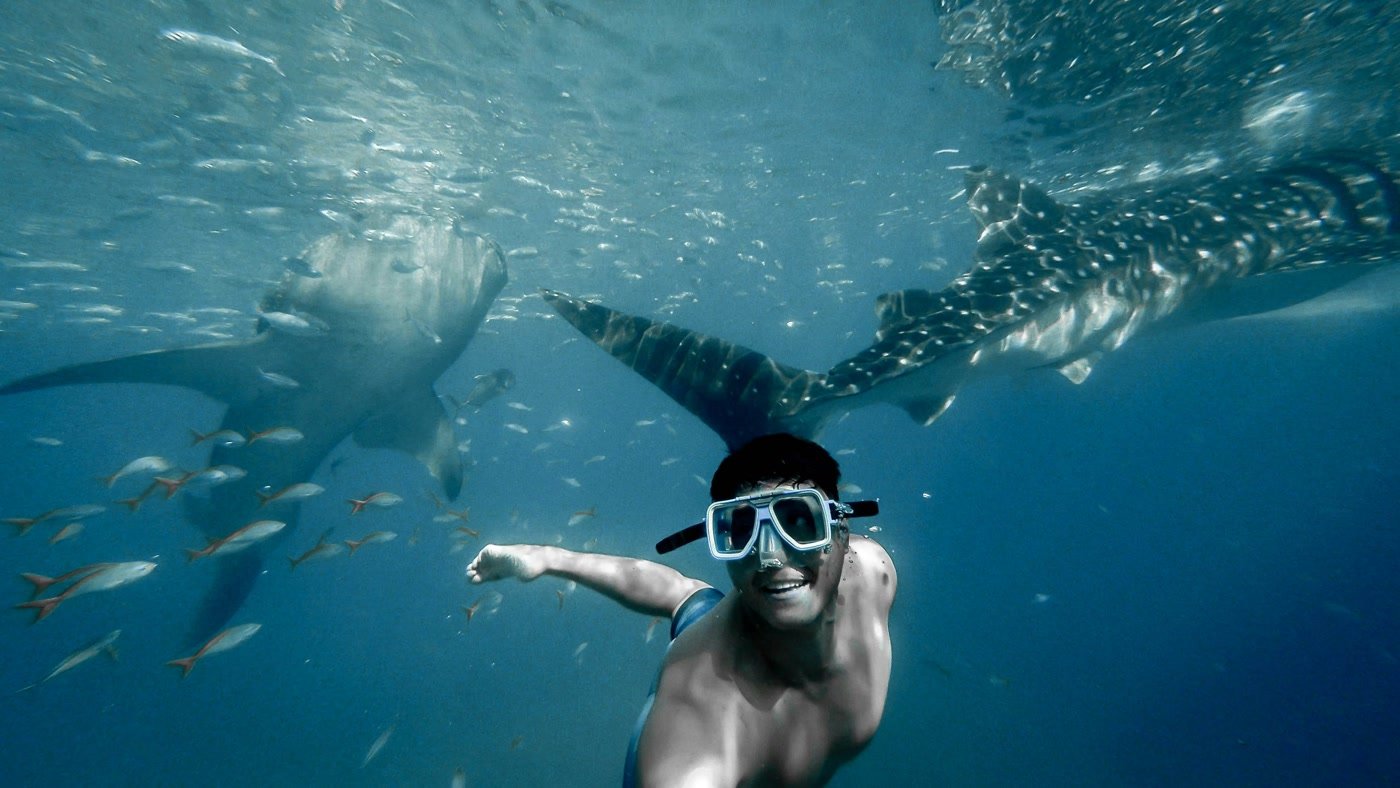
Whale Sharks at Sail Rock: What Freedivers Need to Know
Whale sharks visit Sail Rock between March and May. Here is what freedivers need to know about the season, the behavior,
Read More →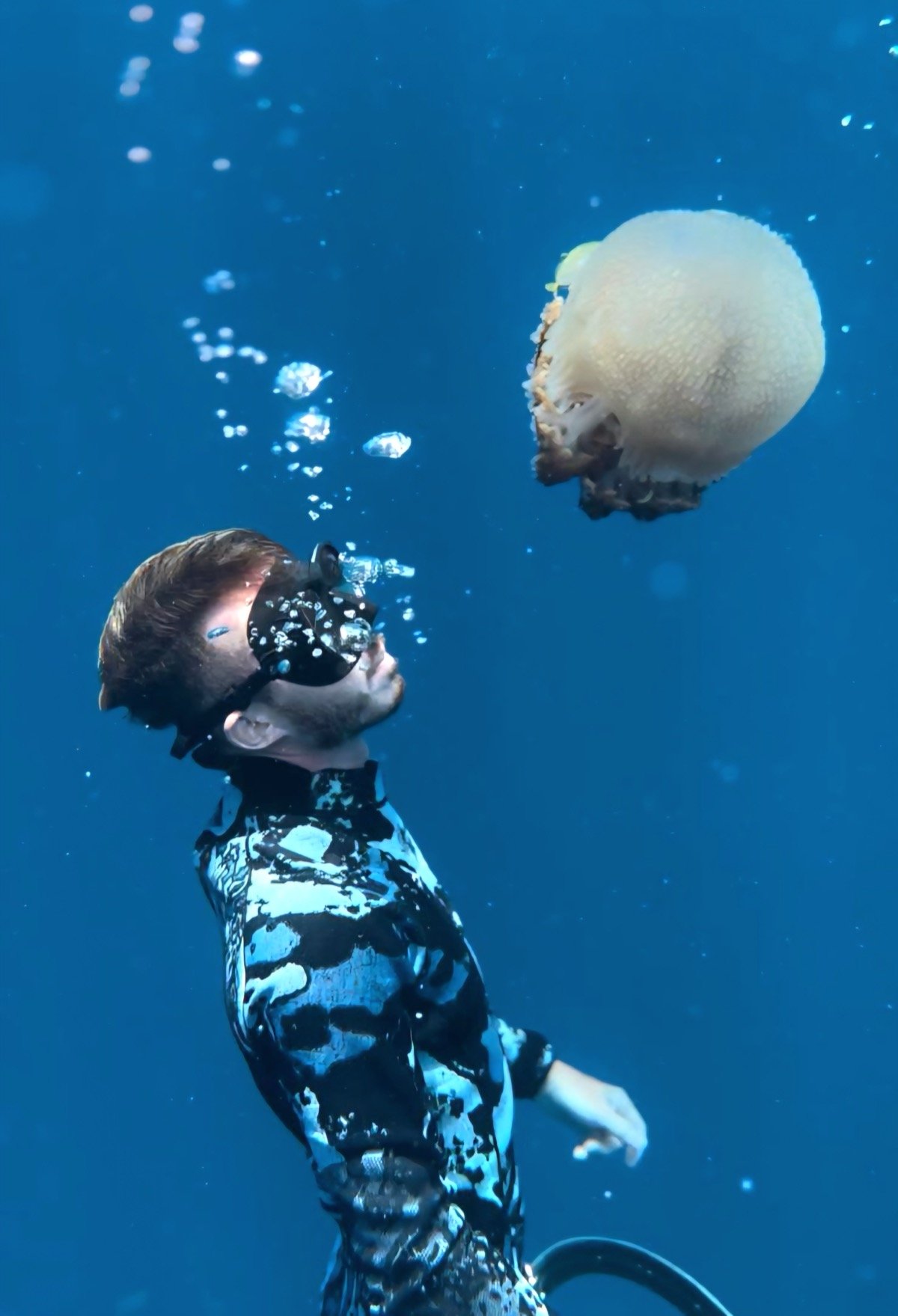
Marine Life You Will See Freediving in the Gulf of Thailand
What marine life can you see freediving in the Gulf of Thailand? Whale sharks, barracuda, sea turtles, batfish, trevally
Read More →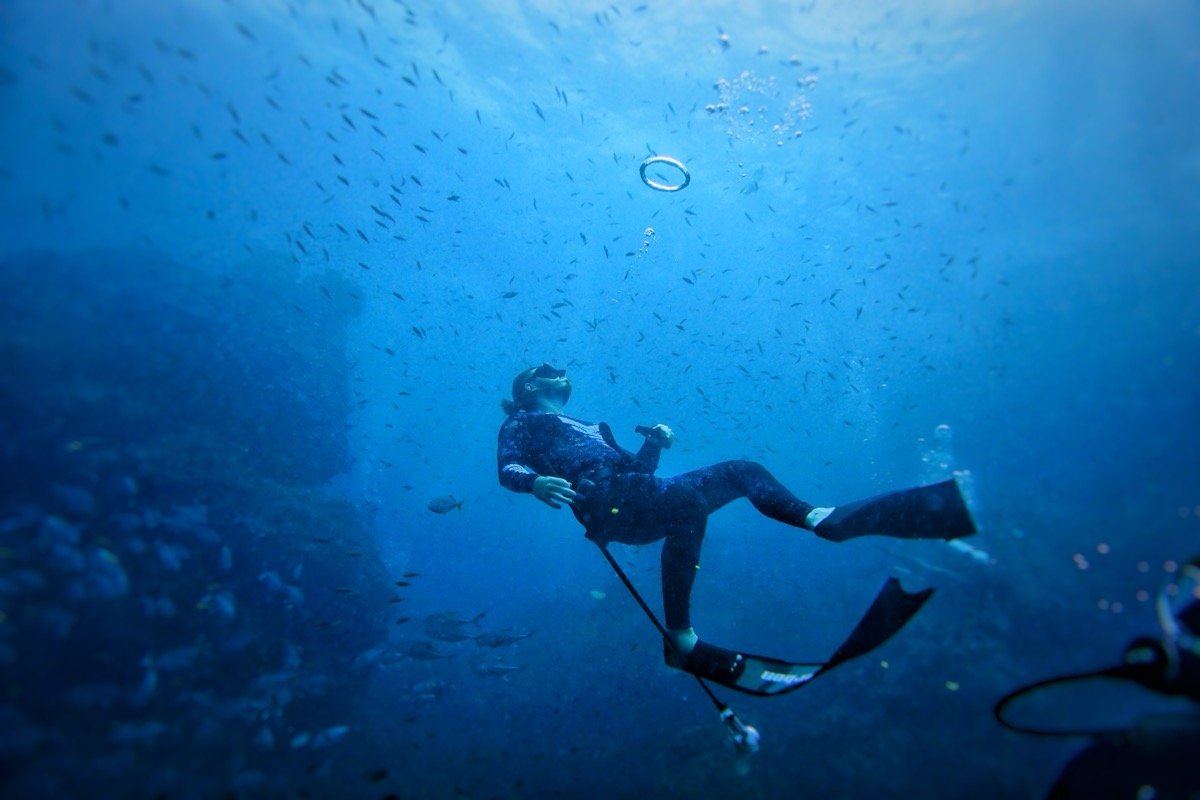
Sail Rock: Why Freedivers Love This Gulf of Thailand Dive Site
Sail Rock is the Gulf of Thailand's best dive site. Discover why freedivers love this submerged pinnacle, what marine li
Read More →