Freediving for Digital Nomads in Koh Samui
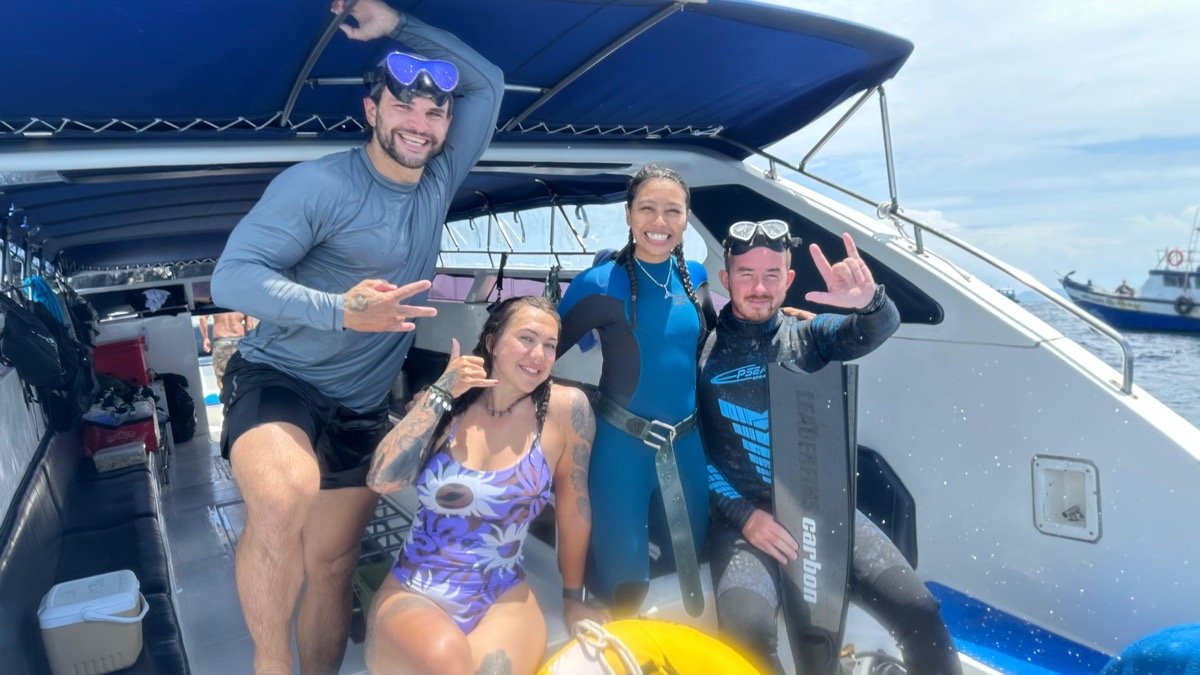
You moved your life online so you could work from anywhere. Now you are in Southeast Asia, laptop open at a beach cafe, wondering what to do with the time you used to spend commuting.
Freediving is the answer a surprising number of digital nomads land on. Not surfing, not scuba, not a yoga retreat. Freediving. Because it is short enough to fit into a work week, challenging enough to be genuinely interesting, and unlike anything you have done sitting at a desk.
Koh Samui is one of the best places in Thailand to do it. This post explains why.
Why Koh Samui Works for Remote Workers
Koh Samui is not a backpacker island. It is an island with infrastructure. Direct flights from Bangkok on Bangkok Airways and Thai AirAsia land multiple times daily. The airport is 15 minutes from most hotels. You do not need to take a ferry, a bus, and another ferry to get here.
The wifi is fast. Most cafes and coworking spaces on Koh Samui deliver 50 to 100 Mbps. Hotels in Chaweng, Bophut, and Lamai offer reliable connections. If you work on video calls, you will not have the lag problems that plague smaller Thai islands.
The food scene is excellent. From authentic Thai street food to international restaurants, you will not run out of options. Fisherman's Village in Bophut has a walking street market every Friday night. Chaweng has everything from Japanese to Italian. You can eat well for 150 THB or spend 1,500 THB on a nice dinner. The range is there.
Medical infrastructure is real. Bangkok Hospital Samui and Thai International Hospital handle everything from routine checkups to emergencies. This matters if you are living abroad long term. Koh Tao, by comparison, has a small clinic and a ferry ride to the nearest hospital.
Co-living and coworking options exist. They are not as established as Chiang Mai or Bali, but spaces like The Hive and various cafe based setups give you a desk, air conditioning, and fast internet when you need it.
How Freediving Fits a Remote Work Schedule
A freediving course does not consume your entire week. The Beginner Freediving Course runs Monday to Wednesday. You are done by mid afternoon each day. That leaves Thursday through Sunday completely free for work, and even Monday through Wednesday evenings are open.
Here is what a typical course week looks like for a remote worker:
Monday: Theory day. You meet your instructor in the morning for classroom sessions covering freediving physiology, breathing techniques, and equalization. The session runs until early afternoon. You can take calls or do light work in the evening.
Tuesday: Open water day. The boat leaves early and returns by mid afternoon. You will be tired but happy. Evening is free. Most students spend it reviewing their dive photos and eating dinner.
Wednesday: Deep dives and certification. Same schedule as Tuesday. By late afternoon you have your Apnea Total Level 1 certification and three days of ocean experience.
Thursday onward: Back to your regular schedule with a new skill, a new hobby, and underwater photos that will make your Instagram look significantly more interesting than another laptop on a beach shot.
If 3 days feels like too much of a commitment, the Discovery Freediving experience runs in a single day. Try it on a Saturday and decide if you want to continue.
Why Freediving, Not Scuba or Surfing
Digital nomads tend to optimize. You want the highest quality experience for the time invested. Freediving delivers that in ways other water activities do not.
Scuba diving requires 4 to 5 days for an Open Water certification. You carry heavy equipment, you depend on a tank of air, and the certification process involves significant classroom time. Scuba is wonderful, but it takes more time and more gear.
Surfing on Koh Samui is limited. The island does not have consistent waves. You would need to fly to Bali, Sri Lanka, or the Andaman coast for serious surfing. Freediving works with what Koh Samui already has: warm, calm water and world class dive sites within boat range.
Freediving is minimalist by nature. No tank, no regulator, no BCD. You, a mask, fins, and a weight belt. That simplicity appeals to people who have already stripped their life down to a laptop and a carry on bag.
The physical and mental benefits are real. Breath hold training teaches you to manage stress responses, control your heart rate, and stay calm under pressure. These are skills that translate directly to high stakes calls, difficult deadlines, and the general anxiety that comes with running a location independent career.
The Social Side
Freediving courses on Koh Samui run with a maximum of 3 students. That means you spend 3 days with 1 or 2 other people who signed up for the same experience. The bonds formed during a freediving course are surprisingly strong. There is something about holding your breath together, watching each other dive, and sharing meals between sessions that creates genuine connection.
Many of the students who come through Koh Samui are digital nomads, remote workers, or people taking extended trips through Southeast Asia. The conversations are interesting. The networking happens naturally. You do not need a coworking event or a meetup app to find your people. They are on the boat.
Cost of Living While Training
Koh Samui is more expensive than Chiang Mai or Koh Lanta but cheaper than Bangkok or Phuket for equivalent quality. Here is a rough breakdown for a nomad spending a week on the island while taking a freediving course:
Accommodation: 500 to 2,000 THB per night. Hostels and basic guesthouses start around 500 THB. A private room with air conditioning and good wifi runs 800 to 1,200 THB. A nice hotel is 1,500 to 3,000 THB. Long term monthly rentals drop significantly.
Food: 150 to 500 THB per meal. Street food and local restaurants are at the lower end. Western restaurants and beachfront dining are at the higher end. You can eat 3 meals a day for 500 THB total if you eat like a local.
Transport: 200 to 500 THB per day if you rent a scooter (monthly rates are cheaper). Grab is available but less reliable than Bangkok. Most nomads rent a scooter for the duration of their stay.
Freediving course: The Beginner Course is 9,500 THB all inclusive. That covers 3 days of instruction, all equipment, boat trips to Sail Rock and Koh Tao, certification, photos, and videos. There are no hidden fees.
A full week on Koh Samui including the freediving course, accommodation, food, and transport runs roughly 20,000 to 30,000 THB (550 to 850 USD) depending on your lifestyle choices. That is a week of world class diving, tropical weather, and a new certification for less than a weekend trip in most Western cities.
After the Course
The certification you receive (Apnea Total Level 1) is recognized internationally. You can use it to join fun dives and guided sessions at freediving schools worldwide. Many nomads take the course on Koh Samui and then dive in Bali, Dahab, the Philippines, or wherever their next destination takes them.
If you stay on Koh Samui, fun dive sessions run Tuesday and Wednesday at Sail Rock and Thursday at Koh Tao. You can keep diving without taking another course. The cost is 4,500 THB per person and includes all equipment, boat transport, and depth coaching.
Some nomads structure their entire Koh Samui stay around freediving. Course in the first week, fun dives twice a week after that, work in between. It is a rhythm that works well on an island that moves slowly.
The Practical Details
Courses run Monday to Wednesday every week. Maximum 3 students per session. All equipment is provided.
You do not need to be a strong swimmer or athlete. You need to be comfortable in open water and able to swim 200 meters. Freediving is more about relaxation than fitness. If you can sit through a 4 hour Zoom meeting without panicking, you can probably hold your breath longer than you think.
What to Do on Your Days Off
Koh Samui does not shut down when you are not diving. The island has enough to fill a month without repeating anything.
Ang Thong National Marine Park is a day trip by speedboat. 42 islands, emerald lagoons, and viewpoints that justify every Instagram account that has ever posted a Thailand photo. You can kayak, hike, or snorkel. It runs on the days you are not diving.
The night markets are worth exploring. Fisherman's Village Walking Street in Bophut runs every Friday evening. Lamai has a Sunday market. Chaweng has food stalls open every night. You eat well, you spend little, and you walk home through warm air with the sound of the ocean behind you.
If you want to stay active, Muay Thai gyms operate across the island. A single session costs 300 to 500 THB. Several yoga studios run daily classes. The road around the island is 50 kilometers and makes for a solid scooter day trip with stops at viewpoints, waterfalls, and temples along the way.
The point is that Koh Samui is not a place where you sit around waiting for your next dive. The island fills the gaps between diving with food, scenery, and the kind of experiences that make remote work feel like less of a compromise and more of an upgrade.
Getting Started
Read the complete guide to freediving in Koh Samui for full logistics. Or check the what to expect from a freediving course in Thailand post for a day by day breakdown.
Message us on WhatsApp to check available dates. Your next Zoom call can wait until Thursday.
About Diego Pauel
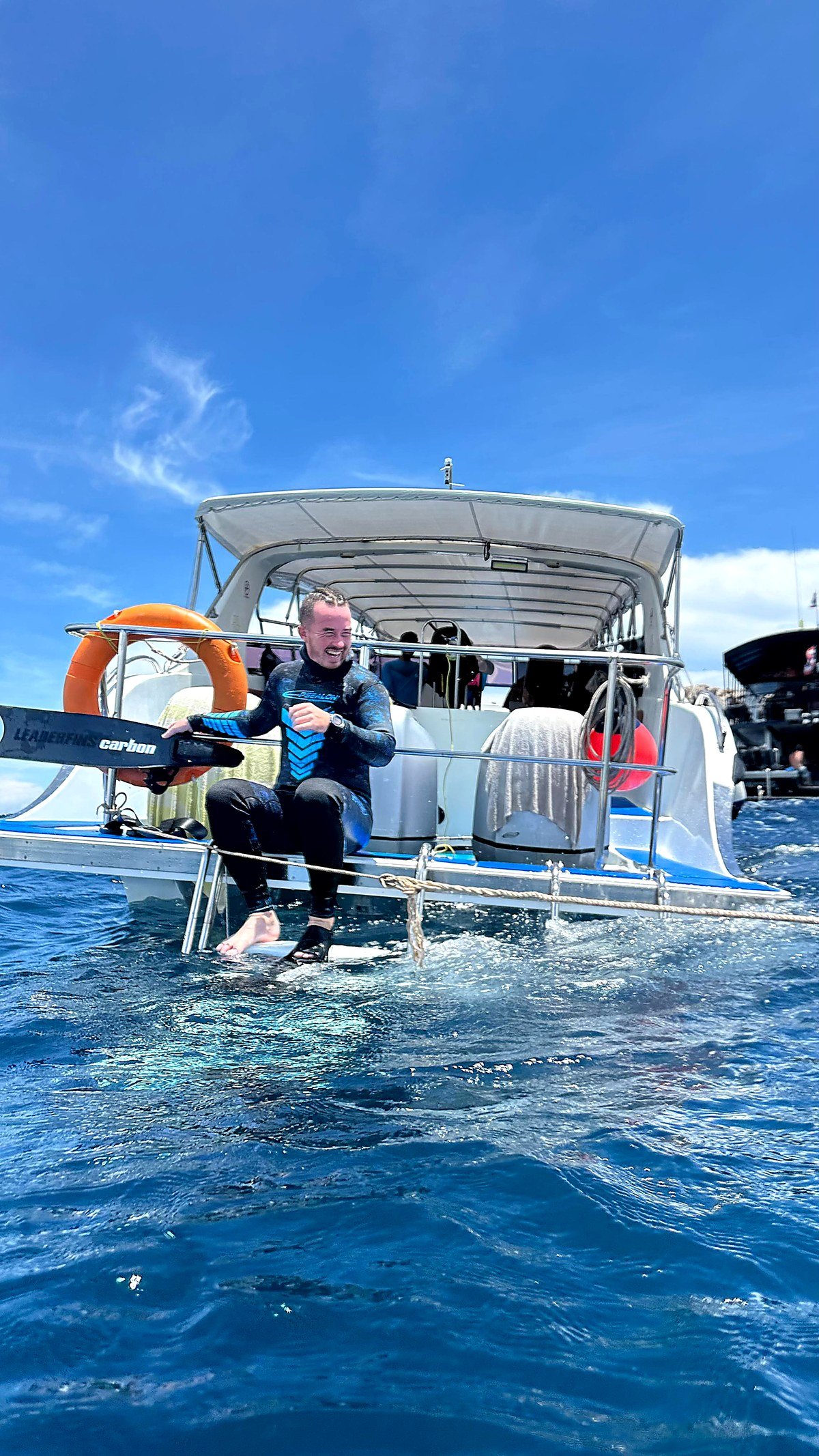
Diego has been teaching freediving from Koh Samui since 2021. He holds instructor certification from Apnea Total and additional credentials across six certification bodies: Oxygen Advantage, Breatheology, International Breathwork Foundation (IBF), Breathing Cold, and GPBA. Plus emergency oxygen administration and first aid.
Learn More →Ready to try freediving?
Message Diego on WhatsApp to check availability for your dates. No deposit needed.
Check Availability on WhatsAppContinue reading
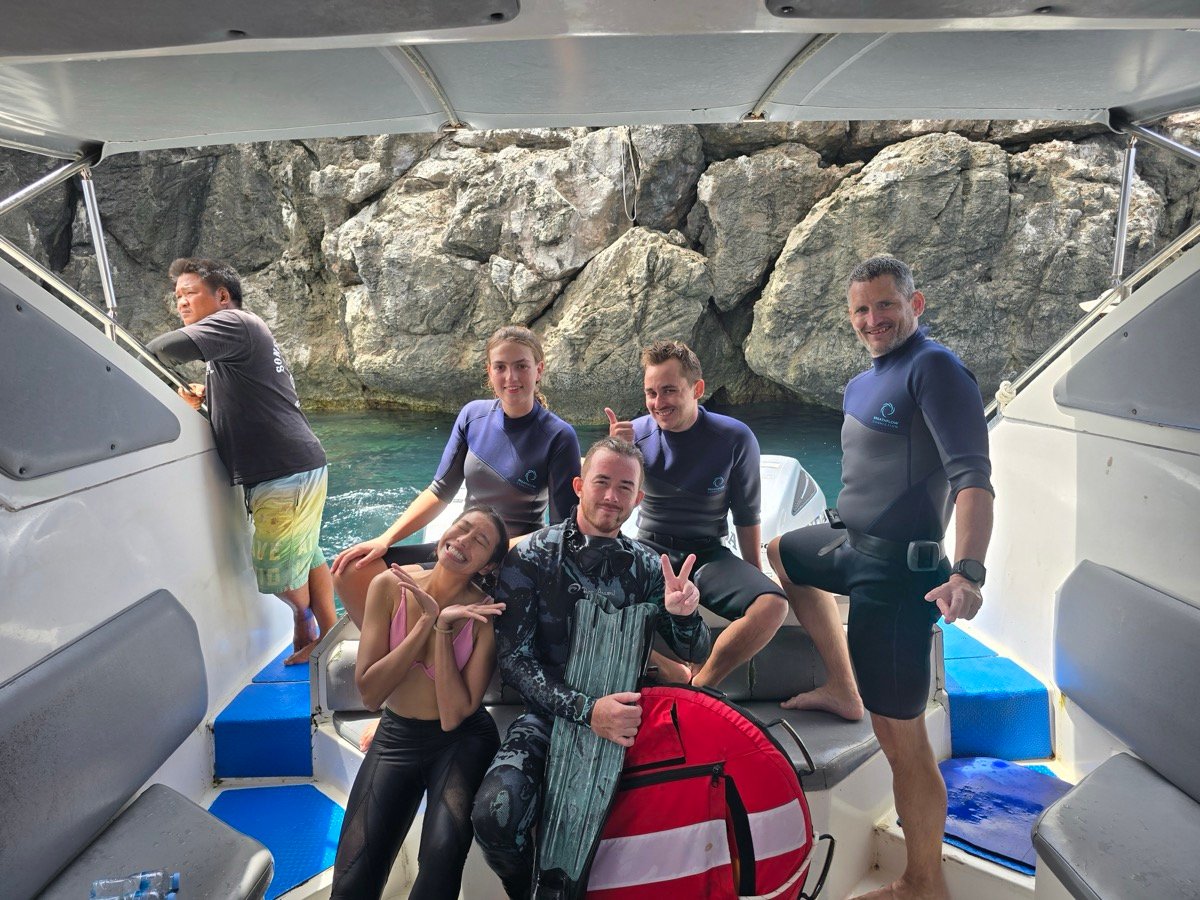
How to Combine a Freediving Course With a Koh Samui Holiday
You do not have to choose between a holiday and learning to freedive in Koh Samui. A 3-day course slots neatly into a we
Read More →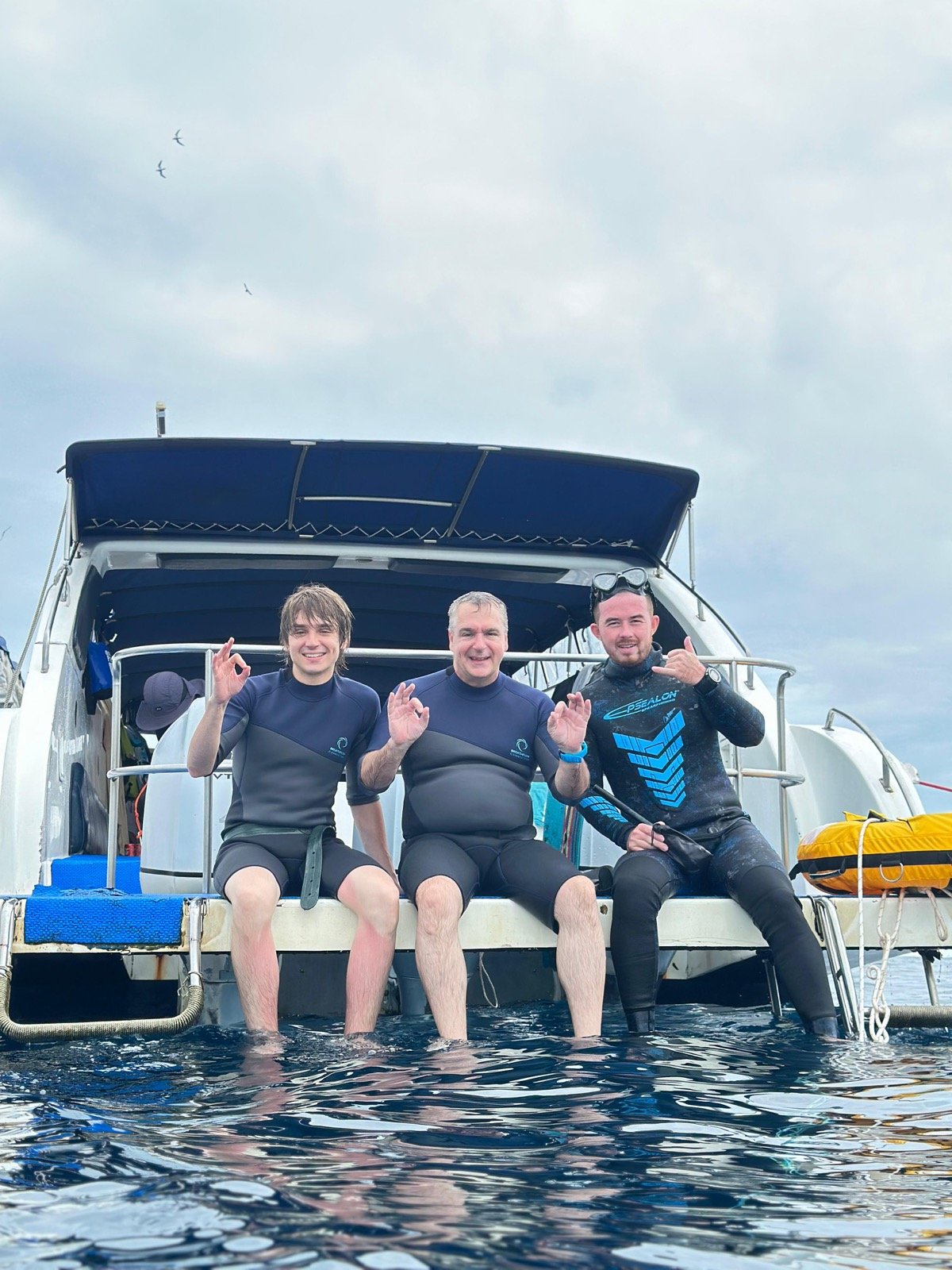
What Does a Freediving Trip to Koh Samui Cost? The Full Budget
A freediving trip to Koh Samui costs roughly 25,000–55,000 THB per person for a week including flights, the course, ac
Read More →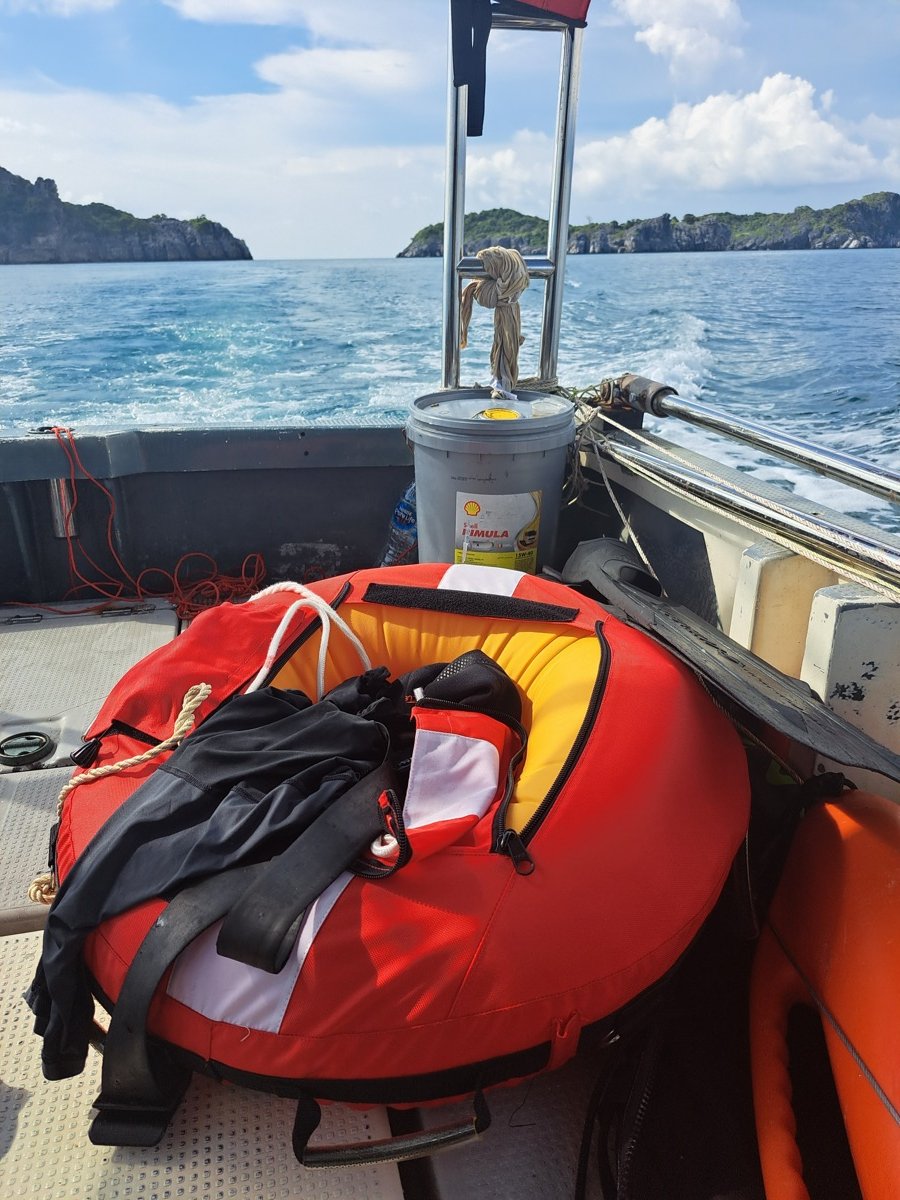
Choosing Freediving Fins: Plastic, Fiberglass or Carbon?
How to choose long blade freediving fins, from a Koh Samui instructor — plastic vs fiberglass vs carbon, blade stiffne
Read More →