Whale Sharks at Sail Rock: What Freedivers Need to Know
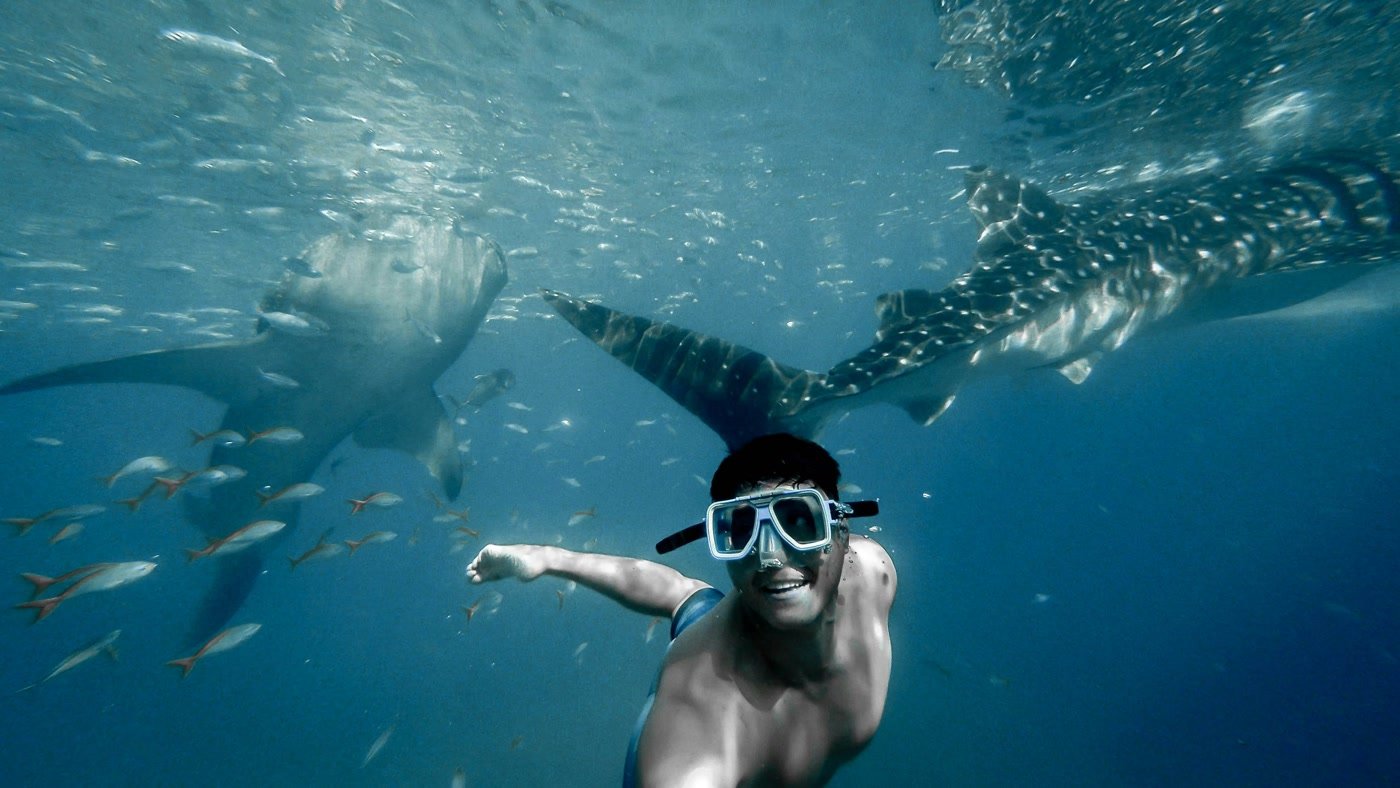
Between March and May, whale sharks visit Sail Rock. If you are on Koh Samui during those months and you freedive, there is a real chance you will be in the water with one.
That sentence still surprises people who have not heard it before. Whale sharks at a dive site accessible from Koh Samui, on a single breath, in 29 degree water. This is not a remote expedition. This is a day trip.
When Whale Sharks Come to Sail Rock
The Gulf of Thailand whale shark season runs roughly March through May, peaking in April. Sightings at Sail Rock have been recorded as early as February and as late as June, but the three month window from March to May is when encounter rates are highest.
The timing correlates with plankton blooms. Whale sharks are filter feeders. They follow plankton concentrations through the Gulf, and Sail Rock sits in the path of those concentrations during this time of year. The same oceanographic conditions that produce the clearest visibility of the year also bring the whale sharks.
In a good April week, multiple sightings at Sail Rock are possible. In a slow week, none. There is no guarantee. Anyone who guarantees a whale shark sighting is not being honest with you. What is accurate is that during peak season, the odds are meaningfully in your favor.
What Sail Rock Looks Like When Whale Sharks Are Present
Sail Rock is a submerged pinnacle rising from 40 meters to just above the surface in the middle of the Gulf of Thailand. The site features a vertical chimney, a swim-through that drops from 5 to about 18 meters, and open water walls that attract large pelagic fish.
Whale sharks at Sail Rock typically appear in the blue water around the pinnacle rather than along the structure itself. They come up from depth, often from below 20 meters, moving slowly through the water column. They do not hide. A whale shark is 4 to 10 meters long. When one appears, visibility permitting, you see it from 20 meters away before it reaches you.
Most encounters last between two and five minutes before the animal continues on its path. Some individuals circle the pinnacle multiple times. A single whale shark might pass the same spot on three or four separate dives within the same morning.
Freediving vs Scuba for Whale Shark Encounters
Most people who see whale sharks at Sail Rock see them on scuba. Scuba is the default for most recreational divers in Thailand. But there is a real argument that freediving produces a better whale shark encounter.
Scuba equipment is loud. The sound of regulators and bubbles carries through water. Whale sharks are not afraid of divers, but they respond to sound. The bubble trail of a group of scuba divers creates a wall of noise that some animals appear to avoid or turn away from.
Freedivers make no sound. No bubbles. No mechanical noise. You enter the water column silently and stay silent for the duration of the dive. This produces a different kind of encounter. Animals behave differently around silent divers. The whale shark continues on its natural path rather than adjusting course in response to noise.
The second difference is freedom of movement. On scuba, you stay at a fixed depth and watch the animal from below or at the same level. On a freedive, you can match the depth of the animal, descend alongside it, ascend with it, and adjust your position in three dimensions. The encounter is participatory rather than observational.
What the Encounter Feels Like
You are hanging in the water at 10 meters, watching the anchor line below you. Your buddy is on the surface, watching from above. The water is blue and clear. Visibility is 20 meters.
Something moves at the edge of your vision. It is too large to be a fish. It takes a moment to understand what you are looking at. Then the white spots register and the scale becomes clear.
A 6 meter whale shark moves past you at 4 meters distance, close enough to read the pattern on its skin, far enough to take in its full length. The pectoral fins are wider than you are tall. The tail moves in a slow, even sweep. The animal has no interest in you. You are a small, silent thing in its path. It passes through your field of vision in about 20 seconds and continues into the blue.
You ascend. Your buddy looks at you from the surface. Nobody says anything for a moment.
That is what the encounter feels like.
Two practical things to know going in. First, depth comfort matters. Whale sharks at Sail Rock typically cruise between 5 and 15 metres. A diver who maxes out at 5 metres sees them from above; a diver comfortable at 10 to 15 metres meets them at eye level. That is exactly why the 10-metre comfort that comes with a Level 1 certification changes the encounter. Second, manage the excitement. A whale shark while freediving is an adrenaline event — your heart rate spikes and your breath hold will suddenly feel shorter. That is normal. The fix is the same relaxation you use on every dive: slow down, stay calm, and do not let the thrill rush you. Your instructor will coach you through it on the trip.
Whale Shark Etiquette at Sail Rock
Whale sharks are protected in Thailand. The rules are simple and exist for good reason.
Do not touch the animal. The white spots on a whale shark are not decoration. They are unique to each individual, like a fingerprint. Touching disrupts the animal and reduces encounter quality for every diver in the water.
Do not chase the animal. If a whale shark is moving away from you, let it go. Chasing causes stress and typically results in the animal diving to depth and leaving the site. The best way to get close is to stay still and let the animal come to you.
Maintain a 3 meter distance from the head and 4 meters from the tail. This is not a rigid rule but a sensible minimum. A whale shark tail can generate real force. Stay clear of it.
Do not use flash photography. Underwater strobes near the face of a large filter feeder serve no one and produce mediocre photos compared to ambient light shots with decent visibility.
These are not bureaucratic rules. They are the difference between a 5 minute encounter and a 90 second one. Animals that are not harassed stay longer.
Your Chances of a Sighting During a Course or Fun Dive
If you take the Beginner Freediving Course in April, your Day 3 dive at Sail Rock falls squarely in peak whale shark season. If conditions are good and the sharks are visiting, your certification dives may include a whale shark encounter.
This is not a guarantee written into the course description. It is a realistic possibility that happens to coincide with learning to freedive for the first time. Several past students have had their first whale shark encounter on Day 3 of the Beginner Course. The combination of earning a certification and seeing a whale shark in the same afternoon is a particular kind of day.
If you book Fun Dives and Coaching during peak season, your dive plan includes Sail Rock specifically for the pelagic encounters. You arrive at the site early in the morning when whale sharks are most active near the surface. Your instructor knows the site and knows where to position you for the best chance of an encounter.
Planning Your Trip Around Whale Shark Season
If whale sharks are the reason you are considering Koh Samui, here is the practical information.
The best months are April and the first half of May. March is productive but less reliable than April. Late May sees a drop in encounter frequency as the animals move deeper into the Gulf.
The best time of day is early morning, between first light and 10am. Whale sharks at Sail Rock feed near the surface during calm morning conditions. By midday, boat traffic increases and the animals tend to move deeper.
Calm sea days are essential. Sail Rock sits in open water. On rough days, the boat trip is unpleasant and surface conditions affect visibility. On calm days, the 90 minute journey is easy and the site is at its best. Check sea conditions before booking.
Peak season coincides with peak booking demand. April especially fills up. If you are planning to be in Koh Samui in April and want to dive Sail Rock, messaging in advance is not optional.
From Koh Samui to Sail Rock
Sail Rock is 90 minutes from the Koh Samui coast by speedboat. Koh Samui is actually closer to Sail Rock than Koh Tao is by most departure points. You leave from the east coast of Samui and arrive at the site before the boats from Koh Tao do.
Early departure means you have the site to yourself in the morning. By the time the dive boat convoys from Koh Tao arrive, you have already completed your most productive dives.
The advantage of arriving first matters more during whale shark season than at any other time. Animals that are undisturbed in the early morning tend to stay near the surface longer. The first boats at the site usually get the best encounters.
A typical day runs like this: meet and brief around 5:30am, depart by 6:00, and reach Sail Rock about 7:30 — ahead of the Koh Tao convoys that usually arrive 8:30 to 9:00. You then have roughly three hours at the site, which works out to around 15 to 20 individual freedives, before heading back and reaching Koh Samui early afternoon. About seven hours door to door, most of the prime whale-shark window spent in clear, quiet water before the crowds.
Book Before Season Peaks
March is the beginning of whale shark season. April is the peak. If you are reading this and you are on Koh Samui or planning to be here before the end of May, this is the window.
Check the Fun Dives and Coaching page if you are already certified and want to dive Sail Rock with an instructor who knows the site. Check the Beginner Freediving Course if you want to learn freediving and time your certification dives with peak season. Check the Discovery Freediving page if you have never tried freediving and want a one day experience at Sail Rock before the season ends.
Message us on WhatsApp to check availability. Sessions fill up in April. Booking now is the practical decision.
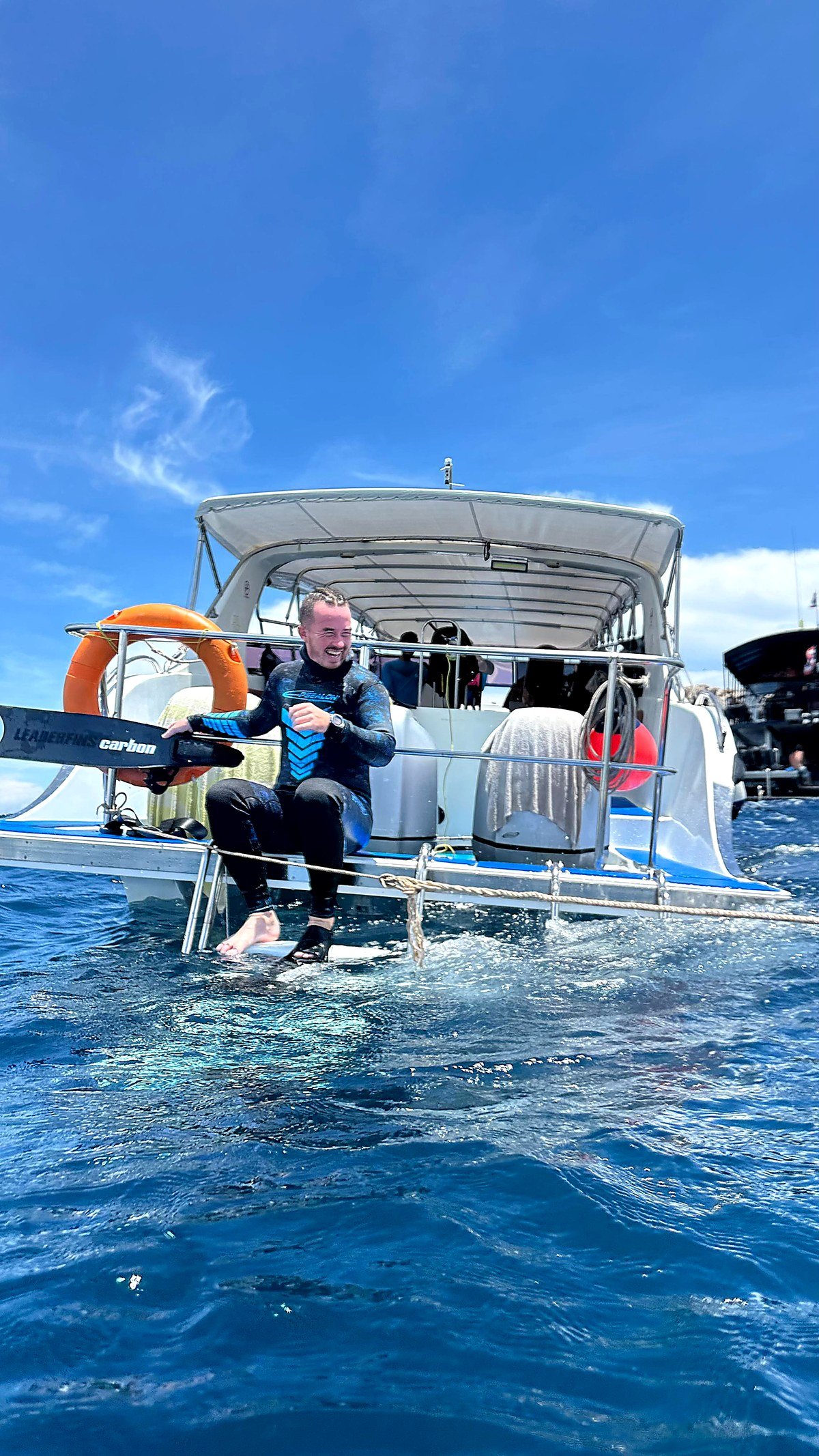
About Diego Pauel
Diego has been teaching freediving from Koh Samui since 2021. He holds instructor certification from Apnea Total and additional credentials across six certification bodies: Oxygen Advantage, Breatheology, International Breathwork Foundation (IBF), Breathing Cold, and GPBA. Plus emergency oxygen administration and first aid.
Learn More →Ready to try freediving?
Message Diego on WhatsApp to check availability for your dates. No deposit needed.
Check Availability on WhatsAppContinue reading
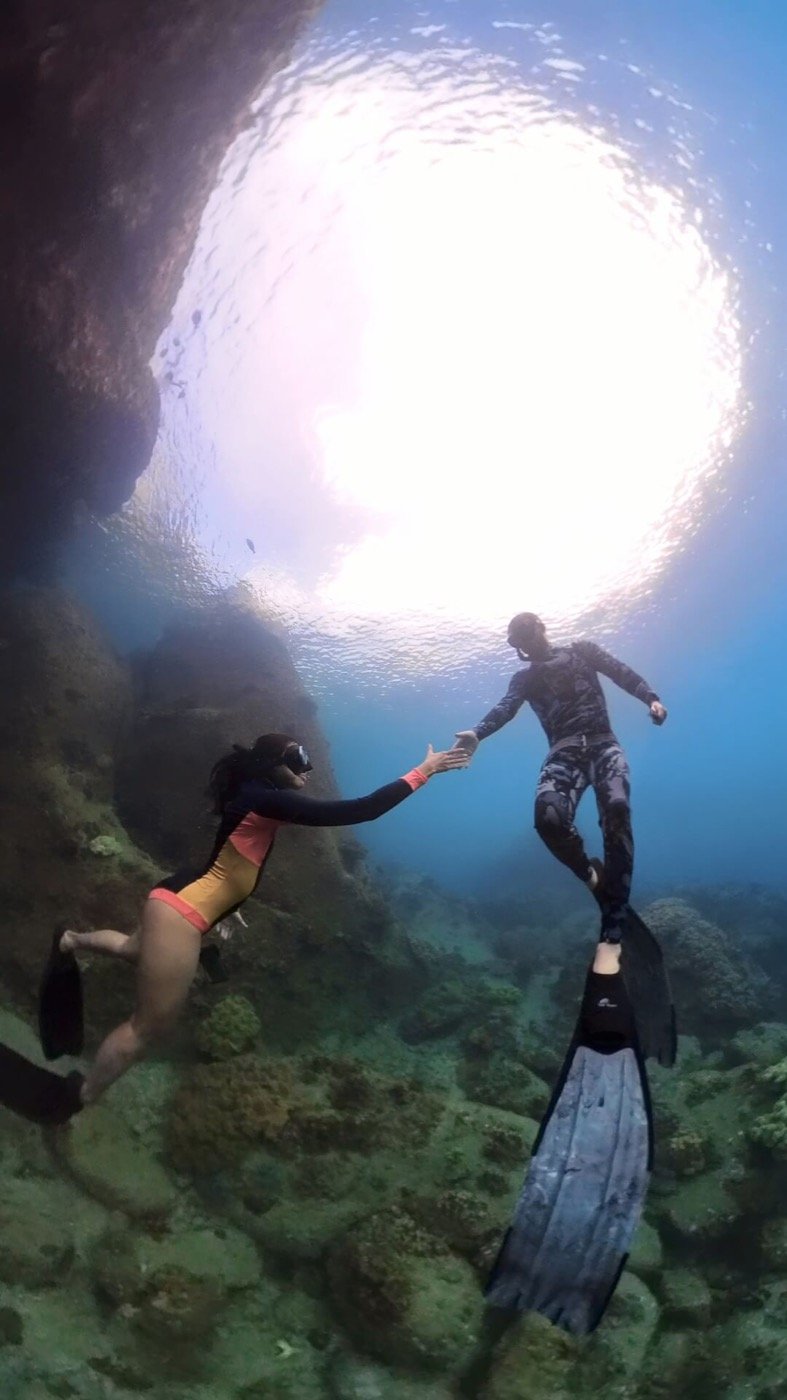
Freediving in Koh Samui: The Complete Guide
Everything you need to know about freediving in Koh Samui. Courses, dive sites, costs, best season, and what to expect f
Read More →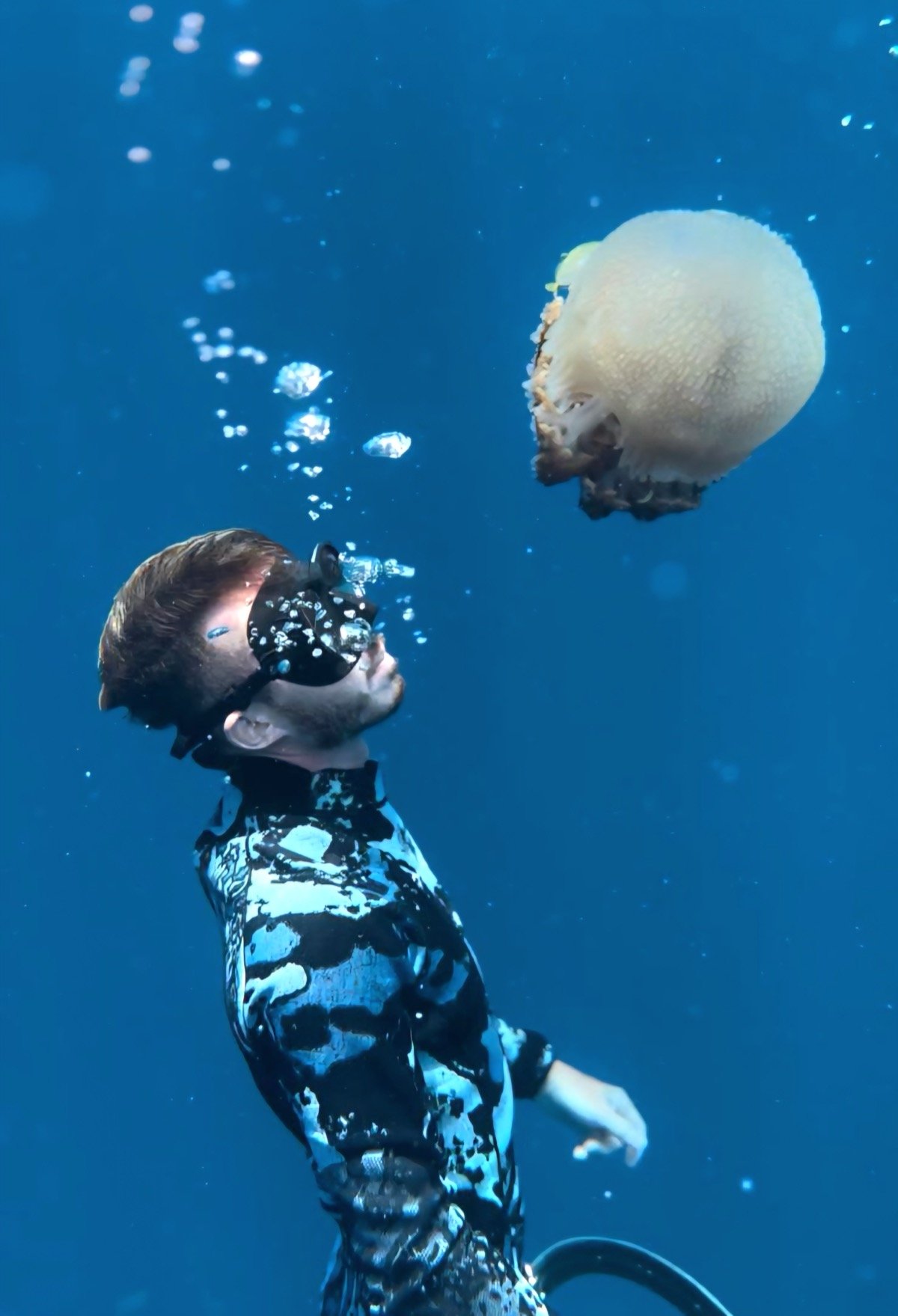
Marine Life You Will See Freediving in the Gulf of Thailand
What marine life can you see freediving in the Gulf of Thailand? Whale sharks, barracuda, sea turtles, batfish, trevally
Read More →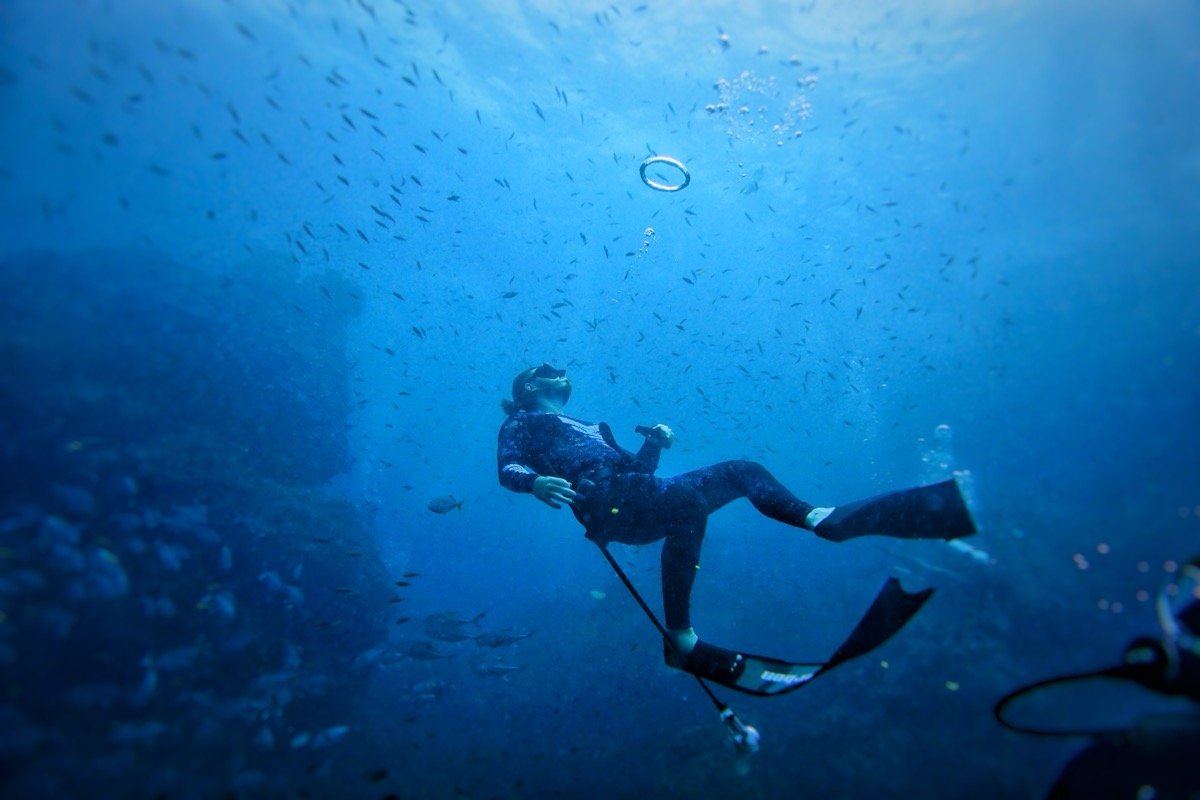
Sail Rock: Why Freedivers Love This Gulf of Thailand Dive Site
Sail Rock is the Gulf of Thailand's best dive site. Discover why freedivers love this submerged pinnacle, what marine li
Read More →