Is Freediving Safe? What You Need to Know
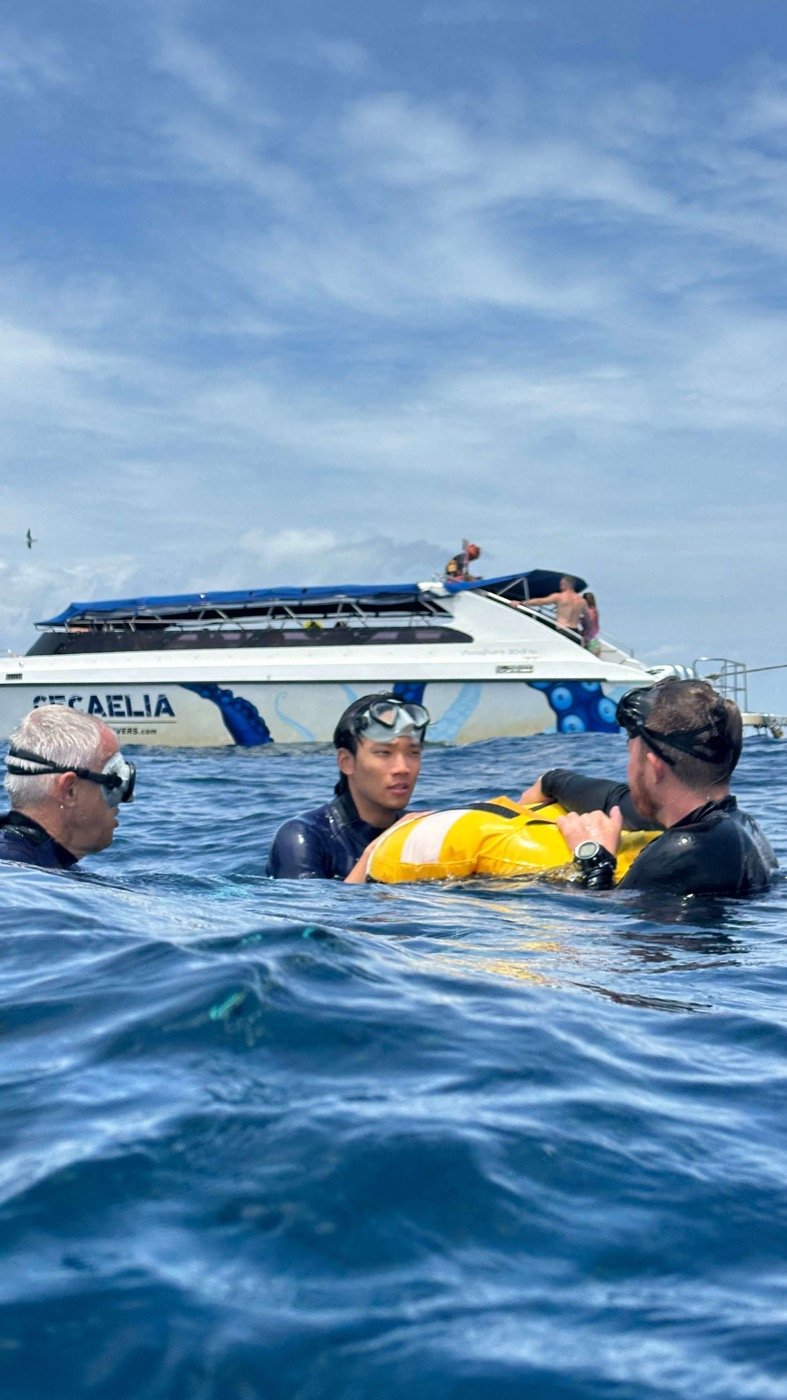
You are thinking about trying freediving and someone has asked you the obvious question: is it safe?
The short answer is yes, when you train with a certified instructor who follows proper safety protocols. The longer answer requires understanding what the actual risks are, how training addresses each one, and what separates a safe freediving school from one cutting corners.
The Real Risks of Freediving
Freediving has risks. Pretending otherwise would be dishonest. But the risks are specific, well understood, and almost entirely preventable with proper training and supervision.
Shallow Water Blackout
This is the risk that makes headlines. A shallow water blackout happens when a diver runs out of oxygen near the surface during the ascent. The diver loses consciousness in the water. If nobody is watching and ready to respond, this can lead to drowning.
Here is the critical detail: shallow water blackouts almost never happen to divers who are properly trained and supervised. They happen to people who practice alone in swimming pools, push beyond their limits without a buddy, or hyperventilate before diving (something every reputable course teaches you never to do).
In a supervised course, your instructor is watching every dive. They position themselves at the depth where blackouts are most likely (the last 5 to 10 meters of ascent) and are ready to assist within seconds. The safety protocols exist specifically for this scenario.
Barotrauma (Pressure Injuries)
As you descend, water pressure increases. Your ears, sinuses, and lungs feel that pressure. If you descend without equalizing (the technique that balances the pressure in your ears), you can damage your eardrums or sinuses.
Equalization is one of the first skills you learn in a freediving course. Your instructor will not let you dive deeper until you can equalize comfortably. Most barotrauma injuries happen to untrained divers who force their way through discomfort instead of stopping and ascending when equalization fails.
The rule is simple: if you cannot equalize, you turn around. No depth target is worth an injury.
Hypoxia and Loss of Motor Control
Before a full blackout, a diver may experience hypoxia: reduced oxygen to the brain that causes loss of fine motor control, tunnel vision, or confusion. This is called a "samba" in freediving terminology. The diver is conscious but cannot swim properly.
A trained buddy or instructor recognizes this immediately. They secure the diver, keep their airway above water, and provide verbal cues until full awareness returns. In a supervised training environment, a samba is a managed event, not an emergency.
Marine Life
In the Gulf of Thailand, dangerous marine encounters are extremely rare. The most common animals you will see at dive sites like Sail Rock are barracuda, batfish, grouper, and occasionally whale sharks. None of these are aggressive toward divers. Jellyfish appear seasonally, and your wetsuit provides protection against stings.
What Makes Freediving Dangerous
The accidents that make news almost always share the same causes.
Diving alone. The single most dangerous thing you can do in freediving is practice without a buddy. Every safety protocol depends on someone being there to respond if something goes wrong. A blackout in a swimming pool with nobody watching is how most fatal freediving accidents happen.
Hyperventilation. Breathing rapidly before a dive does not give you more oxygen. It lowers your carbon dioxide levels, which suppresses the urge to breathe. You feel fine as your oxygen drops because your body's alarm system has been tricked. This is the leading cause of shallow water blackouts among untrained divers.
Ego. Pushing past your limits to hit a number. Ignoring equalization pain. Refusing to end a dive when your body says stop. Competitive pressure or personal pride causes more injuries than the ocean ever will.
No training. Watching YouTube videos and jumping in the ocean is not preparation. Freediving technique, safety protocols, and rescue skills require hands on instruction.
What Proper Safety Looks Like
When you take a freediving course, your instructor should implement specific safety measures. These are not optional extras. They are the baseline standard.
One Up, One Down
While one student dives, another student (or the instructor) watches from the surface. Every dive has a dedicated safety diver. You never dive without someone watching your ascent.
Instructor Positioned at Depth
During training dives, the instructor positions themselves at 5 to 10 meters depth to monitor the final phase of your ascent. This is where blackouts are most likely. They are within arm's reach if anything happens.
Emergency Oxygen
A proper freediving operation carries emergency oxygen on the boat. If a diver experiences a blackout, supplemental oxygen is the first line of treatment. Not every school carries this. Ask before you book.
Recovery Breathing
After every dive, you perform a recovery breathing protocol at the surface. Your instructor monitors you for 30 seconds after surfacing to check for signs of hypoxia. This is standard practice, not paranoia.
Small Group Sizes
An instructor watching 8 students cannot give each diver the same attention as an instructor watching 3. Group size directly affects safety. Smaller groups mean more eyes on each dive, faster response times, and better technique correction before problems develop.
How Training Makes Freediving Safe
A freediving course does not just teach you to hold your breath and swim down. It teaches you the entire framework that makes the sport safe.
You learn to breathe correctly. Diaphragmatic breathing, relaxation protocols, and preparation breathing replace the instinct to hyperventilate. You learn why hyperventilation is dangerous and how to prepare for a dive safely.
You learn equalization. The Frenzel technique lets you equalize pressure in your ears without force. Your instructor watches your equalization on every dive and stops you from descending if you are forcing it.
You learn your limits. A good instructor teaches you to recognize when your body is telling you to stop. The urge to breathe is not an emergency. It is your body's natural alarm clock. You learn the difference between normal discomfort and genuine warning signs.
You learn rescue skills. Every freediving course includes rescue training. You learn how to recognize a blackout, how to secure an unconscious diver, how to manage their airway, and how to provide rescue breaths. These skills protect you and every dive partner you will ever have.
You learn the buddy system. After certification, you will never dive alone. Every freedive involves at least two people: one diving, one watching. This simple rule eliminates the vast majority of fatal freediving incidents.
Questions to Ask Any Freediving School
Before you book a course anywhere in the world, ask these questions.
- What is the maximum number of students per instructor?
- Is there emergency oxygen on the boat?
- Does the instructor hold emergency first aid and oxygen administration certifications?
- What is the rescue protocol if a student has a blackout?
- Will I learn rescue skills as part of the course?
If a school cannot answer these clearly, or if the group size exceeds 4 students per instructor, consider looking elsewhere.
How Safe Is Freediving Compared to Other Activities
Context matters. Freediving has a lower injury rate than surfing, horse riding, recreational cycling, and skiing. A 2023 review of freediving incident data found that the overwhelming majority of fatalities occurred during unsupervised solo practice, not during organized training with certified instructors.
Scuba diving, which most people consider safe, carries its own set of risks including decompression sickness, equipment failure, and air supply management. Freediving removes all equipment complexity. There is no tank to malfunction. No regulator to fail. The simplicity of the sport is itself a safety feature.
This does not mean freediving is risk free. It means the risks are manageable, predictable, and largely within your control when you train properly and follow the protocols.
Safety at Freediving Koh Samui
Here is what we do specifically.
Maximum 3 students per instructor. This is a hard limit, not a guideline. Three students means your instructor watches every second of every dive. Learn more about our Beginner Course or Advanced Course.
Emergency oxygen on every boat trip. Not stored back at the shop. On the boat, ready to use.
Your instructor holds certifications in emergency first aid and oxygen administration from Apnea Total. These are not expired cards from a decade ago. They are current.
Rescue skills are a core part of both the Beginner and Advanced courses. You will practice rescuing your fellow students so that the skill becomes automatic.
No hyperventilation, ever. You will learn proper breathing preparation and understand exactly why hyperventilation is the single most dangerous thing a freediver can do.
No pressure to hit depth targets. Your course has performance standards for certification, but they are achievable for any healthy adult. If you need an extra attempt or a rest between dives, you take it. Safety comes before numbers.
The Bottom Line
Freediving is as safe as the training you receive and the protocols you follow. With a certified instructor, small groups, emergency equipment, and proper supervision, the sport has an excellent safety record.
The people who get into trouble are the ones who skip the training, dive alone, or push beyond their limits without safety coverage. A 3 day course with a qualified instructor is the difference between an educated freediver who dives safely for years and someone taking unnecessary risks in the ocean.
If you want to learn more about the safety protocols used in our courses, or if you have specific health questions about whether freediving is appropriate for you, send a message on WhatsApp. There is no such thing as a silly safety question.
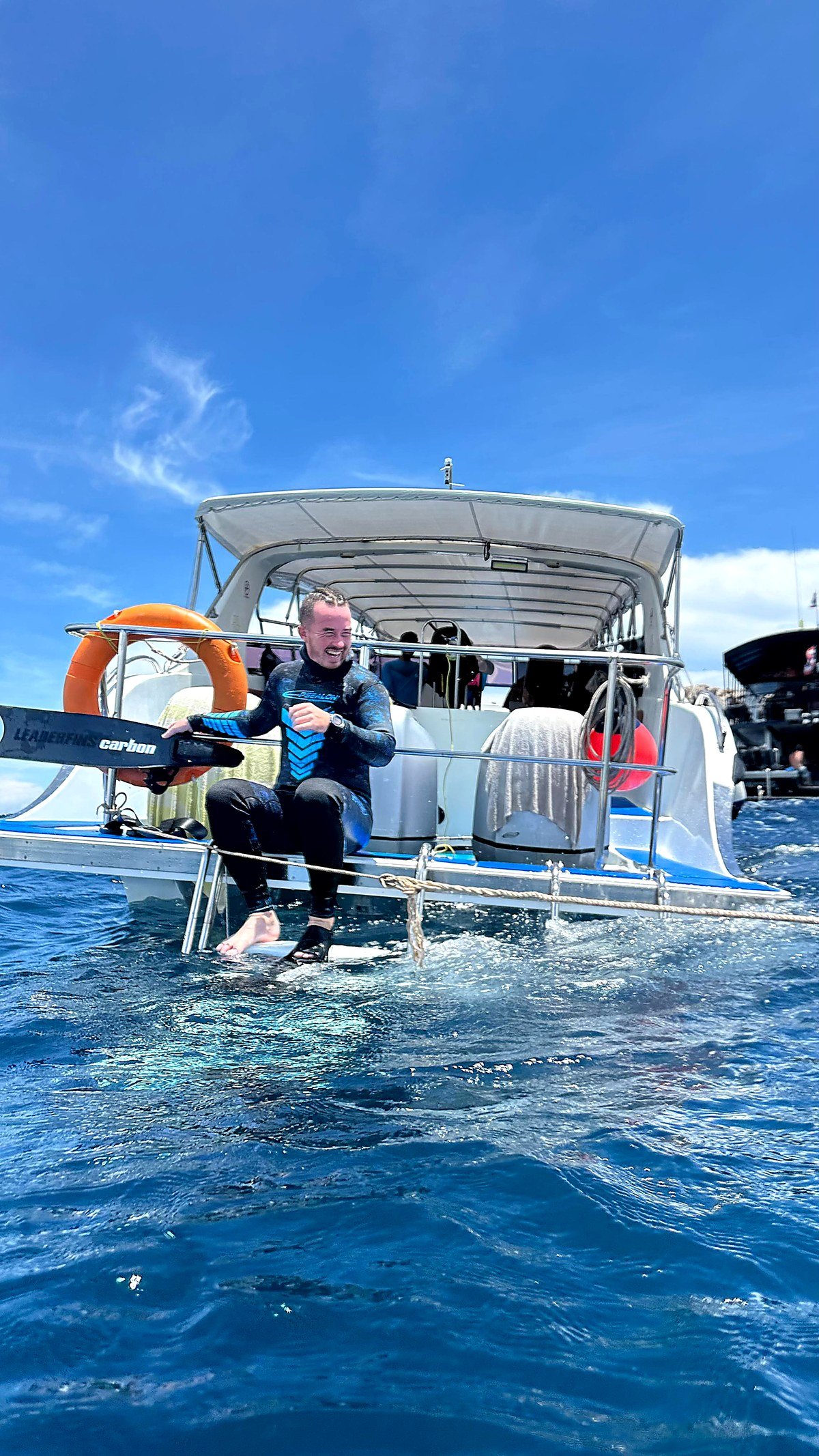
About Diego Pauel
Diego has been teaching freediving from Koh Samui since 2021. He holds instructor certification from Apnea Total and additional credentials across six certification bodies: Oxygen Advantage, Breatheology, International Breathwork Foundation (IBF), Breathing Cold, and GPBA. Plus emergency oxygen administration and first aid.
Learn More →Ready to try freediving?
Message Diego on WhatsApp to check availability for your dates. No deposit needed.
Check Availability on WhatsAppContinue reading
Is Freediving Dangerous? An Honest Answer
Is freediving dangerous? The honest answer from a Koh Samui instructor: the real risk is doing it untrained and alone. D
Read More →
5 Fears Every Beginner Freediver Has (and Why They Are Wrong)
Afraid you cannot hold your breath, equalize, or stay calm underwater? Every beginner freediver has the same 5 fears. He
Read More →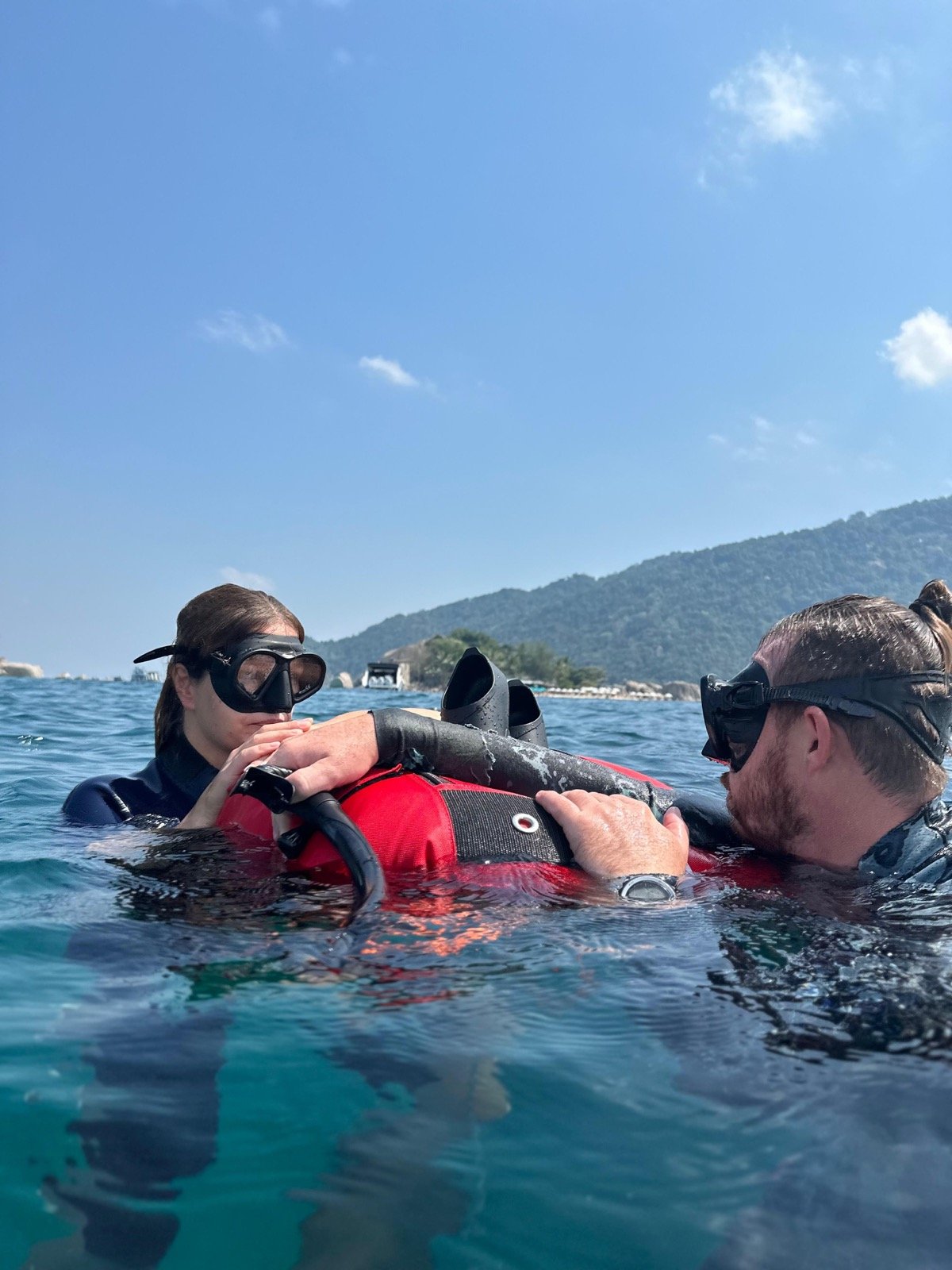
Overcoming the Fear of Deep or Dark Water in Freediving
Scared of deep or dark water? A Koh Samui freediving instructor on why that fear is completely normal, how a dive line a
Read More →