Freediving vs Scuba Diving: Which One Is Right for You
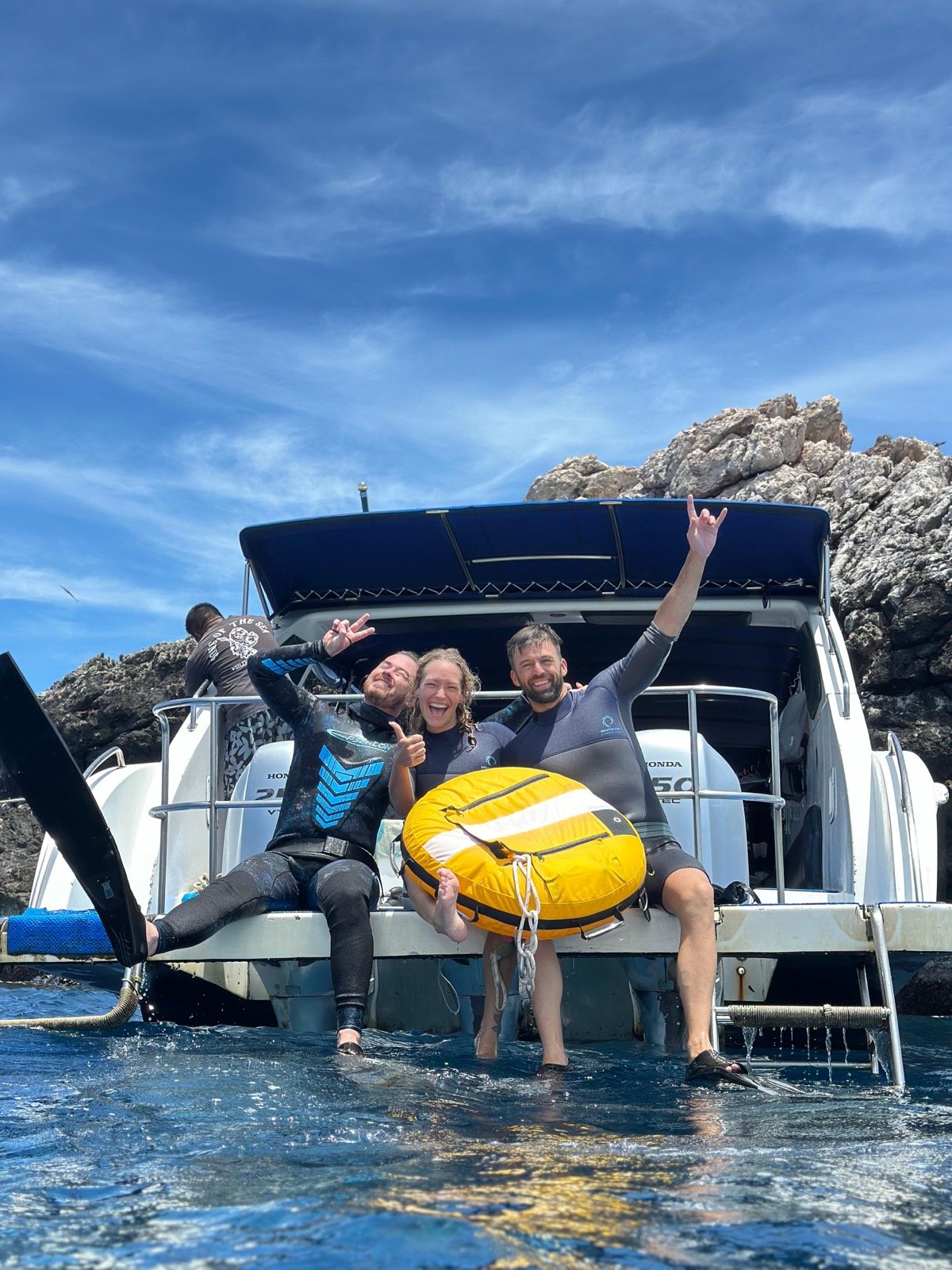
If you are planning a trip to Thailand and want to explore the underwater world, you have two options. Strap on a tank and breathe underwater for an hour. Or take a single breath and dive down on your own power. Both are incredible experiences. They are also fundamentally different in almost every way that matters.
This is an honest comparison. I teach freediving for a living, so my bias is obvious. But I also hold deep respect for scuba diving, and I send students to scuba schools regularly when freediving is not the right fit for them. Both sports deserve a fair look.
The Basic Difference
Scuba diving gives you time. You carry a tank of compressed air, breathe normally, and spend 45 to 60 minutes underwater at depths of 18 to 30 meters. Buoyancy control keeps you hovering at depth without effort. You can stop, observe, take photos, and move slowly through a reef without worrying about your next breath.
Freediving gives you presence. You take one breath at the surface, dive to depth, spend 30 to 90 seconds there, and return. No tank, no regulator, no buoyancy compensator. Just your body, your breath, and the ocean. Each dive is brief. Each dive demands your complete focus.
Scuba is a long conversation with the ocean. Freediving is a series of intense, silent encounters.
Equipment
A scuba diver carries 15 to 25 kg of equipment. Tank, regulator, BCD (buoyancy control device), wetsuit, weight belt, mask, fins, dive computer, sometimes a secondary air source. Setting up takes 10 to 15 minutes. Every piece of equipment needs regular servicing. A full scuba setup costs $1,500 to $3,000 to own.
A freediver carries a mask, a pair of long fins, a wetsuit, and a weight belt. Total weight: about 4 kg. Setup time: under 2 minutes. A complete freediving kit costs $300 to $600. Some beginners start with just a mask and rental fins.
This is one of the things that draws people to freediving. The simplicity. You pack your entire kit in a small bag. There is nothing to assemble, nothing that can malfunction at depth, nothing between you and the water except basic equipment that you can carry with one hand.
Training and Certification
A scuba Open Water certification (PADI, SSI) typically takes 3 to 4 days. You learn equipment assembly, dive planning, buoyancy control, emergency procedures, and how to manage air consumption at depth. The theory component covers gas laws, decompression limits, and the effects of pressure on your body. Certification lets you dive to 18 meters with a buddy.
A beginner freediving course also runs 3 days. You learn breath hold physiology, relaxation techniques, equalization, duck dive technique, and safety protocols including buddy rescue. The theory covers the mammalian dive reflex, oxygen and carbon dioxide dynamics, and how to manage the urge to breathe. Certification lets you dive to 20 meters independently.
The scuba learning curve is technical. You learn to operate equipment, read instruments, and follow procedures. The freediving learning curve is physical and mental. You learn to control your breathing, relax under pressure, and trust your body in an environment where every instinct tells you to go back up.
Cost
A scuba Open Water course in Thailand runs 8,000 to 12,000 THB ($235 to $355 USD). After certification, every dive requires an operator with a boat, a tank, and a guide. A fun dive in Thailand costs 1,500 to 3,500 THB ($45 to $100 USD) per dive. Ongoing costs add up fast: equipment rental, annual servicing, dive travel built around operators and tanks.
A beginner freediving course on Koh Samui runs 9,500 THB ($280 USD) for 3 full days with a maximum of 3 students. After certification, you can dive anywhere there is water. You do not need an operator. You do not need a tank. A certified freediver with their own fins can train at any beach, any coastline, any body of water in the world. Your ongoing costs are essentially zero beyond replacing a mask strap every few years.
Scuba is an ongoing expense. Freediving is a one time investment that opens every coastline on earth.
The Underwater Experience
This is where the comparison gets personal, because the experience is so different that people who love one sometimes cannot understand why anyone would choose the other.
Scuba: The Long Visit
Scuba diving lets you stay. You descend to a coral reef at 15 meters and spend 45 minutes there. You watch a moray eel hunting in a crevice. You hover next to a sea fan while a school of barracuda circles above you. You follow a turtle for 200 meters without rushing. The tank gives you time, and time gives you detail.
The tradeoff is noise. Every breath through the regulator creates a burst of bubbles. Marine life hears you coming. The equipment creates drag. Movement feels mechanical rather than fluid. You are always aware that you are a visitor using technology to be somewhere your body is not designed to go.
Freediving: The Silent Encounter
Freediving gives you silence. Below the surface, there are no bubbles, no hissing regulators, no mechanical sounds. You hear the ocean. The clicking of shrimp. The distant crack of parrotfish biting coral. Your own heartbeat slowing as the mammalian dive reflex kicks in.
Marine life responds to that silence. Fish that scatter from scuba divers hold their position when a freediver glides past. At Sail Rock, freedivers routinely have closer encounters with barracuda, batfish, and whale sharks than scuba divers at the same site. The animals do not associate you with noise and threat.
The tradeoff is time. A freedive to 20 meters lasts about 60 to 90 seconds. You descend, look around, absorb what you can, and return to the surface. Each dive is a single moment of intensity. You see less overall than a scuba diver on the same site, but what you see, you experience completely. There is no multitasking at depth on a single breath.
Safety
Both sports have risks. Both sports are safe when practiced correctly with proper training.
Scuba diving risks include decompression sickness (the bends), air embolism from ascending too fast, and equipment failure. These are managed through dive tables, computer monitoring, and equipment maintenance. The most dangerous moment in scuba is an uncontrolled ascent.
Freediving risks include blackout from low oxygen, which can occur if you push beyond your limits on a breath hold dive. This is managed through conservative depth targets, proper buddy protocols, and never diving alone. The most dangerous thing in freediving is diving without a trained buddy watching from the surface.
Every course I teach includes safety protocols, buddy rescue training, and emergency oxygen on the boat. You learn to recognize the warning signs in yourself and in your dive partner. The goal is not to see how deep you can go. The goal is to dive within your comfort zone and expand that zone gradually over time.
Physical Requirements
For scuba, you need to be comfortable in water and reasonably healthy. Most medical conditions that affect scuba relate to pressure equalization (ear problems, sinus issues) or cardiovascular fitness. You do not need to be a strong swimmer because the BCD keeps you buoyant.
For freediving, you need to swim comfortably in open water without flotation. You do not need to be an athlete. Freediving rewards relaxation over fitness. The calmest student almost always outperforms the fittest student, because relaxation conserves oxygen while effort burns it. If you can swim 200 meters without stopping and float on your back for 10 minutes, you are physically ready for a freediving course.
The biggest physical challenge in freediving is equalization. Clearing your ears as pressure increases with depth. This is a technique, not a strength requirement. Some people pick it up in minutes. Others need practice. A good instructor will spend as much time on equalization as on anything else in the course, because it is the skill that determines how deep you can comfortably go. Our equalization guide covers the basics if you want to start practicing before your trip.
Which One Should You Choose
Choose scuba if you want to spend long periods underwater observing marine life in detail. If your goal is to photograph a nudibranch for 10 minutes or follow a manta ray across a cleaning station, scuba gives you the bottom time to do it. Scuba is also better for deep wreck exploration and technical diving beyond recreational limits.
Choose freediving if you want a more connected, physical, meditative experience in the water. If you are drawn to the idea of diving without equipment, exploring on your own terms, and developing a skill that works anywhere in the world without depending on tanks or operators. Freediving is also ideal if you want to combine diving with other activities. A freediving course on Koh Samui leaves your afternoons free for the rest of the island.
Choose both if you can. Many of the best underwater enthusiasts are certified in both. They scuba dive when they want to spend an hour on a deep reef. They freedive when they want the silence and simplicity. The two complement each other well.
Why Scuba Divers Try Freediving
A surprising number of my students are already certified scuba divers. They come to freediving not because they disliked scuba, but because they want something different. The phrases I hear most often: "I want to feel the ocean without all the gear." "I want to move freely instead of floating at one depth." "I want to hear the silence."
Scuba divers who try freediving often find that their equalization skills transfer directly. Their comfort in open water is already established. The adjustment is mental, not physical. Learning to relax on a breath hold instead of relying on a constant air supply. Learning that 60 seconds of depth can be as rewarding as 60 minutes when you are fully present.
If you are a certified scuba diver visiting Koh Samui and want to try something different, a 3 day beginner course will give you a complete new perspective on the underwater world you already know.
Try Freediving on Koh Samui
If this comparison has you leaning toward freediving, or at least curious enough to try it, Koh Samui is one of the best places in the world to learn. Warm water year round. World class dive sites including Sail Rock. Small groups of maximum 3 students per instructor. And an island with the infrastructure to make your trip comfortable before and after you get in the water.
The beginner course runs Monday to Wednesday every week. No experience needed. Advanced courses run Tuesday to Thursday for certified freedivers who want to push deeper. Guided fun dives are available on request for anyone who is already certified and wants to explore Sail Rock or Koh Tao's best sites.
Read the complete guide to freediving in Koh Samui for everything else you need to plan your trip. Or message us on WhatsApp to check available dates. No deposit required.
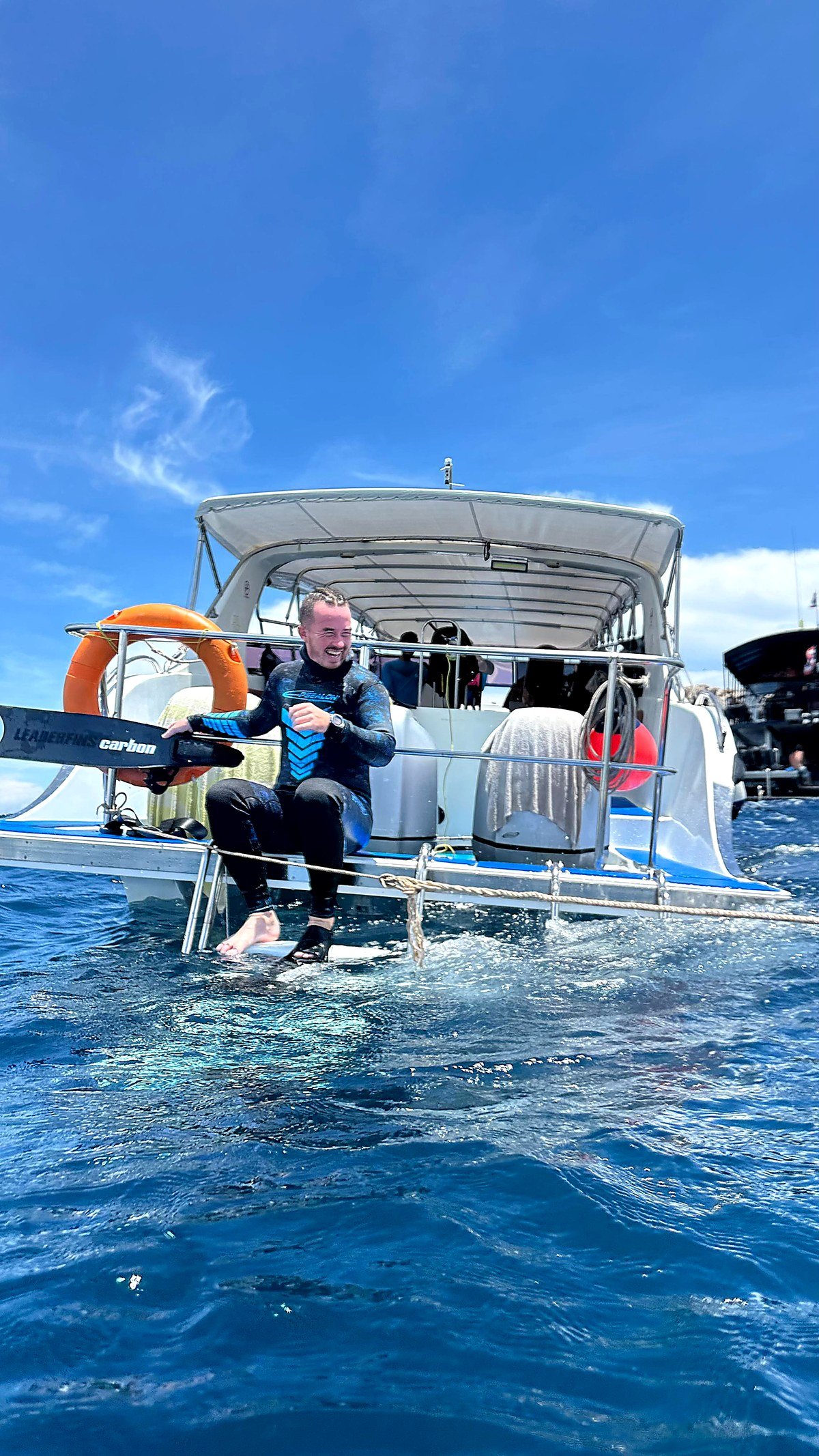
About Diego Pauel
Diego has been teaching freediving from Koh Samui since 2021. He holds instructor certification from Apnea Total and additional credentials across six certification bodies: Oxygen Advantage, Breatheology, International Breathwork Foundation (IBF), Breathing Cold, and GPBA. Plus emergency oxygen administration and first aid.
Learn More →Ready to try freediving?
Message Diego on WhatsApp to check availability for your dates. No deposit needed.
Check Availability on WhatsAppContinue reading
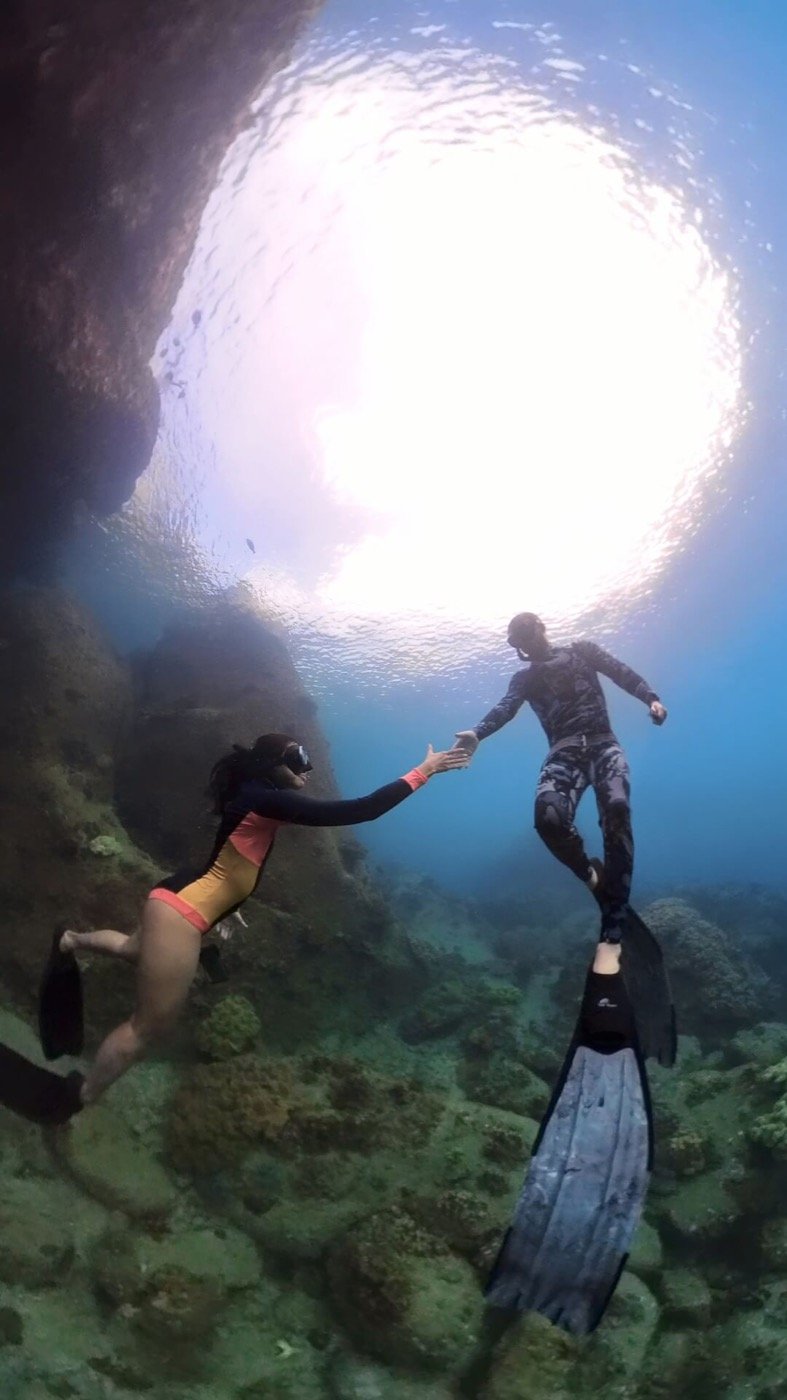
Is Koh Samui Good for Freediving?
Yes. Koh Samui has warm 28-29C water year round, sits closer to Sail Rock than Koh Tao does, and has one dedicated freed
Read More →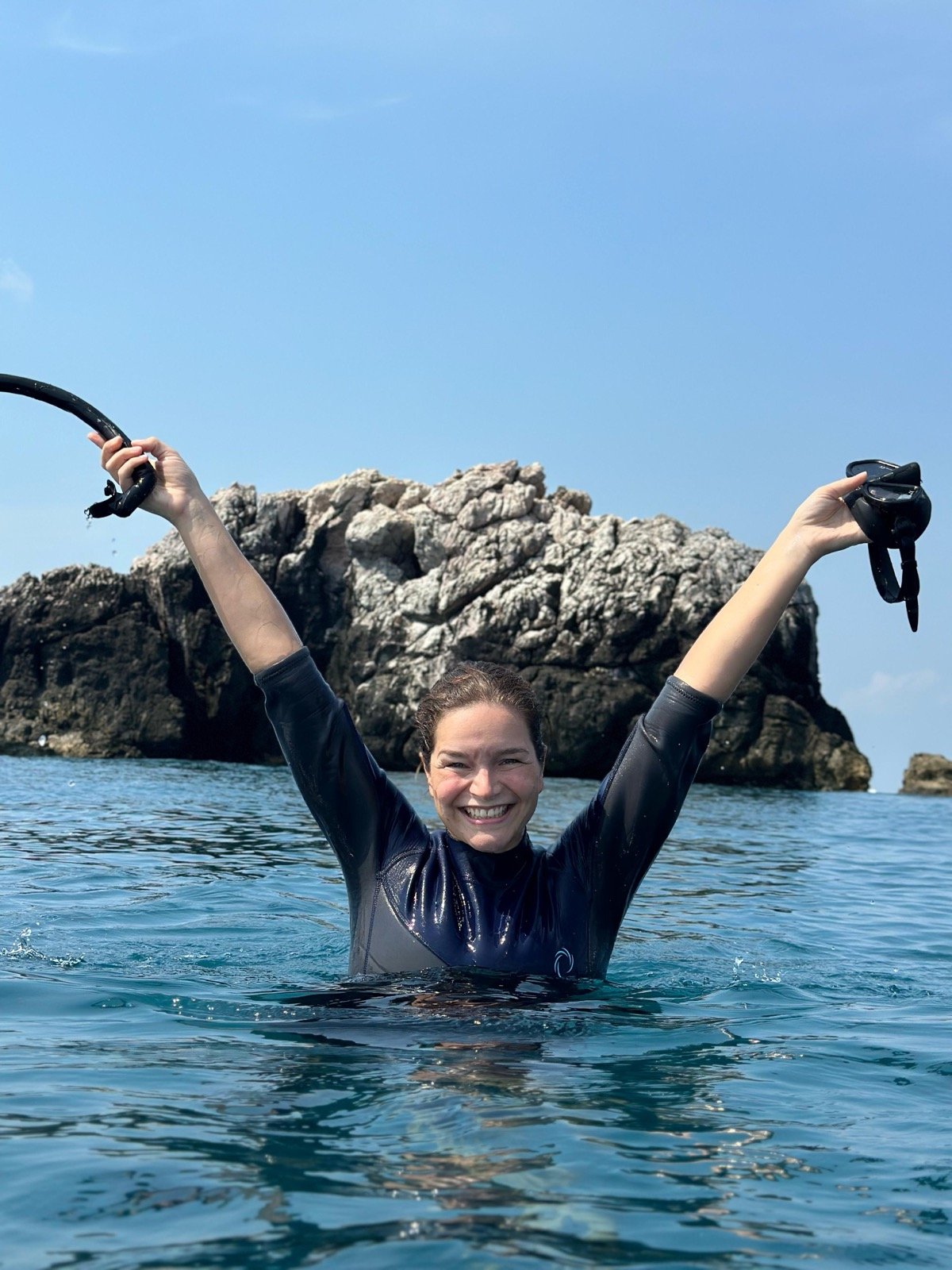
Freediving in Koh Phangan vs Koh Samui: Which Should You Choose?
Thinking about freediving in Koh Phangan? Honestly, Koh Phangan has almost no dedicated freediving schools — most dive
Read More →
Freediving Certifications Compared: AIDA vs PADI vs Apnea Total
AIDA vs PADI vs Apnea Total: a detailed comparison of the three major freediving certification agencies. Course structur
Read More →