What to Expect from a Freediving Course in Thailand
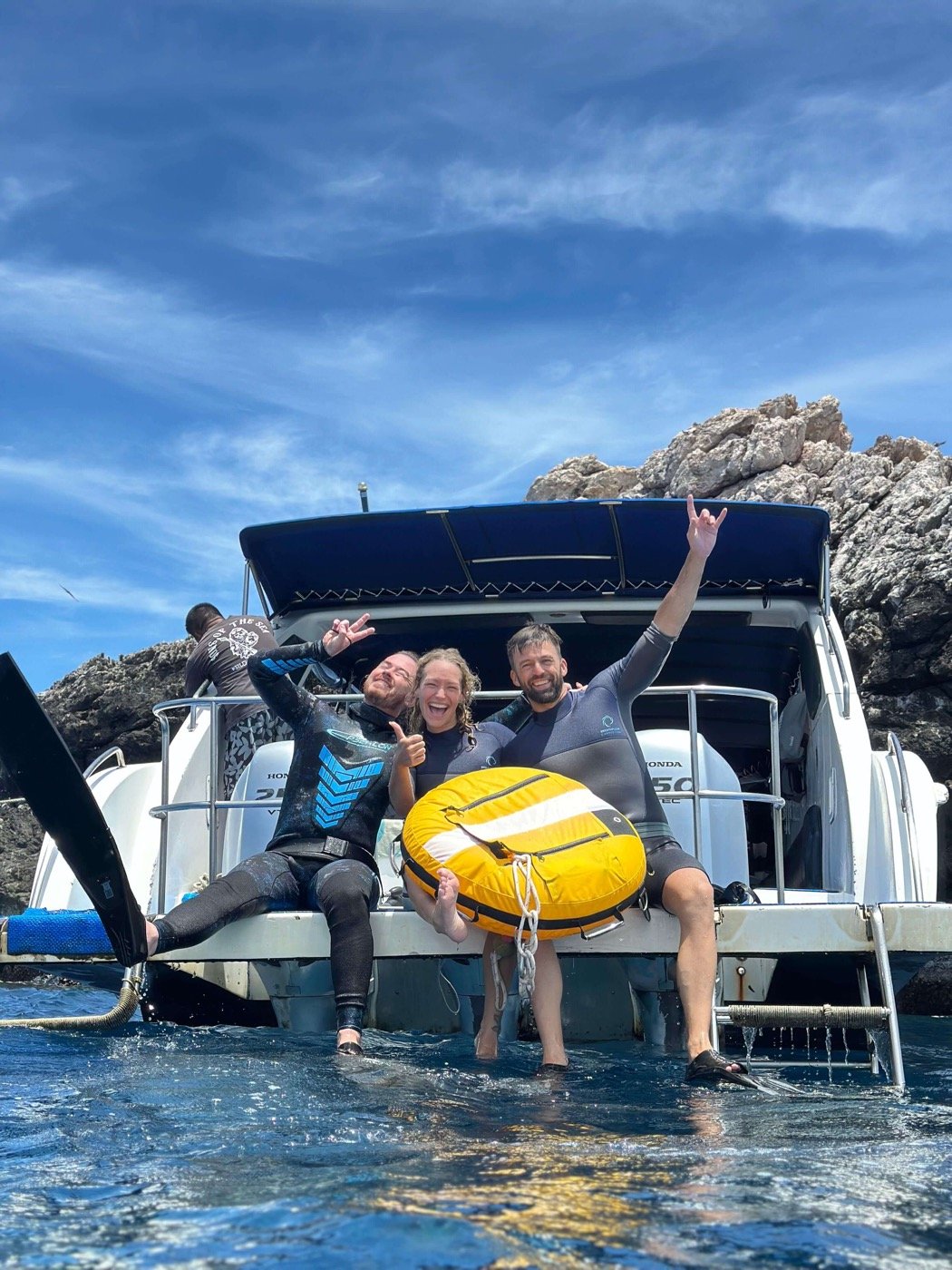
You have decided to take a freediving course in Thailand. You have booked your flights, you know which island you are going to, and now you are wondering what actually happens during the course. What will you learn? How deep will you go? Will you be able to do it?
This is a straightforward breakdown of what a typical 3 day beginner freediving course looks like, based on how we run courses on Koh Samui.
Before the Course
Most schools will ask you to fill out a medical questionnaire and sign a liability waiver. This is standard across all certification agencies. If you have asthma, heart conditions, epilepsy, or recent ear surgeries, mention these upfront. Some conditions are contraindicated for freediving. Most are not, but your instructor needs to know.
There is no fitness test. You do not need to be an athlete. If you can swim 200 meters without stopping and float comfortably in water out of your depth, you have the physical requirements covered. Freediving is built on relaxation, not strength.
The night before your course, eat a normal dinner, drink plenty of water, and get a full night of sleep. Avoid alcohol for at least 24 hours. Dehydration makes equalization harder and alcohol disrupts the quality of your sleep. Both will affect your performance on Day 1.
Day 1: Theory and Confined Water
Day 1 typically splits into a morning theory session and an afternoon in the water.
Morning: Theory
You will cover the science behind freediving. This includes:
- How your body responds to holding your breath (the mammalian dive reflex)
- What happens to your lungs, ears, and sinuses as pressure increases with depth
- Why you feel the urge to breathe and what that urge actually means
- Diaphragmatic breathing and how to prepare for a dive
- Equalization technique (Frenzel method) and why it matters
- Safety protocols: the buddy system, one up one down, recovery breathing, rescue procedures
- Why hyperventilation is dangerous and how to avoid it
The theory session usually runs 2 to 3 hours. It is not a university lecture. Your instructor will use diagrams, demonstrations, and practical exercises to keep it engaging. By the end, you will understand what is happening in your body during every phase of a freedive.
Afternoon: Confined Water
You get in the water for the first time. In Thailand, confined water training usually happens in a sheltered bay or shallow reef rather than a swimming pool. The water is warm (28 to 30 degrees), calm, and shallow enough to stand.
You will practice:
- Static apnea. Floating face down at the surface and holding your breath. Your instructor talks you through the relaxation sequence and monitors your time. Most students surprise themselves by holding their breath for 2 to 3 minutes on the first attempt.
- Breathing preparation. The specific sequence of breaths you take before every dive. This becomes automatic by Day 3.
- Equalization on land and in shallow water. Pinching your nose and pushing air into your ears. Your instructor checks your technique before you attempt any depth.
- Duck dive. The surface maneuver that starts every freedive. You bend at the waist, kick your legs straight up, and let gravity pull you down. It takes a few tries to get right.
- Rescue skills. How to grab an unconscious diver at depth, bring them to the surface, manage their airway, and perform rescue breaths. You will practice this on your fellow students.
Day 1 ends with you feeling surprised at how long you can hold your breath and slightly awkward at duck diving. Both are normal.
Day 2: Open Water
Day 2 is when the course becomes real. You leave the shallows and head to open water, either from the beach or by boat depending on the school and location.
You will dive along a line (a rope that runs from a buoy at the surface down to 20 or 30 meters depth). The line is your guide. You follow it down, equalize as you go, and follow it back up. Your instructor is in the water with you, either at depth watching your ascent or at the surface timing your dive.
What a Training Dive Looks Like
You float at the surface next to the line. You perform your breathing preparation. When you are ready, you give your instructor the OK signal. You duck dive, grab the line, and begin pulling yourself down.
At 5 meters, you equalize. At 10 meters, you equalize again. The pressure feels different now. Everything is quieter. The surface light fades slightly. You keep pulling down the line, equalizing every meter or two.
When you reach your target depth (or when equalization stops working), you turn around. The ascent is the important part. You swim up smoothly, exhale as you approach the surface, and perform your recovery breathing protocol the moment your face breaks the water.
Your instructor is right there. They watch your eyes, your breathing, your body language. They give you the OK signal. You respond. The dive is done.
Then you debrief. What depth did you reach? How did equalization feel? Were you relaxed or tense? What can you improve on the next dive?
Typical Depths on Day 2
Most students reach 10 to 15 meters on Day 2. Some reach 20 meters by the end of the day. A few struggle with equalization and stay around 8 to 10 meters. All of these are normal. Depth comes with practice, and the course gives you the tools to continue improving after certification.
Day 3: Dive Site Training
Day 3 is the highlight. Most courses in Thailand include a boat trip to a real dive site for the final day of training.
On Koh Samui, Day 3 usually means a trip to Sail Rock or one of the Koh Tao sites. You leave early in the morning, arrive at the site, and spend 3 to 4 hours alternating between depth training on the line and exploration freedives around the reef or pinnacle.
This is where everything clicks. The theory you studied on Day 1, the skills you drilled on Day 2, now you apply them at a world class dive site surrounded by marine life. You dive down the line to your target depth, then you swim along the reef watching schools of barracuda sweep past.
Day 3 is the day students remember. It is the moment freediving stops being a skill you are learning and becomes an experience you want to repeat.
Certification Dives
Your certification dives usually happen on Day 2 or Day 3. For a beginner certification (Apnea Total Level 1, AIDA 2, or equivalent), you typically need to demonstrate:
- A constant weight dive to 12 to 20 meters (varies by agency)
- A static breath hold of 1.5 to 2 minutes
- A rescue simulation
- Correct safety protocols (recovery breathing, buddy procedures)
These targets are achievable for most healthy adults by the end of 3 days. If you need an extra attempt, you take it. Nobody fails a freediving course for being slow. You only fail by being unsafe.
What You Will Need to Bring
Most schools in Thailand provide all diving equipment. Here is what you should bring:
- Swimsuit and towel
- Reef safe sunscreen
- Water bottle (at least 1 liter)
- Light snacks for the boat
- Seasickness medication if you are prone to motion sickness
The school provides mask, snorkel, long fins, wetsuit, weight belt, and weights. You do not need to buy or bring any diving equipment.
What Certification Gets You
After completing the course, you receive a freediving certification card (Apnea Total, AIDA, SSI, or whichever agency the school is affiliated with). This card is recognized internationally and allows you to:
- Rent freediving equipment at dive shops worldwide
- Book guided fun dives and advanced courses at any school
- Join freediving groups and clubs that require certification
- Prove your training level if diving with a new buddy
The certification does not expire, but it does not replace ongoing practice. The skills you learn in 3 days need regular repetition to stay sharp.
Common Concerns
"I am not a strong swimmer"
You do not need to be. Freediving uses long fins that generate thrust with minimal effort. The technique is a slow, relaxed kick, not a sprint. If you can swim and float comfortably, you can freedive.
"I cannot hold my breath for more than 30 seconds"
Neither can most people before they learn diaphragmatic breathing and relaxation techniques. Your breath hold on Day 1 of the course will be double or triple what it is right now. The breathing preparation protocol makes an enormous difference.
"I am scared of deep water"
This is more common than you think, and it is not a reason to skip the course. Most people who are nervous about depth find that the gradual progression (shallow water on Day 1, guided line dives on Day 2, open water on Day 3) dissolves the fear. You control the pace. If 10 meters is your limit, you dive to 10 meters. Nobody pushes you deeper than you want to go.
"Will I get seasick on the boat?"
Thailand's dive boats range from small longtails to larger speedboats. If you are prone to seasickness, take medication before boarding. Ginger tablets and acupressure wristbands also help. The boat rides are typically 45 to 90 minutes. Once you are in the water, seasickness disappears.
How to Choose a School in Thailand
Thailand has freediving schools on Koh Tao, Koh Samui, Koh Lanta, Koh Phi Phi, Phuket, and a few other locations. Here is what to look for:
- Maximum group size. Smaller is better. 4 students or fewer per instructor is ideal. Anything above 6 is a crowd.
- Course duration. 3 days gives you more practice time and depth progression than a compressed 2 day course.
- Safety equipment. Emergency oxygen on the boat is non negotiable.
- Instructor credentials. Check their certification level and agency affiliation. An instructor level certification (not just a divemaster or assistant) should be the minimum.
- Transparent pricing. The price should include all equipment, certification, and boat trips. Hidden fees are a red flag.
What Happens After the Course
You leave with a certification, a set of skills, and probably a new obsession. Most students immediately want to dive more. The course gives you the foundation, but real progression happens through continued practice.
Many students return for an advanced course (Level 2) within months. Others start freediving recreationally wherever they travel, renting equipment and diving with local buddies. Some discover spearfishing, underwater photography, or competitive freediving.
The important thing is to keep diving with a buddy and keep practicing the safety skills you learned. Freediving gets better the more you do it, and Thailand is one of the best places in the world to do it.
Ready to Book
If you are coming to Koh Samui and want to take a freediving course, send a WhatsApp message to check dates and availability. The Beginner Course runs every Monday to Wednesday with a maximum of 3 students. No deposit required to hold a spot.
About Diego Pauel
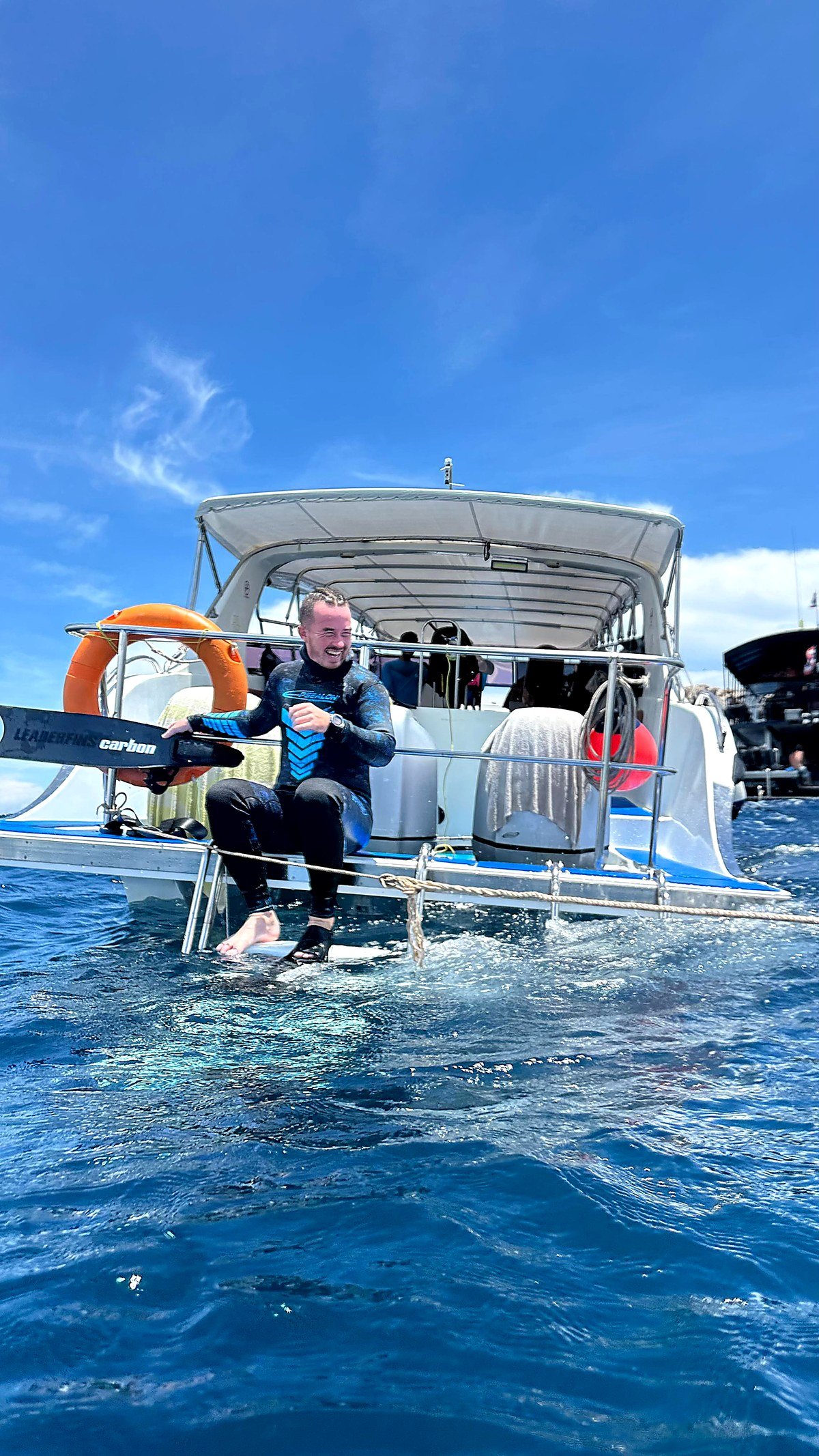
Diego has been teaching freediving from Koh Samui since 2021. He holds instructor certification from Apnea Total and additional credentials across six certification bodies: Oxygen Advantage, Breatheology, International Breathwork Foundation (IBF), Breathing Cold, and GPBA. Plus emergency oxygen administration and first aid.
Learn More →Ready to try freediving?
Message Diego on WhatsApp to check availability for your dates. No deposit needed.
Check Availability on WhatsAppContinue reading
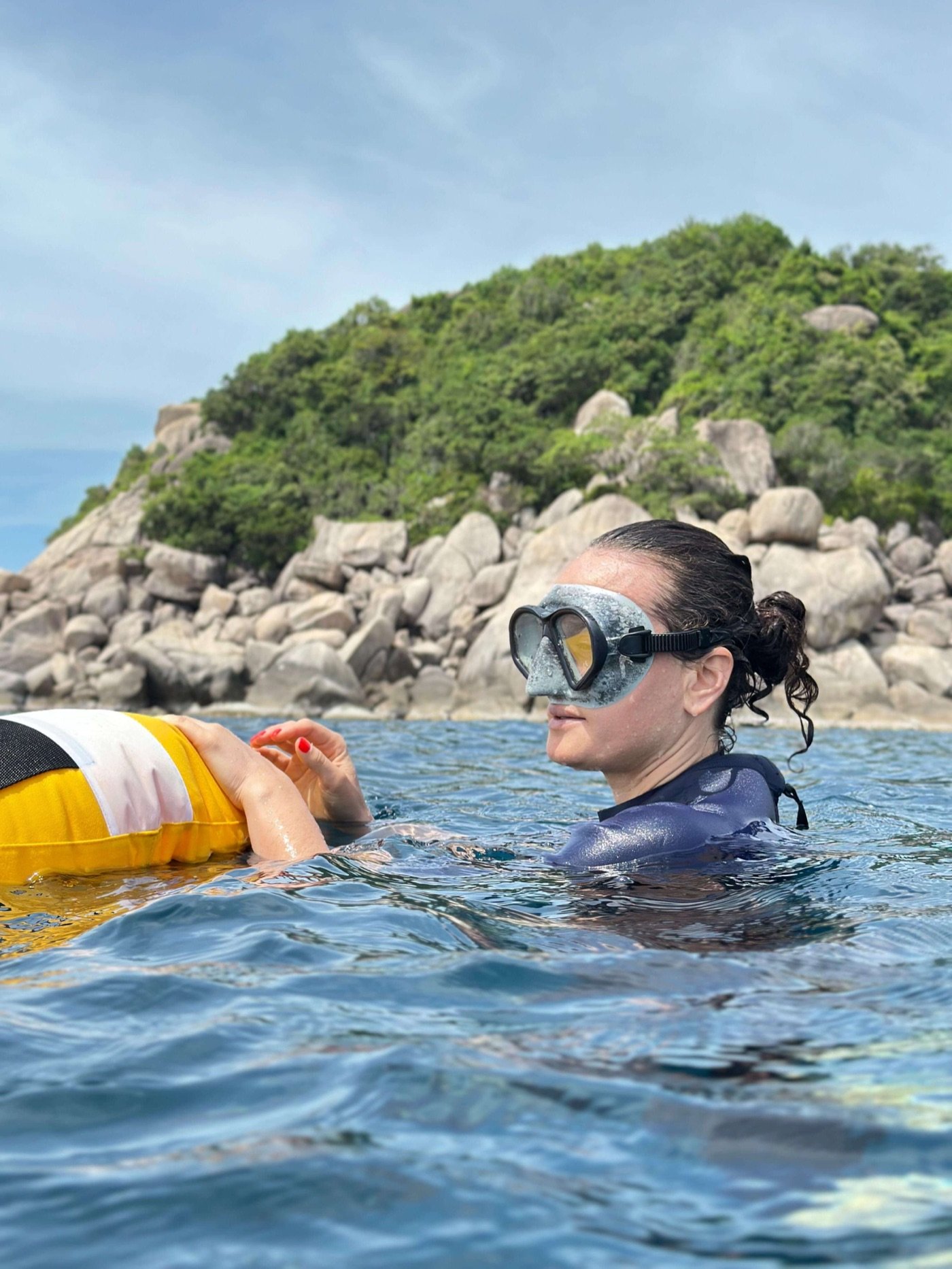
Can You Freedive If You Are Not a Strong Swimmer?
Can you freedive if you are not a strong swimmer? Honest answer from a Koh Samui instructor: you need basic comfort in d
Read More →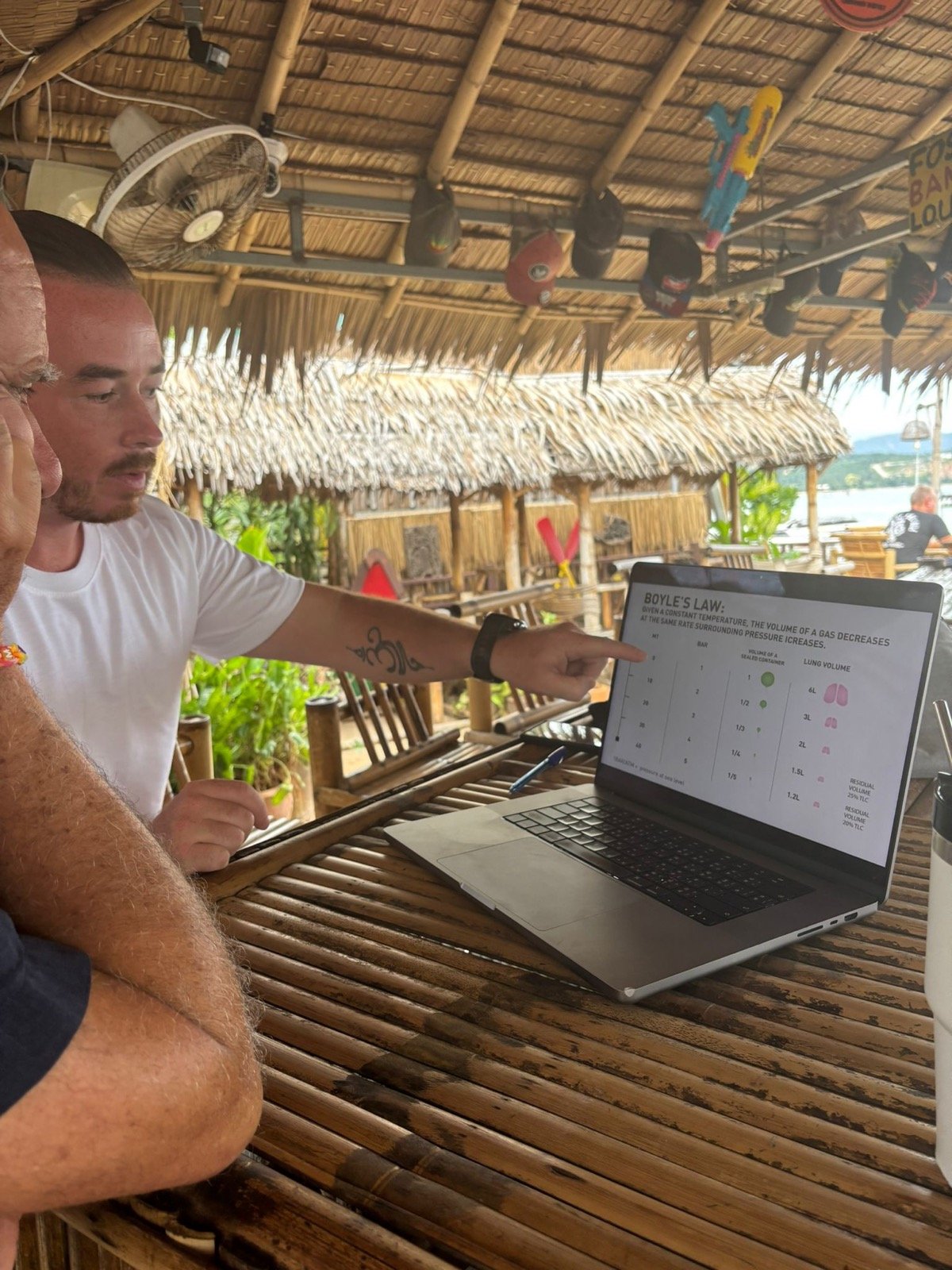
What a Freediving Course Day Actually Looks Like, Hour by Hour
Wondering what a day on a freediving course really looks like? Here is the honest hour by hour rundown from a Koh Samui
Read More →
How Yoga and Breathwork Actually Help Your Freediving
Do yoga and breathwork really help your freediving? Honest take from a Koh Samui instructor: yes, but not in a mystical
Read More →