Why I Teach Freediving in Koh Samui
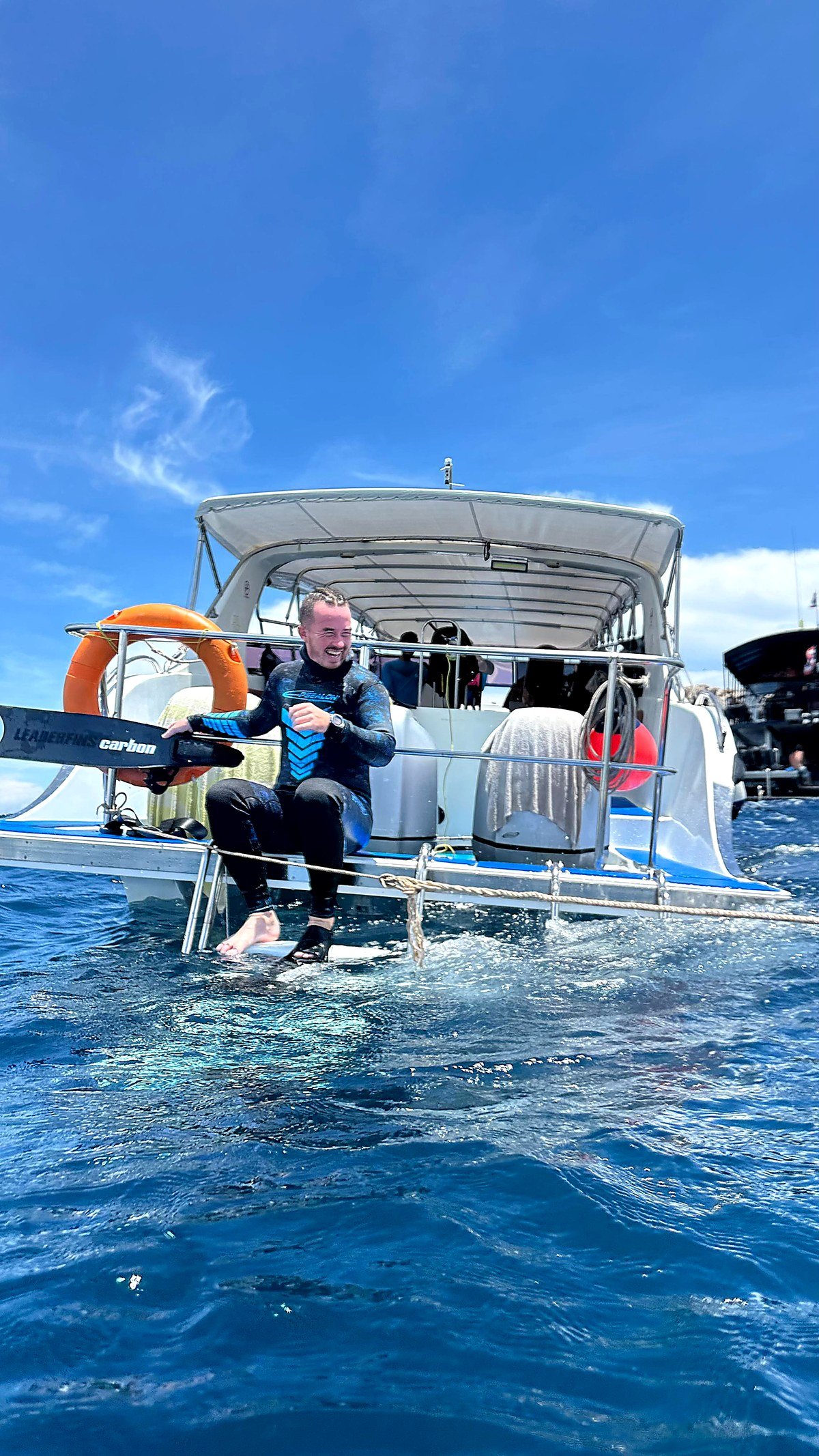
Most of the posts on this blog are practical. How to equalize. What to expect from a course. When to visit. This one is different. This is the story of why I do what I do, why I do it here on Koh Samui, and what keeps me in the water every week.
If you are researching freediving instructors in Thailand and want to know who will be teaching you, this is the post that answers that question.
How I Found Freediving
I did not start in the water. I started with breathwork. Years of studying how breathing affects the nervous system, how it changes the way people process fear, how a single exhale can shift someone from fight or flight into calm. I trained under different schools and traditions. Wim Hof method, Oxygen Advantage, Breatheology. Each system taught me something different about what the breath can do when you learn to use it deliberately.
Freediving was the natural next step. Everything I had studied on land, the breath holds, the relaxation, the mental control, came alive in the water. On land, a 3 minute breath hold is an exercise. Underwater, that same 3 minutes takes you 20 meters below the surface into a world most people never see. The discipline was the same. The context changed everything.
I certified as an Apnea Total freediving instructor and started teaching on Koh Samui in 2021. Five years later, I am still here. Still teaching. Still diving every week.
Six Certification Bodies and What They Taught Me
People sometimes look at my certifications and ask why six. Apnea Total, Oxygen Advantage, Breatheology, International Breathwork Foundation, Breathing Cold, GPBA. The honest answer is that no single system has all the answers.
Apnea Total gave me the freediving instructor framework. The course structure, the safety protocols, the depth progression methodology. It is the backbone of every course I teach. But it does not cover functional breathing assessment the way Oxygen Advantage does. Patrick McKeown's system taught me how to evaluate a student's baseline breathing pattern before they ever get in the water. Some students show up breathing 18 times a minute through their mouth. They need breathing correction before they need a freediving lesson.
Breatheology, developed by Stig Severinsen who holds four world records, taught me the mental game at depth. How to manage the urge to breathe. How to train focus so intensely that the body's alarm signals become information rather than panic triggers. Breathing Cold taught me cold exposure and resilience. The International Breathwork Foundation grounded me in the therapeutic side of breath practice. GPBA expanded my understanding of competitive performance training.
Each system contributed a different tool. When I teach a beginner freediving course, you get the benefit of all six, filtered through 5 years of figuring out what actually works for students who are holding their breath underwater for the first time.
Why I Teach Instead of Just Diving
I love freediving. The quiet, the weightlessness, the focus it demands. But the reason I teach is not that I love diving. The reason I teach is what I saw happening at other schools.
I trained at schools where instructors managed 6, 7, 8 students at once. The instructors were skilled. The curriculum was solid. But the attention was spread so thin that students were making the same mistakes on Day 3 that they made on Day 1. Nobody corrected their duck dive because the instructor was watching 5 other students at the same time. Nobody fixed their equalization timing because there was not enough time between dives to give everyone individual feedback.
I watched students leave those courses with certifications but without confidence. They could technically dive to the required depth under controlled conditions, but they did not feel ready to dive independently. Something was missing. That something was attention.
The moment I decided to teach, I made one rule: maximum 3 students. That number is not arbitrary. Three is the most students I can watch simultaneously during a depth dive while still catching the small things. The slight tension in your shoulders on the breathe up. The early head lift during your duck dive. The equalization timing that falls apart below 12 meters. Those details are invisible from the back of a group of 8. With 3 students, I see everything.
The Max 3 Rule
Every school talks about personal attention. The difference is math. With 3 students diving in rotation, each person makes roughly 8 to 10 depth dives per open water session. After each dive, I give specific feedback. Not "good dive" but "your duck dive was clean, your equalization was smooth to 8 meters, then you started rushing the Frenzel between 8 and 12. On the next dive, slow down your equalization cycle in that zone and you will go deeper without effort."
That level of detail requires watching one dive at a time. It requires knowing what each student's pattern looks like after 15 dives so I can spot when something changes. It requires remembering that Student A struggles with equalization below 10 meters while Student B has clean equalization but tenses their legs on the turn at the bottom.
With 3 students, I carry all of that in my head across a full day of diving. With 6 or 8, it becomes impossible. The instruction becomes generic. "Nice dive. Go deeper next time." That is not teaching. That is supervision.
I could make more money running groups of 6. I choose not to. The max 3 rule is the foundation of everything I do, and I will not change it.
Why Emergency Oxygen Matters to Me
Every training boat carries emergency oxygen. I hold both emergency first aid and oxygen administration certifications. Every student learns the rescue protocol. This is not a selling point. It is a baseline.
Freediving is a safe sport when practiced correctly. The incident rate for supervised training is extremely low. But "low" is not zero, and the margin between a minor issue and a serious one is measured in how fast the response happens. A diver who experiences a loss of motor control at the surface needs oxygen within seconds, not minutes. That oxygen needs to be on the boat, assembled, and ready to deliver. Not back at the dock.
Some schools in Thailand operate without emergency oxygen on the training boat. Some do not carry it at all. I do not understand that calculation. The cost of a complete oxygen kit is less than the revenue from a single course. The weight on the boat is negligible. The only reason not to carry it is if safety is not actually a priority.
Every course I teach, the oxygen kit sits within arm's reach of where students surface. Every single time. That is not negotiable.
Why Koh Samui
I could teach on Koh Tao. More dive schools, more foot traffic, more backpackers looking for a quick certification. I chose Koh Samui for three reasons.
First, the dive sites. Sail Rock, the most spectacular underwater pinnacle in the Gulf of Thailand, is closer to Koh Samui than to Koh Tao. One hour by speedboat from Samui versus 90 minutes from Koh Tao. And when we arrive at Sail Rock from Koh Samui, we arrive before the Koh Tao boats. We have the site to ourselves in the early morning when the water is calmest and visibility is best. That matters when you are teaching someone to dive to 20 meters for the first time.
Second, the island infrastructure. Koh Samui has an international airport with direct flights from Bangkok, Singapore, and Hong Kong. Reliable wifi for evening theory sessions. Hospitals with international standards if anything goes wrong. Restaurants that go far beyond the backpacker fare of smaller islands. When students fly in for a course, their experience is not just the diving. It is the whole week. Koh Samui makes that week comfortable.
Third, the space. Koh Tao has 10+ competing freediving schools sharing the same training sites. On a busy morning, there are 40 to 50 students on the same stretch of water, each school's lines a few meters apart. That is not the environment I want for a student's first time underwater. Koh Samui gives me uncrowded water, quiet mornings, and the room to let students progress at their own pace without a line of other divers waiting behind them.
What Students Have Taught Me
After 5 years and hundreds of students, the biggest lesson is that the best freedivers are not the ones who come in strongest. They are the ones who come in most willing to listen.
I have trained former military who could hold their breath for 4 minutes on Day 1 but struggled to relax at 10 meters because their instinct was to fight through discomfort rather than soften into it. I have trained people who could barely swim 50 meters who turned out to be natural freedivers because they had no bad habits to unlearn and no ego about depth.
The pattern is consistent. The students who progress fastest are the ones who follow the technique, trust the process, and stop trying to force results. Freediving punishes effort. The harder you try, the more oxygen you burn. The more you fight the urge to breathe, the stronger it gets. The sport rewards the opposite of what most people bring to a physical challenge. It rewards surrender.
Teaching that lesson, watching someone shift from tension to trust in the space of a single dive, is the reason I still do this every week. It never gets old.
What Comes Next
I am building Freediving Koh Samui into the definitive freediving school on this island. Not the biggest. The best. That means continuing to teach small groups, maintaining the safety standards that define every session, and expanding the experiences available to students.
Spearfishing trips are already running. Guided day trips to the best hunting grounds in the Samui archipelago, led by a certified freediving instructor with emergency oxygen on every boat. Koh Samui is the only place in this part of Thailand where you can do that.
The advanced course takes certified freedivers to 25 to 30+ meters with mouthfill equalization training. Fun dives and coaching sessions give certified divers access to Sail Rock and Koh Tao's best sites with personalized depth coaching.
The plan is not to grow by adding more students per course. The plan is to grow by offering more ways to experience the ocean from Koh Samui, all with the same 3 student maximum and the same attention to safety that defines every day on the water.
Come Train with Me
If you are on Koh Samui or planning a trip to Thailand, I would like to take you diving. The beginner course runs every week, Monday to Wednesday. No experience required. If you can swim comfortably in open water, you are ready.
Message me directly on WhatsApp with your dates. I will confirm availability and answer any questions you have about the course, the dive sites, or what to expect. No deposit required to hold a spot. Just a conversation.
For more about my background and teaching approach, visit the About page. For a complete overview of everything available, read the complete guide to freediving in Koh Samui.
I will see you in the water.
About Diego Pauel
Diego has been teaching freediving from Koh Samui since 2021. He holds instructor certification from Apnea Total and additional credentials across six certification bodies: Oxygen Advantage, Breatheology, International Breathwork Foundation (IBF), Breathing Cold, and GPBA. Plus emergency oxygen administration and first aid.
Learn More →Ready to try freediving?
Message Diego on WhatsApp to check availability for your dates. No deposit needed.
Check Availability on WhatsAppContinue reading
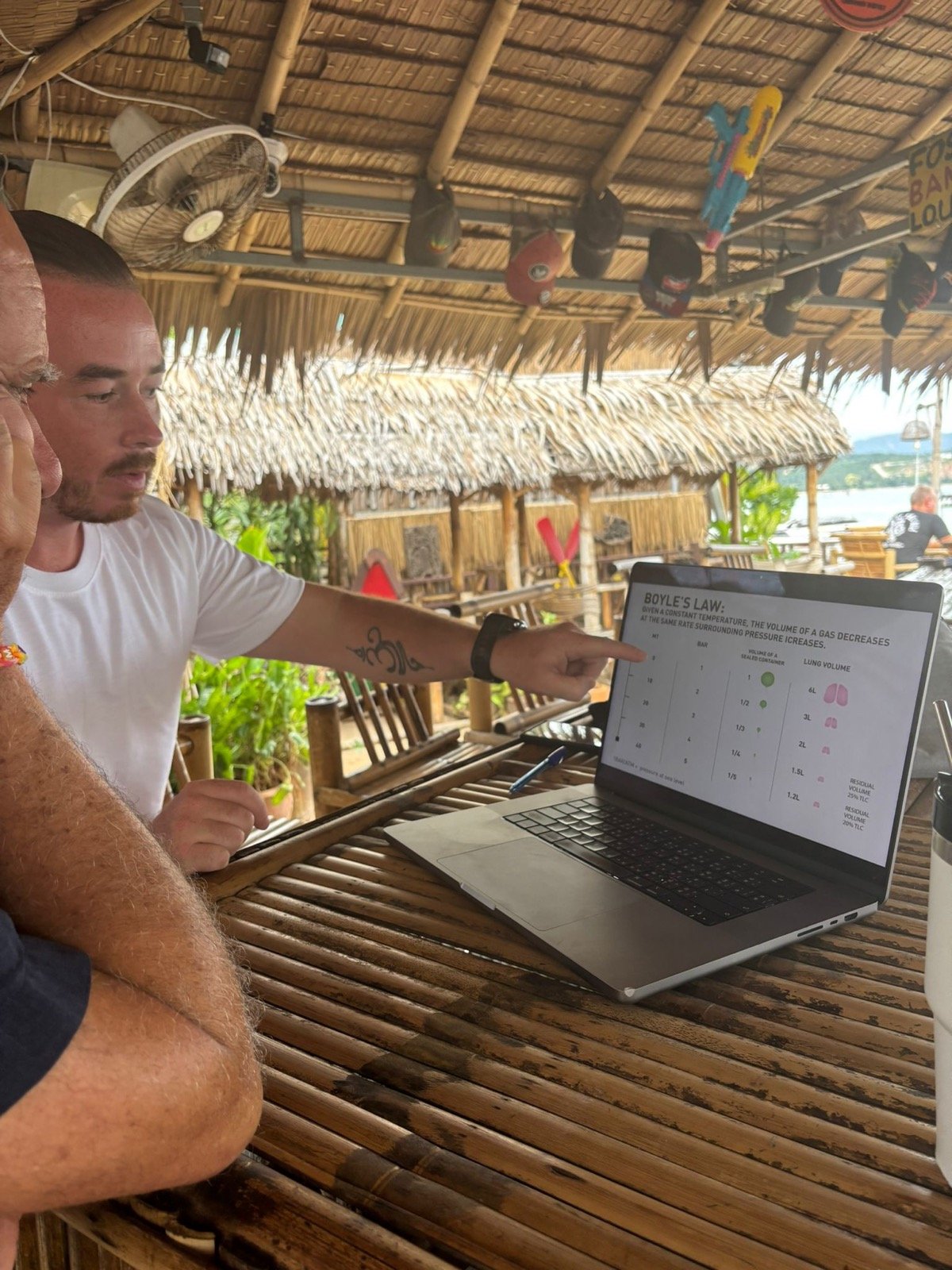
What a Freediving Course Day Actually Looks Like, Hour by Hour
Wondering what a day on a freediving course really looks like? Here is the honest hour by hour rundown from a Koh Samui
Read More →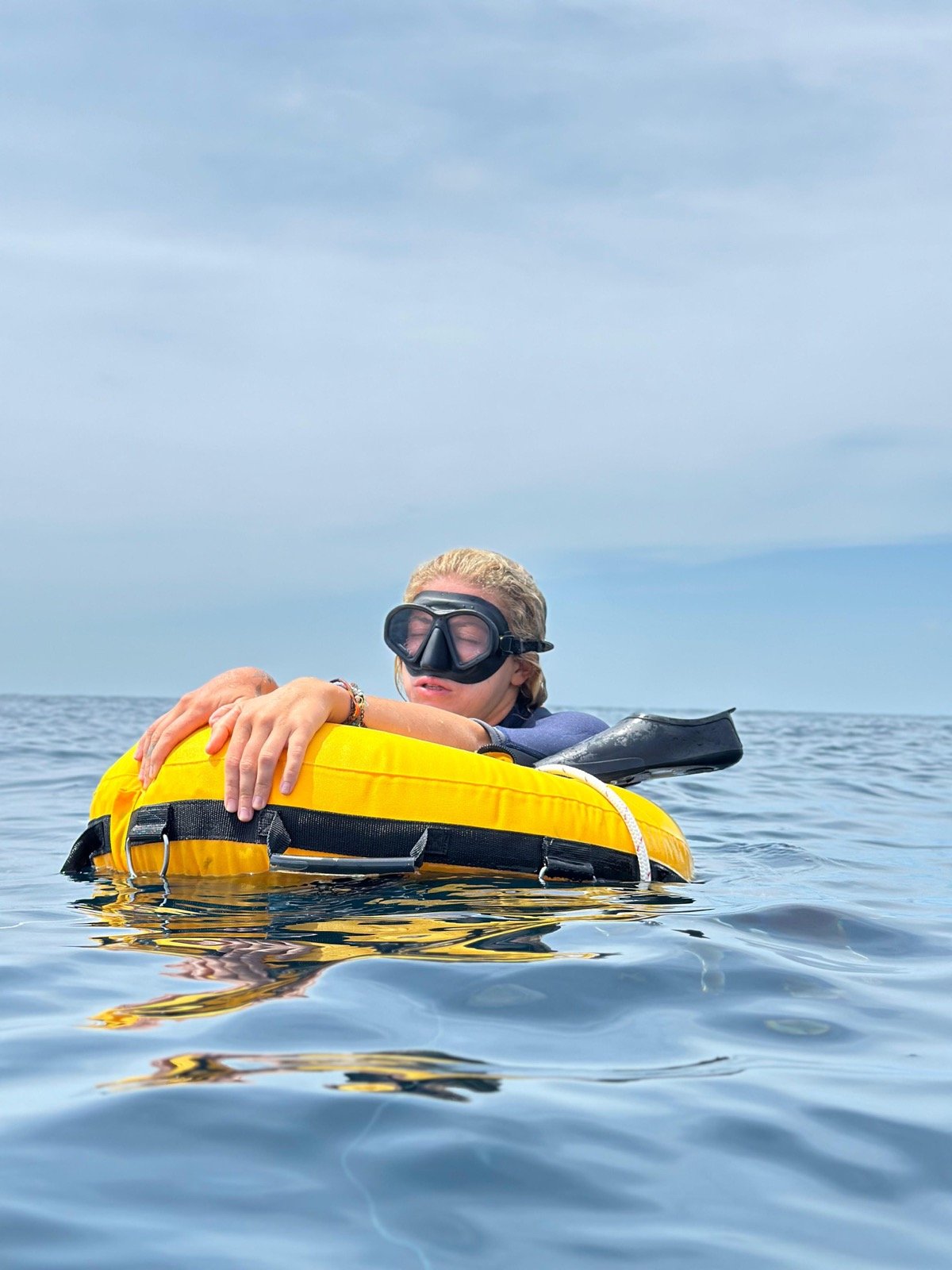
How Yoga and Breathwork Actually Help Your Freediving
Do yoga and breathwork really help your freediving? Honest take from a Koh Samui instructor: yes, but not in a mystical
Read More →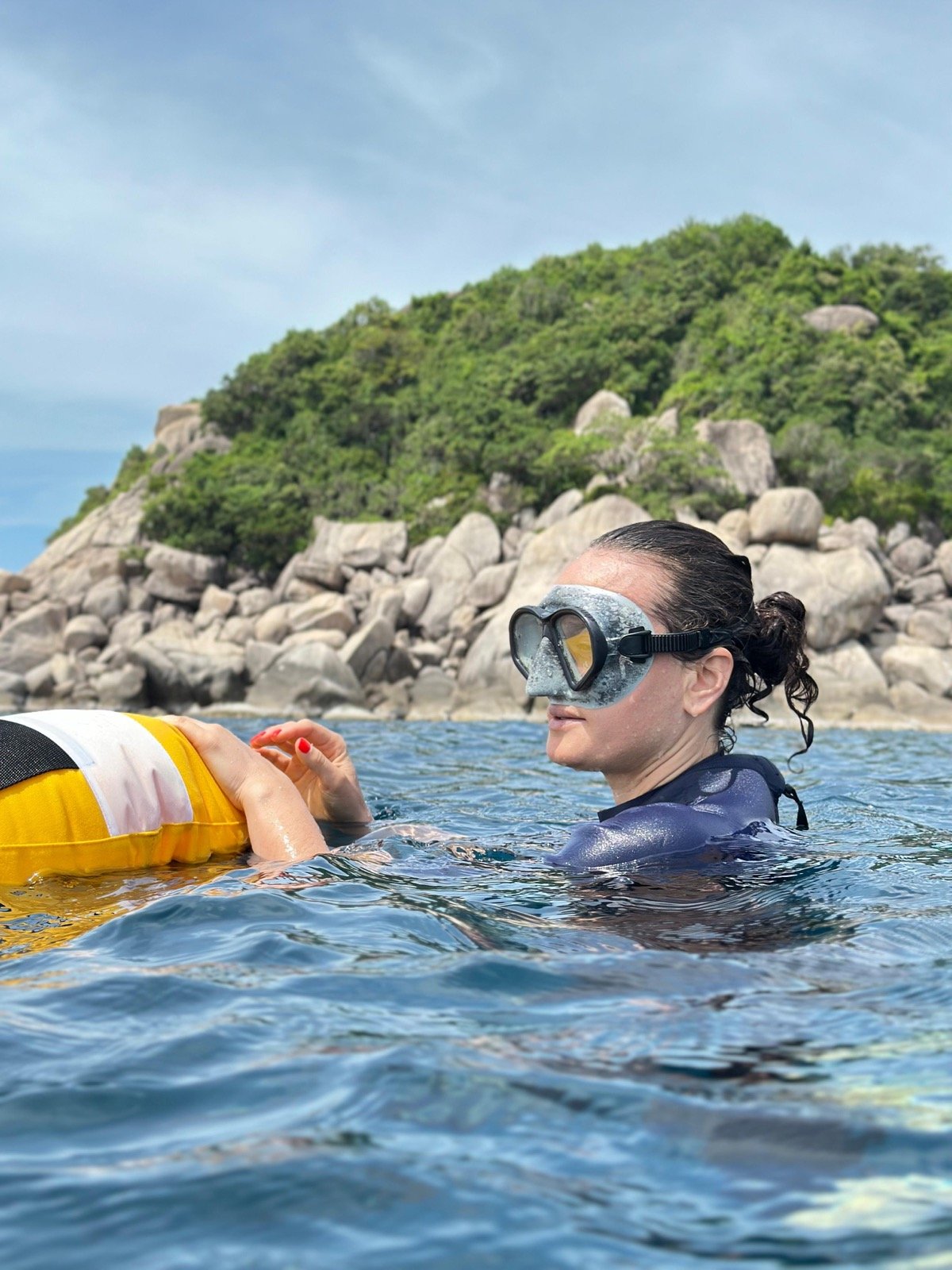
Try Freediving for the First Time in Koh Samui
Want to try freediving in Koh Samui? Here is everything you need to know about your first freediving experience, from wh
Read More →