Freediving Breathing Techniques for Beginners
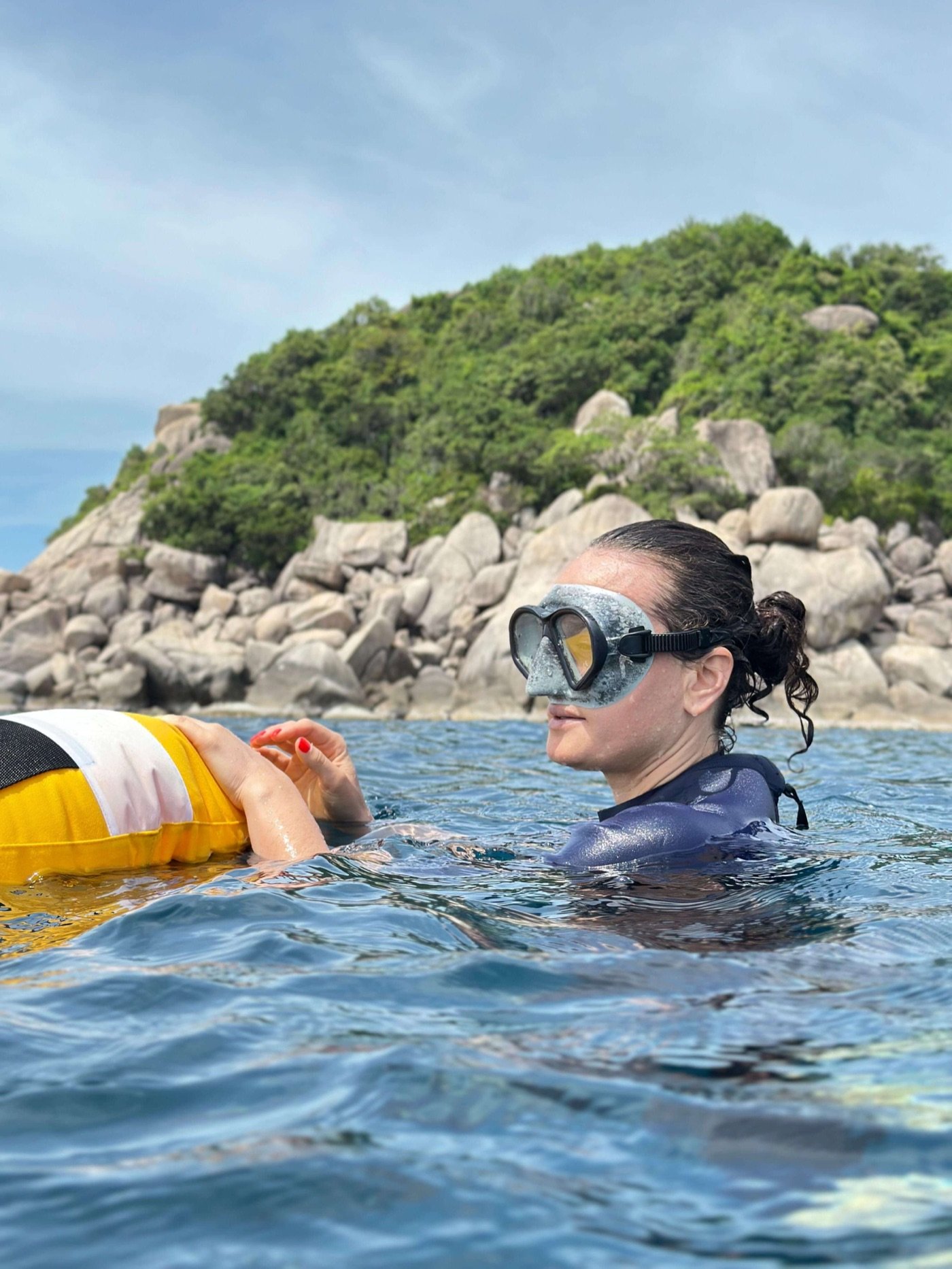
Freediving looks like a sport about holding your breath. It is not. It is a sport about how you breathe before you hold your breath.
Two people with identical lung capacity can have wildly different breath hold times. The difference is technique. The person who breathes correctly before a dive will hold their breath 30 to 60 seconds longer than the person who takes a big gulp of air and goes under. Every time.
This guide covers the breathing techniques taught in freediving courses, why they work, and how to practice them at home before you arrive for your course.
Why Breathing Technique Matters
Your breath hold is not limited by your lung size. It is limited by how efficiently you use the air you have.
When you breathe normally, you use about 500 milliliters of air per breath. Your lungs hold 4 to 6 liters. That means during normal breathing, you are cycling less than 15% of your total lung capacity. The rest sits unused in the lower parts of your lungs.
Freediving breathing techniques change this. By using your diaphragm instead of your chest, by slowing your breath rate, and by following a specific preparation sequence before each dive, you move more oxygen into your blood and more carbon dioxide out of it. You start the dive with a fuller tank and a cleaner engine.
This is why a person with no athletic background can hold their breath for 2 to 3 minutes after 30 minutes of instruction. They did not grow bigger lungs. They learned to use the ones they already have.
Diaphragmatic Breathing: The Foundation
Most people breathe with their chest. Watch yourself in a mirror. If your shoulders rise when you inhale, you are a chest breather. Chest breathing is shallow. It uses the top third of your lungs and leaves the larger lower lobes underventilated.
Diaphragmatic breathing uses your diaphragm, the dome shaped muscle that sits below your lungs and above your stomach. When you engage the diaphragm, it contracts downward and pulls air into the full depth of your lungs. Your belly expands outward. Your chest stays relatively still. Your shoulders do not move.
How to Find Your Diaphragm
Lie on your back. Place one hand on your chest and one hand on your belly. Breathe in through your nose slowly. Focus on making the hand on your belly rise while the hand on your chest stays still.
If you cannot do this at first, try exhaling completely, letting your belly sink toward your spine, and then inhaling gently into that space. The belly rises because the diaphragm is pulling air down into the lower lungs and the organs beneath it push outward.
Practice this for 5 minutes. Once the motion feels natural on your back, sit upright and repeat. Then stand. The goal is to make diaphragmatic breathing your default, not just something you do when lying down.
Why It Works for Freediving
Diaphragmatic breathing fills more of your lungs with each breath. More lung volume means more oxygen available at the start of your dive. It also activates the parasympathetic nervous system, the part of your nervous system responsible for rest and relaxation. Your heart rate drops. Your muscles soften. Your oxygen consumption decreases.
This is the opposite of what happens when you chest breathe quickly before a dive. Fast, shallow breathing activates the sympathetic nervous system (your fight or flight response), raises your heart rate, and burns oxygen before you even get in the water. Every freediver has seen the student who gasps five quick breaths and then wonders why they cannot hold for more than 45 seconds. The breathing was the problem, not the breath hold.
The Breathe Up: Your Pre Dive Sequence
The breathe up is the specific breathing sequence you perform in the minutes before a dive. It is the most important part of your preparation. Get it right and your dive feels effortless. Rush it or skip it and your dive feels short and uncomfortable.
The Full Sequence
Phase 1: Relaxation breathing (2 to 3 minutes). Float face down at the surface with your snorkel in. Breathe slowly and deeply through your diaphragm. Inhale for 4 to 5 seconds, exhale for 6 to 8 seconds. The exhale is longer than the inhale. This ratio activates your parasympathetic nervous system and lowers your heart rate.
During this phase, scan your body for tension. Relax your jaw, your shoulders, your hands, your feet. Let the water support your weight. You should feel your heart rate slow within the first minute.
Phase 2: Ventilation breathing (3 to 5 breaths). After 2 to 3 minutes of relaxation breathing, take 3 to 5 slightly larger breaths. These are not gasps. They are controlled, full diaphragmatic breaths that fill your lungs more completely than the relaxation phase. Inhale fully through the belly, then expand the ribs, then let the upper chest fill last. Exhale fully and repeat.
This phase tops off your oxygen levels and clears residual carbon dioxide from the dead space in your airways.
Phase 3: Final breath. Your last breath before the dive is a full, calm, complete inhale. Fill your belly first, then your ribs, then your chest. Do not force it. Do not pack air into your lungs (that is an advanced technique called lung packing that can cause injury if done incorrectly). Simply take the fullest comfortable breath you can.
Then close your mouth, tip forward, and begin your duck dive.
Common Breathe Up Mistakes
Rushing it. Two minutes of relaxation breathing feels long when you are floating at the surface wanting to get underwater. But those 2 minutes are what lower your heart rate from 80 beats per minute to 60. That 20 beat difference translates directly to lower oxygen consumption during the dive. Rushing the breathe up is the single most common mistake beginners make.
Breathing too fast. If your inhale and exhale cycle is shorter than 8 seconds total, you are breathing too fast. Speed activates the sympathetic nervous system. Slow down. Count your breaths. 4 seconds in, 6 to 8 seconds out.
Tensing up on the final breath. The last breath should feel the same as every breath before it, just slightly fuller. If you find yourself clenching your shoulders, tightening your neck, or gulping air, you have introduced tension that will follow you into the dive. Take the final breath from the same relaxed place as the rest of the breathe up.
What Happens in Your Body During the Breathe Up
The breathe up is not just psychological preparation. It triggers measurable physiological changes.
Heart rate drops. Extended exhales stimulate the vagus nerve, which signals your heart to slow down. A resting heart rate of 70 to 80 beats per minute can drop to 55 to 65 during a proper breathe up. This means your heart pumps less blood per minute, which means your muscles consume less oxygen per minute.
Blood oxygen rises. Deep diaphragmatic breaths exchange more air in the lower lungs where blood flow is highest. Your blood oxygen saturation, which sits at roughly 97 to 99% during normal breathing, reaches its maximum. You cannot go above 100%, but you can ensure you start the dive without a deficit.
Carbon dioxide drops to baseline. Gentle, slow breathing allows carbon dioxide to leave your blood at a natural rate without over clearing it (more on why that matters below). You want your CO2 at a comfortable baseline, not artificially low.
Peripheral blood vessels constrict. As you prepare for the dive, your body begins redirecting blood flow from your extremities toward your core and brain. This is part of the mammalian dive reflex and it happens more effectively when you are relaxed.
Why Hyperventilation Is Dangerous
This is the most important safety section in this entire post.
Hyperventilation means breathing faster and deeper than your body needs. In everyday life, it is associated with panic attacks. In freediving, some people do it deliberately before a dive, thinking that more breathing equals more oxygen.
It does not work that way. And it can kill you.
Here is what actually happens. Your blood oxygen is already near 100% during normal breathing. Hyperventilating does not raise it further. What hyperventilation does is blow off carbon dioxide. CO2 levels in your blood drop well below normal.
This matters because carbon dioxide is your body's primary trigger to breathe. When CO2 builds up during a breath hold, you feel the urge to breathe. That urge is your warning system. It tells you that oxygen is getting low and it is time to surface.
When you hyperventilate before a dive, you suppress that warning system. You blow off so much CO2 that the urge to breathe is delayed. You feel fine at depth. You feel fine during the ascent. And then, at 3 to 5 meters below the surface, your oxygen drops below the level needed to maintain consciousness.
You black out. Underwater. Without warning.
This is called a shallow water blackout. It is the leading cause of death in freediving and it is almost entirely caused by hyperventilation before a dive. The safety protocols taught in freediving courses exist specifically to prevent this.
The rule: never breathe faster than your body naturally wants to breathe during the breathe up. If you feel lightheaded, dizzy, or tingly in your fingers, you are hyperventilating. Slow down immediately. Return to normal breathing for at least a minute before attempting a dive.
Recovery Breathing: After the Dive
The moment your face breaks the surface after a dive, you perform recovery breathing. This is a specific protocol designed to reoxygenate your brain as quickly as possible and prevent a surface blackout.
The Protocol
As your mouth clears the water, exhale sharply (a quick "pah" sound) and immediately inhale deeply. Repeat 3 to 4 times. Each cycle is a strong exhale followed by a full inhale.
After 3 to 4 recovery breaths, give your buddy or instructor the OK signal (a clear hand signal or verbal "I am OK"). Do not remove your mask. Do not start talking about the dive. Recovery breaths first. OK signal second. Everything else third.
Why Recovery Breathing Matters
During a dive, your body has been consuming oxygen and producing carbon dioxide with no way to exchange gases. When you surface, your blood oxygen is at its lowest point of the dive. The first 10 to 15 seconds at the surface are the highest risk window for a blackout because the pressure drop during ascent causes blood oxygen to fall further (a phenomenon called hypoxia of ascent).
Recovery breathing forces fresh, oxygen rich air into your lungs and reverses the oxygen debt as fast as possible. The sharp exhale clears the stale air from your airways. The deep inhale floods your lungs with oxygen that transfers immediately to your blood.
Do not skip recovery breathing. Do not hold your breath at the surface while you look at your dive computer. Do not start celebrating your depth. Breathe first. Signal second. Celebrate third.
How to Practice at Home
You do not need water to practice freediving breathing. In fact, the best preparation for a freediving course happens in your living room in the weeks before you arrive.
Daily Diaphragmatic Breathing (5 to 10 minutes)
Lie down, place your hands on belly and chest, and practice belly breathing. Inhale 4 seconds, exhale 8 seconds. Count your breaths. Work toward 3 to 4 breath cycles per minute (15 to 20 seconds per cycle). This trains your body to operate at a lower metabolic rate and strengthens the diaphragm muscle.
The Full Breathe Up Simulation (5 minutes)
Sit or lie comfortably. Set a timer for 3 minutes. Breathe slowly and deeply: 4 to 5 seconds inhale, 6 to 8 seconds exhale. Focus on relaxing every muscle group in sequence. After 3 minutes, take 3 full breaths (belly, ribs, chest), then take one final full inhale and hold.
Do not hold your breath to the point of discomfort. This exercise is about practicing the breathing sequence, not about building breath hold time. Hold for 30 to 60 seconds, then exhale and resume normal breathing. Practice recovery breaths as you resume (3 to 4 sharp exhale and inhale cycles).
CO2 Tolerance Tables (Intermediate)
Once you are comfortable with the basic breathing, you can practice CO2 tolerance using a simple table. This involves repeated short breath holds with decreasing rest periods between them. A typical beginner table:
- Hold 1 minute, rest 2 minutes
- Hold 1 minute, rest 1 minute 45 seconds
- Hold 1 minute, rest 1 minute 30 seconds
- Hold 1 minute, rest 1 minute 15 seconds
- Hold 1 minute, rest 1 minute
- Hold 1 minute, rest 45 seconds
- Hold 1 minute, rest 30 seconds
Adjust the hold time down if 1 minute is too long. The point is not to suffer. The point is to teach your body that rising CO2 is uncomfortable but not dangerous. Over time, your tolerance increases and the urge to breathe arrives later during real dives.
Important: only practice breath holds on dry land or in a pool with a buddy watching you. Never practice breath holds alone in water.
What Your Instructor Will Teach You
The breathing techniques in this guide are what you will learn on Day 1 of a freediving course. Your instructor demonstrates each technique, watches you practice, and adjusts your form in real time. Reading about diaphragmatic breathing is useful. Having someone watch you do it and correct the moment your shoulders start creeping upward is what makes the difference.
In a course with a maximum of 3 students, there is time for your instructor to work with your individual breathing pattern. Some students naturally breathe fast and need coaching to slow down. Others have tight diaphragms from years of chest breathing and need specific stretches to unlock the range of motion. Others get the technique immediately but rush the breathe up out of eagerness to dive. Each pattern gets addressed individually.
By the end of Day 1, the breathing preparation will feel natural. By Day 3, it is automatic. You will not think about the breathe up any more than you think about tying your shoes. And that automation is what lets you focus on equalization, technique, and the experience of being underwater.
Start Practicing Now
If you have a freediving course coming up, start the diaphragmatic breathing exercises today. Five minutes a day for a week will make a noticeable difference on Day 1. You will relax faster, hold your breath longer, and spend less time relearning how to breathe and more time learning how to dive.
The Beginner Freediving Course on Koh Samui runs Monday to Wednesday, 3 students maximum. Breathing technique is the first skill taught and the foundation everything else builds on.
Send a WhatsApp message to check dates and availability. If you have questions about breathing preparation or want a practice routine before your course, mention it in the message. Your instructor can send you a personalized plan based on your starting point.
About Diego Pauel
Diego has been teaching freediving from Koh Samui since 2021. He holds instructor certification from Apnea Total and additional credentials across six certification bodies: Oxygen Advantage, Breatheology, International Breathwork Foundation (IBF), Breathing Cold, and GPBA. Plus emergency oxygen administration and first aid.
Learn More →Ready to try freediving?
Message Diego on WhatsApp to check availability for your dates. No deposit needed.
Check Availability on WhatsAppContinue reading
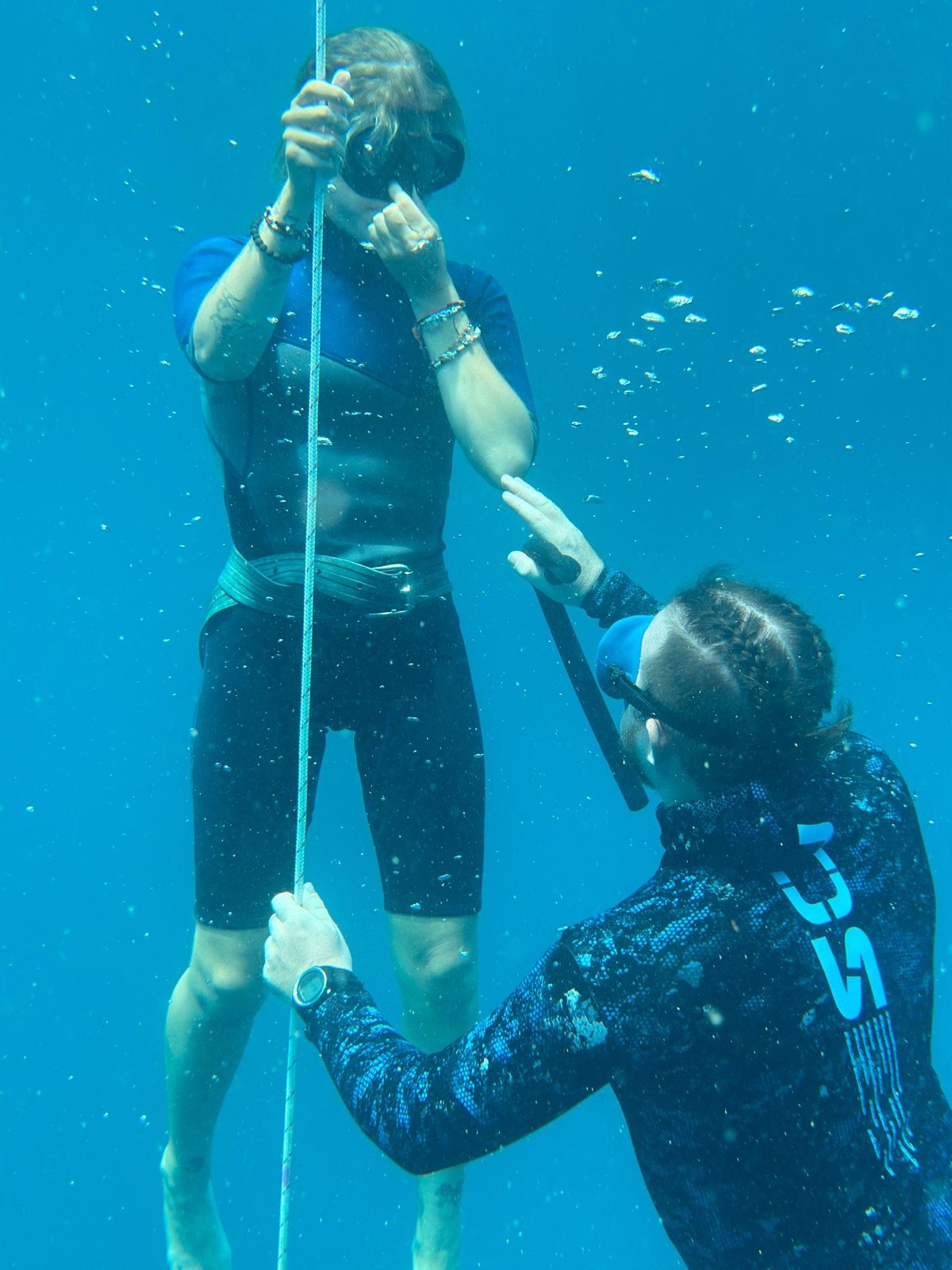
The Freediving Duck Dive: How to Get Under the Surface Without Wasting Energy
The duck dive is the first thing every freediver gets wrong and the easiest thing to fix. Here is exactly how to drop un
Read More →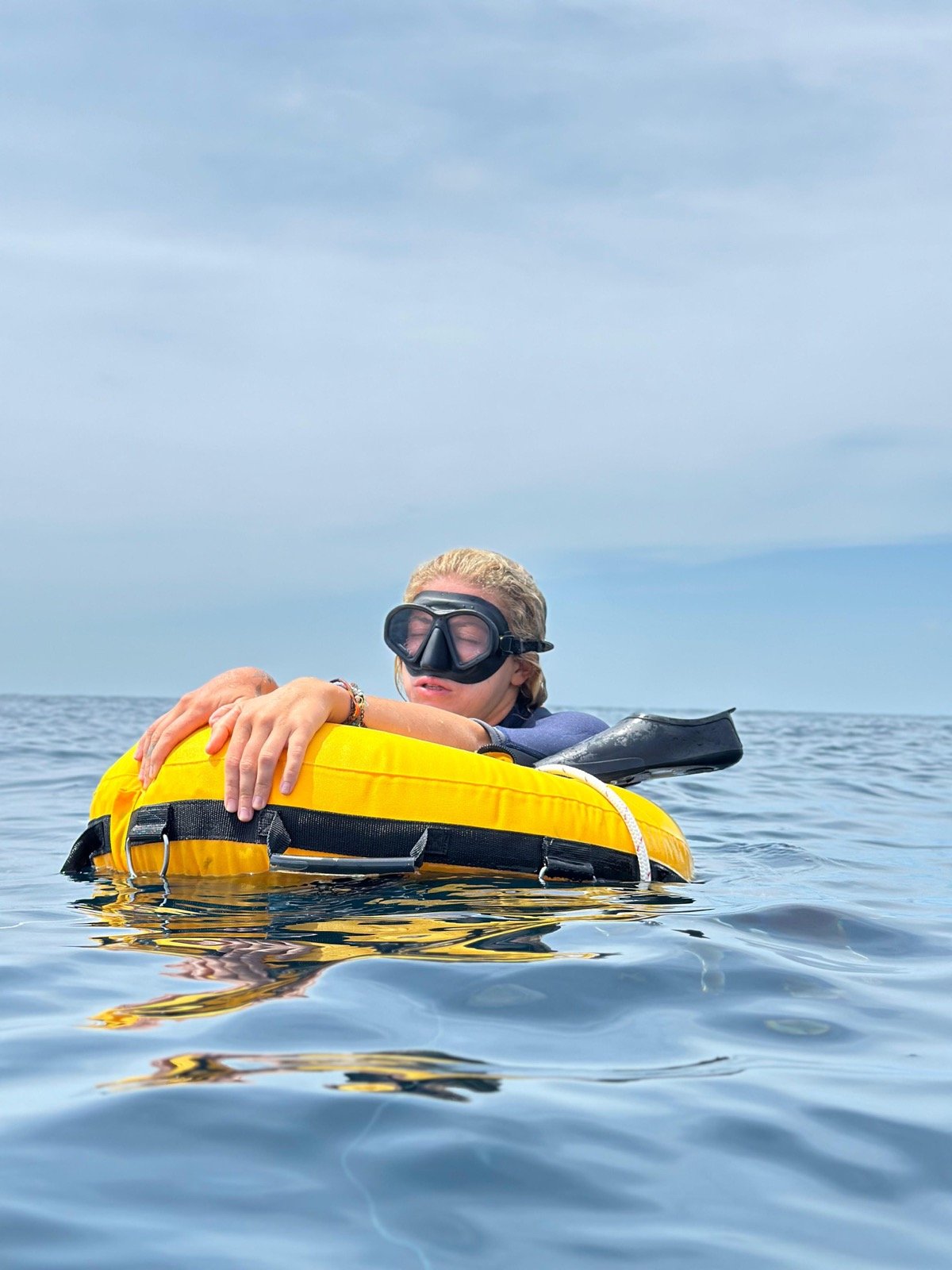
How Deep Can a Beginner Freedive?
How deep can you dive after a beginner freediving course? Most students reach 15 to 20 meters in 3 days. Here is what de
Read More →