Freediving Koh Samui vs Koh Tao: An Honest Comparison
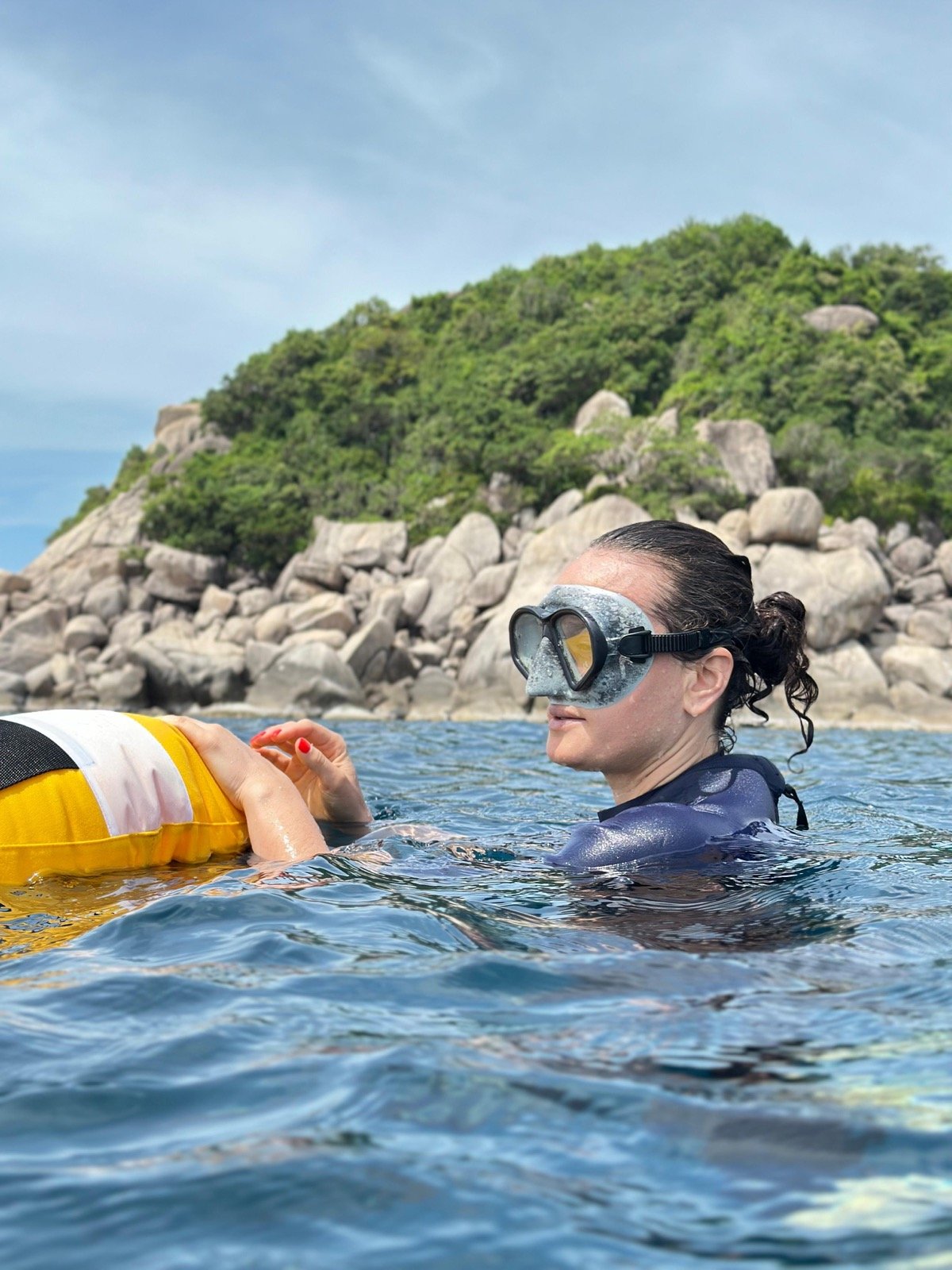
If you Google "freediving Thailand," Koh Tao dominates the results. Ten or more schools, hundreds of students, an entire island built around diving culture. It is the default choice. Most people do not even consider an alternative.
I teach freediving on Koh Samui. I have spent years in these waters. I have friends who teach on Koh Tao. I am not here to trash the competition. But I am going to give you something most marketing pages will not: an honest breakdown of both islands so you can decide which one actually fits what you are looking for.
Koh Tao: What It Gets Right
Let me start with credit where it is due. Koh Tao earned its reputation for a reason.
The island has the highest concentration of freediving schools in Southeast Asia. AIDA, SSI, Molchanovs, Apnea Total — every major certification body is represented. You can walk down a single street and compare five schools before lunch. That kind of competition keeps prices low and gives you options.
Courses on Koh Tao start around 7,500 THB for a 2 day beginner program. Some schools go even lower during off season. If you are backpacking through Thailand on a tight budget, that matters.
The island also has something Koh Samui genuinely cannot match: shore entry depth training. At Hin Wong Bay on the east side of Koh Tao, you can walk off the beach and be in 20 meter water within a few minutes of swimming. Training buoys sit in 30 to 40 meter water close to shore. No boat required. For serious depth training — the kind where you want to do 15 or 20 dives in a day — this is a real advantage.
The shallow reefs are beautiful. Tanote Bay, Aow Leuk, and Japanese Gardens are vibrant coral sites with excellent visibility and abundant marine life. You can snorkel or freedive these spots on your day off and see turtles, triggerfish, and healthy hard coral without paying for a boat trip.
And then there is the community. Koh Tao has a legitimate freediving culture. Training buddies are easy to find. Evening talks happen at beach bars. You meet people at your course who become travel friends. If you are solo traveling and want the social energy of a shared experience, Koh Tao delivers that in a way a smaller operation cannot.
Koh Tao: The Other Side
Now here is what people do not mention until you are already there.
Koh Tao is crowded. Not just the bars and beaches — the dive sites. On any given morning, a popular training site like Twins or Japanese Gardens will have multiple schools running courses simultaneously. Six to eight training lines in the water. Thirty to forty students rotating through dives. Your instructor is watching you, but they are also managing the chaos of shared space with other groups.
Group sizes on Koh Tao typically run 4 to 8 students per instructor. Some budget schools push to 10. When your instructor has 8 students on the line, they see each dive for a few seconds. You get a thumbs up or a quick correction. Then you wait your turn while seven other people dive. On a 2 day course, your total actual dive time might be surprisingly low.
The party culture is the other thing. Koh Tao is a party island. Full moon events, bar crawls, cheap buckets of alcohol on every corner. None of this is a problem if that is what you want. But freediving requires genuine rest. It requires hydration. It requires showing up at 7am with a clear head and relaxed nervous system. I have seen plenty of students lose a full training day because they went out the night before and could not equalize through a hangover. The island culture works against the mindset freediving demands.
You are also stuck on a small island with limited non-diving infrastructure. One hospital with basic capabilities. Limited restaurant variety. Power outages during storms. If your partner or family came along and does not dive, they are looking at a few beaches, a handful of viewpoint hikes, and not much else for three days.
Getting there adds friction too. No airport. You are taking a ferry from Koh Samui (1.5 to 2 hours each way), Chumphon (1.5 to 6 hours depending on the boat), or Surat Thani (a full night on a slow ferry). That is a half day of travel in each direction just to reach your starting point.
Koh Samui: The Case for the Bigger Island
Here is what most people do not realize: Koh Samui and Koh Tao share the same dive sites.
Sail Rock, the Gulf of Thailand's most spectacular dive site, sits roughly between the two islands. It is accessible from both. Chumphon Pinnacle, Southwest Pinnacle, and the southern Koh Tao sites are all reachable by boat from Samui.
But here is the thing nobody talks about. Morning dive trips from Koh Samui arrive at Sail Rock before the Koh Tao boats do. You get the site in the early morning when the water is calmest, visibility is best, and there are no other groups in the water. By the time the Koh Tao fleet arrives mid-morning, you have already done your best dives. That timing advantage is real and consistent.
Ang Thong Marine Park — 42 islands of protected limestone karst, emerald lagoons, and pristine reef — is significantly closer from Koh Samui than from Koh Tao. If you want to combine freediving with exploring one of the most beautiful marine parks in Thailand, Samui is the logical base.
Infrastructure That Actually Matters
Koh Samui has an international airport with direct flights from Bangkok (1 hour), Singapore, Hong Kong, and Kuala Lumpur. You land and you are on the island. No ferry, no overnight boat, no half day of transit.
The island has two international hospitals with proper emergency facilities. In a sport where safety matters, knowing that a fully equipped hospital is 20 minutes away rather than a 2 hour ferry ride away is not a minor detail.
Restaurants range from street food to high end dining. Wifi is reliable. There are proper gyms if you want to train between dive days. Shopping, nightlife, cultural sites, cooking classes, muay thai stadiums, spas — the list goes on. Koh Samui is a complete destination, not just a dive platform.
Perfect for Non-Diving Partners and Families
This is the point that rarely gets discussed but matters to a huge number of potential freedivers. You are not traveling alone. Your partner came with you. Your kids are with you. They do not freedive.
On Koh Tao, your non-diving partner gets a small island with limited beaches, a few restaurants, and not much to do for three days while you are in the water. On Koh Samui, they get Chaweng Beach, Lamai Beach, the Big Buddha temple, Ang Thong day trips, elephant sanctuaries, night markets, and enough restaurants and bars to fill a week without repeating.
You do your freediving course during the day. In the evening, you meet your partner for dinner at a restaurant that would hold its own in any city. Everyone is happy.
The Right Atmosphere for Serious Training
Freediving is not a party sport. The best sessions happen when you are rested, hydrated, focused, and calm. Koh Samui's atmosphere supports that. You stay in a comfortable hotel. You sleep well. You eat well. You show up to your course without the temptation of a bar crawl the night before.
The groups are smaller too. Maximum 3 students per instructor. That means your instructor watches every single dive. Every duck dive, every equalization attempt, every surface protocol. You get real time corrections and genuine coaching rather than a brief nod between managing seven other students.
Koh Samui: Where It Falls Short
I said this would be honest, so here is the other side.
Koh Samui has fewer freediving schools. There is one dedicated operation. That is it. You do not get to shop around, compare instructors on the beach, or switch schools mid-trip. If the schedule does not work for your dates, you wait or you go to Koh Tao where someone is always running a course.
There is no shore entry depth training on Koh Samui. The island's coastline drops off gradually. Deep water requires a boat. For a course, this is handled — boat trips are included in the price. But if you are a certified freediver who wants to do casual depth training on your own, walking off the beach into 30 meter water like you can at Hin Wong Bay on Koh Tao, that is not possible here.
Courses cost more. The Beginner Course on Koh Samui is 9,500 THB for 3 days. Budget Koh Tao schools start around 7,500 THB for 2 days. The Koh Samui price includes an extra day of training, smaller groups, boat trips, and certification — but on paper, the number is higher. If you are counting every baht, Koh Tao is cheaper.
The island itself is more expensive across the board. Accommodation, food, transport — everything costs more on Koh Samui than on Koh Tao. A decent hotel room on Samui costs what a private bungalow costs on Koh Tao. This is just the reality of a more developed tourist destination.
The Verdict
There is no single right answer. There is the right answer for you.
Choose Koh Tao if: You are traveling specifically for freediving and nothing else. Budget is your primary concern. You want to meet other freedivers in a social scene built around the sport. You plan to stay for weeks doing extended depth training with shore access. You are a solo backpacker who thrives on community energy.
Choose Koh Samui if: You want world-class freediving sites with smaller groups and more personal instruction. You are traveling with a partner or family who needs things to do while you dive. You value comfort, good food, and proper infrastructure. You have an international flight into Samui and do not want to add a ferry. You want to arrive at Sail Rock before the crowds. You are a serious freediver who wants a focused, distraction-free training environment.
Both islands put you in the same water. Both give you access to Sail Rock, Chumphon Pinnacle, and the Gulf of Thailand's marine life. The question is not where the diving is better. The question is what kind of experience you want around the diving.
Ready to Dive?
If Koh Samui sounds like the right fit, check the course schedule or book a guided fun dive at Sail Rock. Message Diego on WhatsApp to check availability. No deposit required. Just a quick message with your dates and I will confirm if there is space.
If you are on the fence between the two islands, message me anyway. I will give you the same honest answer I gave you here. Sometimes Koh Tao genuinely is the better choice for your situation. I would rather you end up at the right school than the wrong island.
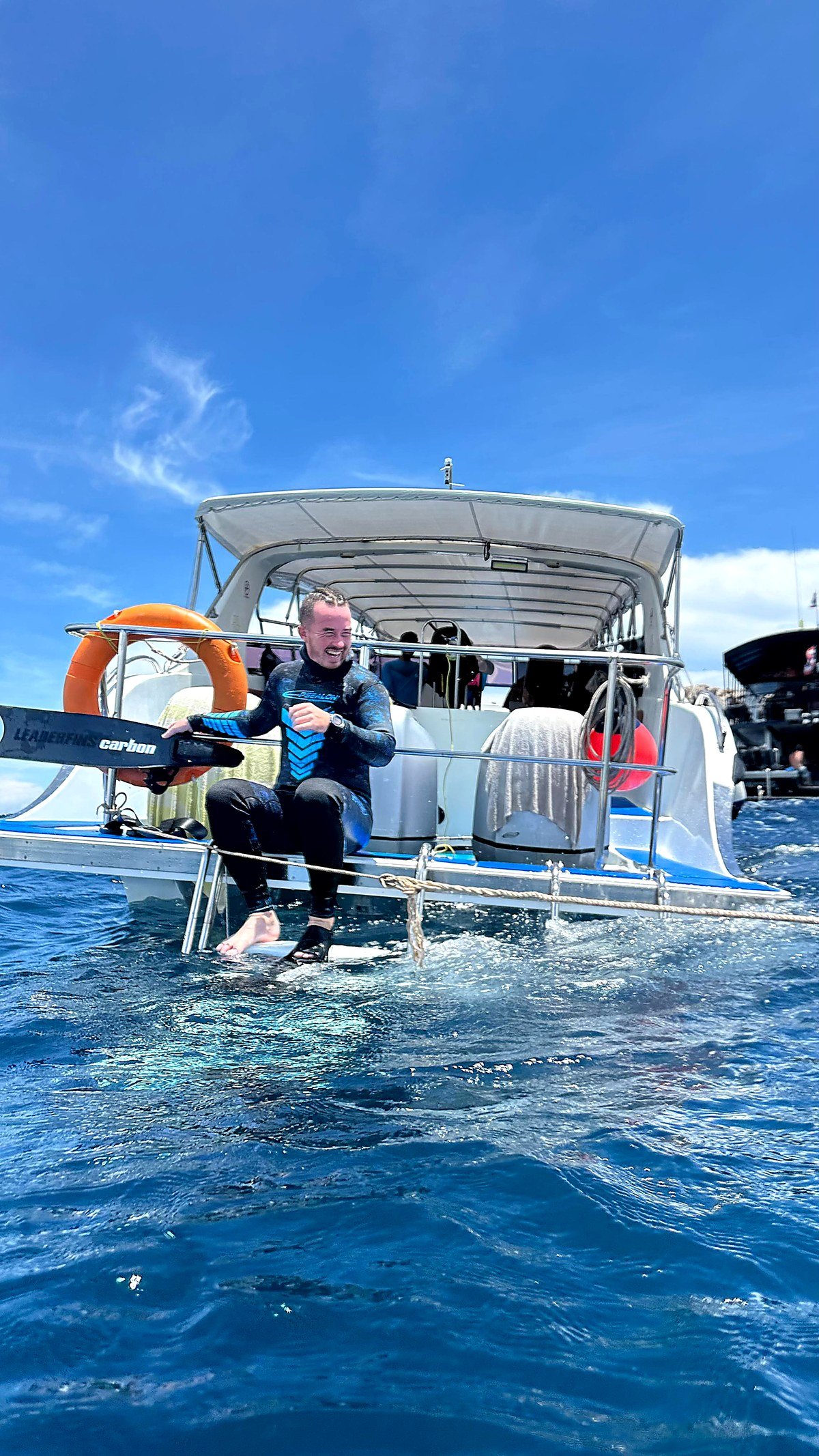
About Diego Pauel
Diego has been teaching freediving from Koh Samui since 2021. He holds instructor certification from Apnea Total and additional credentials across six certification bodies: Oxygen Advantage, Breatheology, International Breathwork Foundation (IBF), Breathing Cold, and GPBA. Plus emergency oxygen administration and first aid.
Learn More →Ready to try freediving?
Message Diego on WhatsApp to check availability for your dates. No deposit needed.
Check Availability on WhatsAppContinue reading
Freediving in Koh Samui vs Koh Tao: An Honest Comparison
An honest comparison of freediving in Koh Samui versus Koh Tao. Prices, group sizes, dive sites, travel time, and which
Read More →
5 Fears Every Beginner Freediver Has (and Why They Are Wrong)
Afraid you cannot hold your breath, equalize, or stay calm underwater? Every beginner freediver has the same 5 fears. He
Read More →
Best Time of Year to Freedive in Koh Samui
When is the best time to freedive in Koh Samui? A season by season guide covering visibility, water temperature, whale s
Read More →