5 Fears Every Beginner Freediver Has (and Why They Are Wrong)
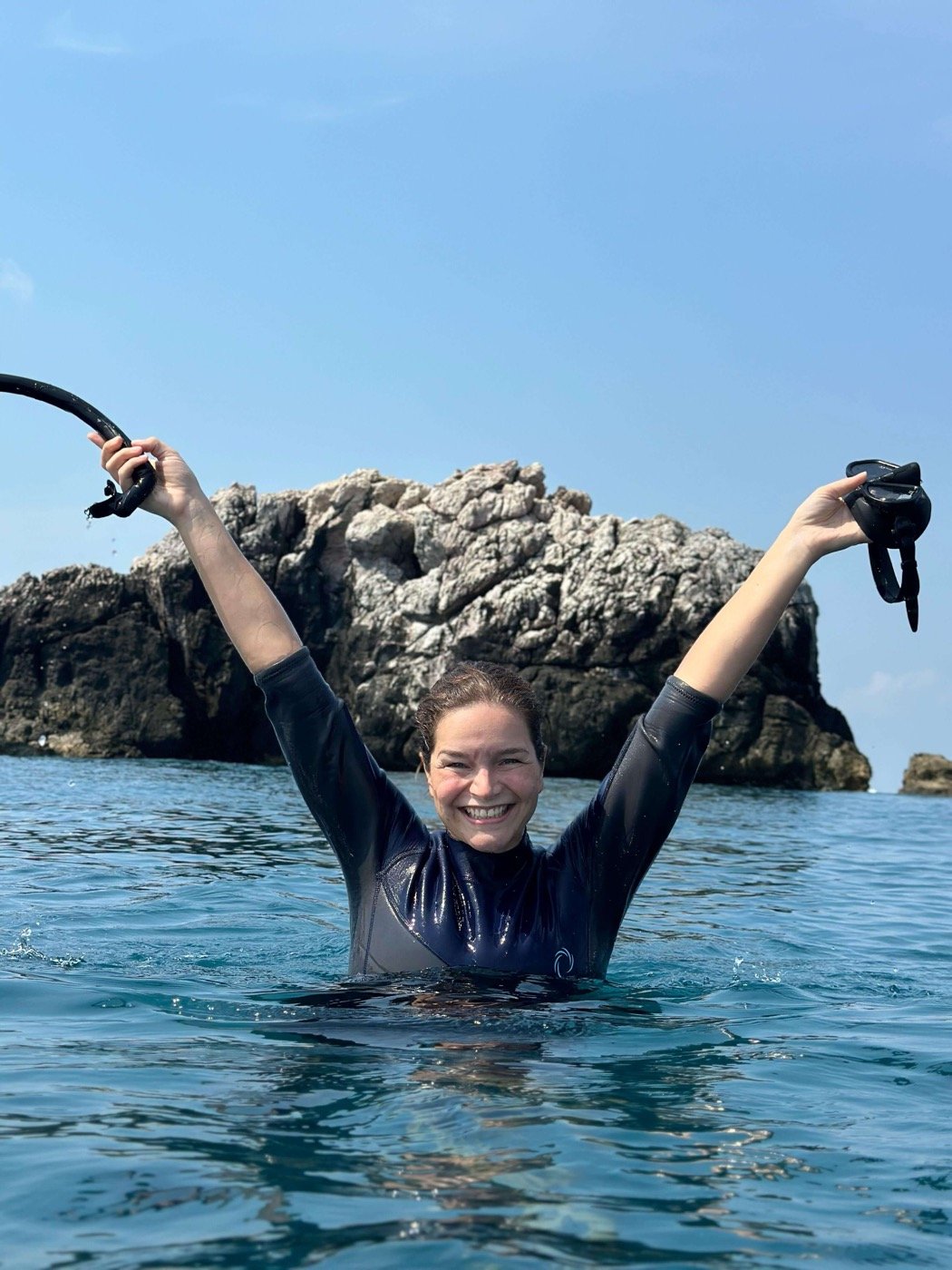
You want to try freediving. You have watched the videos. You have looked at courses in Thailand. Maybe you have even picked your dates. But there is a voice in the back of your head running through a list of reasons why this is not going to work for you.
You are not alone. Every single student who has taken a freediving course started with the same fears. Not some of them. All of them. The fears are so consistent that I can predict what someone will say before their first day in the water.
Here are the 5 fears that come up in almost every course, and the reality behind each one.
1. I Cannot Hold My Breath Long Enough
This is the most common fear by far. You try holding your breath at home, manage 30 or 40 seconds, and conclude that freediving is not for you. The logic seems airtight. Freediving requires breath holding. You are bad at breath holding. Therefore you cannot freedive.
The problem with this logic is that you are testing the wrong thing. Holding your breath while sitting at your desk, stressed, chest tight, thinking about how long you have left, is the worst possible way to hold your breath. You are using chest breathing, your heart rate is elevated, your muscles are tense, and your brain is consuming oxygen faster than it would in the water.
On Day 1 of a freediving course, you learn diaphragmatic breathing. You fill your lungs from the bottom up instead of the top down. You spend 2 minutes doing a breathing cycle that drops your heart rate and saturates your blood with oxygen. Then you put your face in the water, relax, and let your body do what it already knows how to do.
Most students hold their breath for 2 minutes or longer on their first day. Some reach 3 minutes by Day 2. The technique makes that much difference. Your lungs are not too small. Your willpower is not too weak. You have just never been taught how to breathe properly before holding your breath.
And here is the part that surprises everyone: a typical freedive to 15 meters takes 30 to 40 seconds from surface to surface. You do not need to hold your breath for 3 minutes to freedive. You need 30 to 40 seconds of relaxed, efficient movement. Your body is already capable of that right now, today, without any training at all.
2. I Will Panic Underwater
Panic is the fear behind the fear. Even if you believe you can hold your breath, there is a deeper concern: what happens when you are 15 meters below the surface and your brain tells you to breathe?
This fear comes from imagining the worst case scenario as your starting point. You picture yourself deep underwater, running out of air, with no way to breathe. That image is terrifying because it skips every step between where you are now and that moment.
A freediving course does not work like that. The progression is deliberate and gradual.
On Day 1, you are in shallow, confined water. Chest deep. You can stand up at any time. You practice static breath holds face down at the surface with your instructor within arm's reach. Nobody descends on Day 1. You are learning to relax, not testing your limits.
On Day 2, you move to open water with a dive line. You descend along the rope, which means you have a reference point at all times. You know exactly how deep you are and exactly how to get back. Your instructor watches from the surface and meets you when you return. The first dives are to 5 meters. Then 8. Then 10. Each dive is deeper than the last, but only when you are ready.
On Day 3, you dive at a real site like Sail Rock. By this point you have done 20+ dives over two days. You know what your body feels like at depth. You know how to equalize, how to turn, how to ascend. The fear is not gone, but it has been replaced by experience.
There is also a physiological factor working in your favor. When your face contacts the water, your body triggers the mammalian dive reflex. Your heart rate drops by 10 to 25 percent. Blood shifts from your extremities to your core organs. Your body is literally calming itself down the moment you submerge. The reflex evolved to make mammals more efficient underwater. It works in your favor before you even take your first stroke.
With a maximum of 3 students per instructor, you never feel like a number. I see your face before every dive. If your jaw is tight, if your breathing is shallow, if your eyes look rushed, we stop. You do not dive until you are ready. That level of attention is why small groups exist.
3. My Ears Will Hurt (I Cannot Equalize)
If you have ever flown on a plane with a cold or dived to the bottom of a swimming pool, you know the feeling. Pressure builds in your ears and if you cannot clear it, it hurts. The deeper you go, the more it hurts.
Equalization is the technique that solves this. You push a small amount of air into your middle ear to match the increasing water pressure as you descend. Scuba divers pinch their nose and blow (the Valsalva technique). Freedivers use a more efficient method called Frenzel, which uses the tongue as a piston to push air into the ears without engaging the chest.
The fear is that you will not be able to do it. That your ears are somehow different. That you will be stuck at 3 meters while everyone else glides to 20.
Equalization is a technique. It is not a talent you are born with and not a genetic advantage some people have. Every person with functioning ear anatomy can learn to equalize. The question is how quickly.
Some students equalize perfectly within 10 minutes. They close their soft palate, press their tongue against the roof of their mouth, and feel the click on the first try. Others take a full day of practice. They need to feel the muscles involved, understand the timing, and develop the coordination. Both outcomes are completely normal.
This is one reason the course runs 3 full days instead of 2. A 2 day course puts enormous time pressure on equalization. If you do not get it in the first few hours, you spend the rest of the course frustrated. A 3 day format gives you time. If Day 1 is spent entirely on equalization practice, that is fine. You still have two full days of diving ahead of you.
The instructor goes at your pace. If you equalize comfortably to 8 meters today, 8 meters is your target. Tomorrow we try 10. The day after, 15. There is no fixed depth requirement and no pressure to match the student next to you. Read the equalization guide or the Frenzel technique breakdown if you want to start practicing before you arrive.
4. I Am Not Fit Enough
This fear takes different forms depending on the person. "I am not a strong swimmer." "I get out of breath walking up stairs." "I am not the athletic type." "I have not exercised in months." The underlying belief is the same: freediving is a physical sport and my body is not up to the task.
Freediving is a physical activity, but it rewards the opposite of what most people consider athletic. The calmest student almost always outperforms the fittest student. This is not a motivational cliche. It is a consistent, observable pattern across hundreds of students.
Here is why. Oxygen consumption increases with effort. The harder you work, the faster you burn through your air supply. A fit person who muscles their way through a descent, kicking hard, tensing their core, gripping the line, will use their oxygen in half the time of a relaxed person who glides down with minimal effort. Freediving technique is built around conservation. Slow kicks. Streamlined body position. Relaxed arms. Every movement is designed to use the least energy possible.
The practical fitness requirement for a beginner freediving course is this: you need to swim 200 meters without stopping and float on your back for 10 minutes. That is it. No speed requirement. No stroke technique requirement. Just comfortable, relaxed movement in the water.
If you can swim in the ocean without feeling afraid, you are fit enough. The rest is technique, and technique is what the course teaches you. Some of the deepest divers in the world do not look like athletes. They look like people who know how to relax.
One more thing. Freediving uses long fins that are roughly twice the length of swimming fins. These fins amplify your kick to the point where a single slow movement propels you 2 to 3 meters. You are not working hard to descend. The equipment does most of the work. Your job is to stay relaxed while it does.
5. What If I Black Out
This is the fear that stops the most people from even researching freediving. The idea that you might lose consciousness underwater is genuinely frightening, and it should be. Blackout is a real phenomenon in freediving. Pretending otherwise would be dishonest.
Here is what actually happens. A blackout, or loss of motor control, occurs when the oxygen level in your blood drops below a critical threshold. This only happens at the very end of a maximum effort dive when a diver has pushed past their comfortable limit and stayed down too long. The body gives multiple warning signals before this point: contractions in the diaphragm, a strong urge to breathe, tingling in the extremities. A trained freediver recognizes these signals and turns back.
In a freediving course, you are never anywhere near this limit. The depth targets are conservative. A student capable of reaching 20 meters might dive to 12 or 15 during training. There is always a margin. The goal of a course is not to find your maximum. It is to build a foundation of safe, comfortable technique that you can expand over months and years.
The safety infrastructure exists for the unlikely event that something does go wrong. Your buddy watches from the surface during every dive. The instructor monitors every student. Emergency oxygen is on the boat. Rescue technique is part of the course curriculum. You do not just learn how to dive. You learn how to watch someone else dive and how to bring them to the surface if needed.
The statistics support this. Freediving accidents occur almost exclusively in unsupervised settings: solo depth attempts, spearfishing without a buddy, competitive divers pushing records. In a structured course environment with trained supervision, the safety record is comparable to scuba diving. Read the safety guide for a detailed breakdown of risks and protocols.
The presence of this fear actually makes you a better freediving student. People who take the risks seriously are the ones who follow protocols, respect their limits, and never skip a safety check. Overconfidence is far more dangerous than fear.
The Fear Never Fully Disappears
Here is something no marketing page will tell you. The fear does not go away completely. Not after your first course, not after your 50th dive, not after years of experience. Every freediver feels something before they turn upside down and swim toward the bottom. A tightness in the chest. A flicker of doubt. A quiet question: is today the day it does not work?
The difference between a freediver and someone who never tries is not the absence of fear. It is the decision to acknowledge the fear, prepare for it, and then take the breath anyway. The course gives you the tools to manage the fear. The experience replaces the unknown with the familiar. But a healthy respect for the ocean never leaves you, and it should not.
Every student I have ever taught was afraid of something on Day 1. Every single one. By Day 3, they were diving to depths they could not have imagined 48 hours earlier. Not because the fear vanished, but because they learned it was manageable.
Try It on Koh Samui
If you have read this far, you already know which fears are holding you back. You also know that every other beginner had the same ones. The only way to find out what is on the other side of those fears is to get in the water.
The beginner course on Koh Samui runs 3 full days, Monday to Wednesday, with a maximum of 3 students per instructor. You get the individual attention that makes the difference between a student who is pushed too fast and a student who progresses at their own pace. Emergency oxygen on every boat. Real dive sites including Sail Rock on Day 3. And an instructor who has heard every fear on this list a hundred times and knows exactly how to work through each one.
Read the complete guide to freediving in Koh Samui for logistics, pricing, and dive site information. Or message us on WhatsApp to check available dates. The only question left is when.
About Diego Pauel
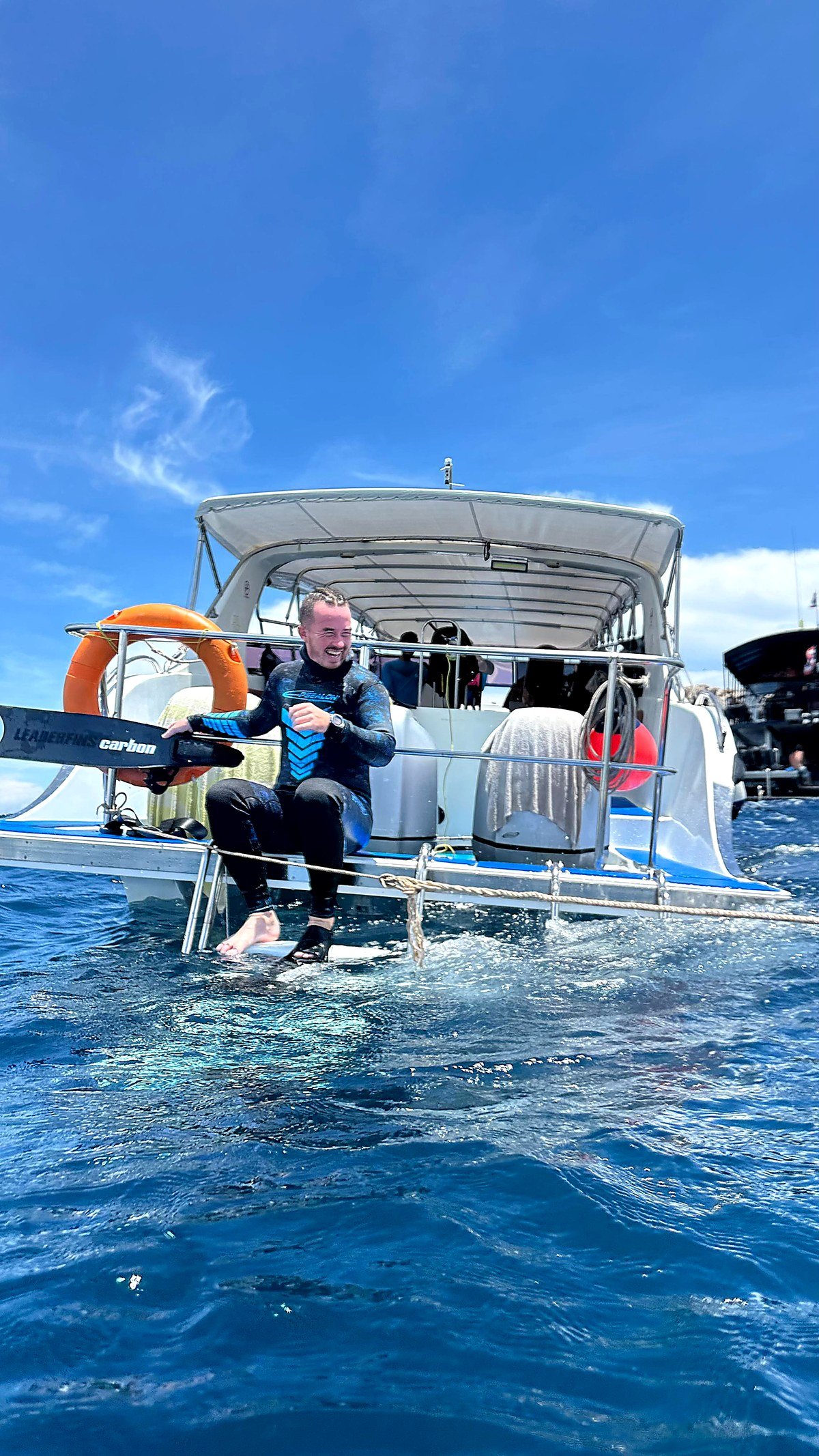
Diego has been teaching freediving from Koh Samui since 2021. He holds instructor certification from Apnea Total and additional credentials across six certification bodies: Oxygen Advantage, Breatheology, International Breathwork Foundation (IBF), Breathing Cold, and GPBA. Plus emergency oxygen administration and first aid.
Learn More →Ready to try freediving?
Message Diego on WhatsApp to check availability for your dates. No deposit needed.
Check Availability on WhatsAppContinue reading
Can You Freedive with a Cold?
The honest answer to whether you can freedive with a cold, congestion, or sinus issues. What the risks are, when it is s
Read More →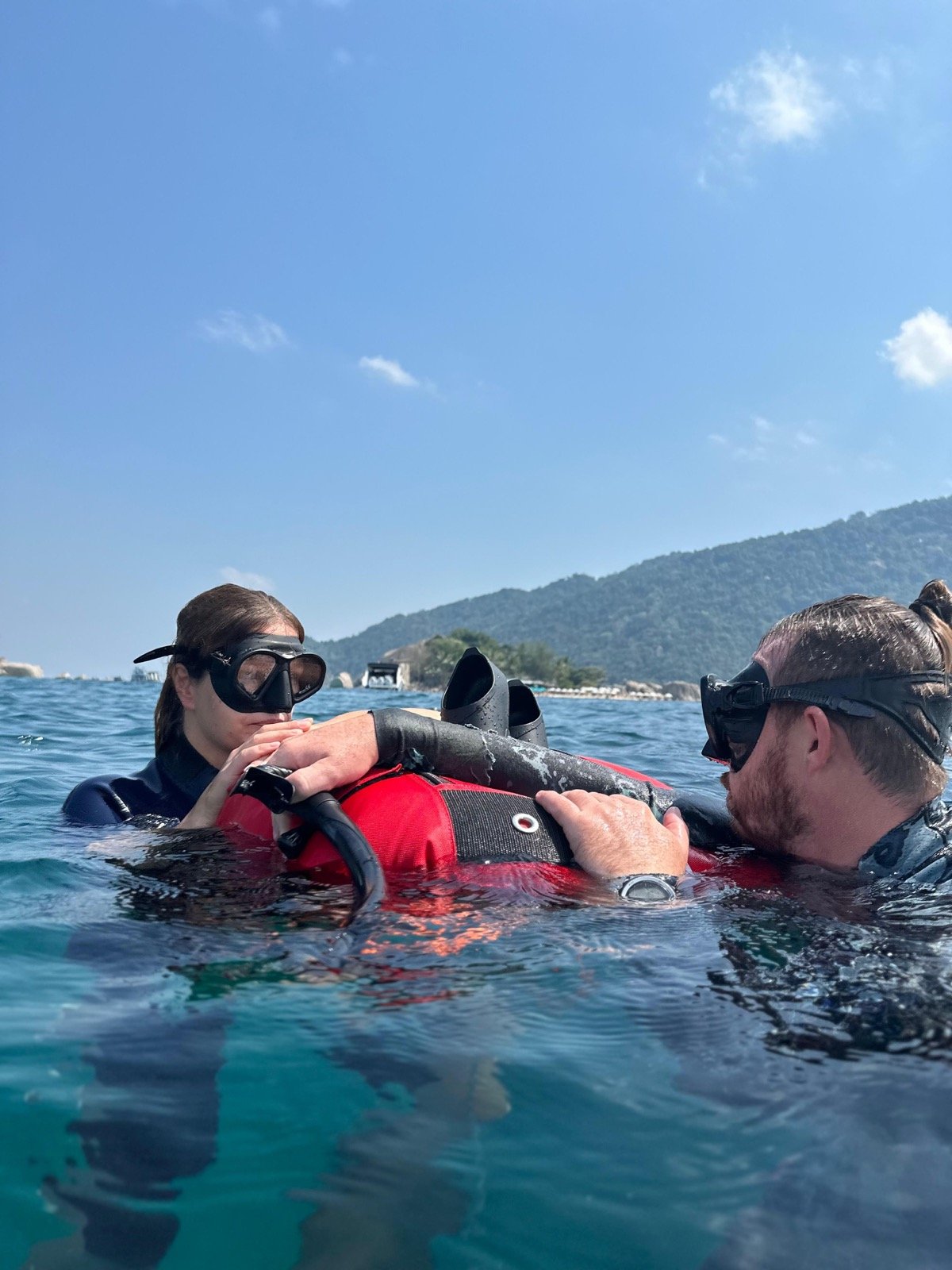
Overcoming the Fear of Deep or Dark Water in Freediving
Scared of deep or dark water? A Koh Samui freediving instructor on why that fear is completely normal, how a dive line a
Read More →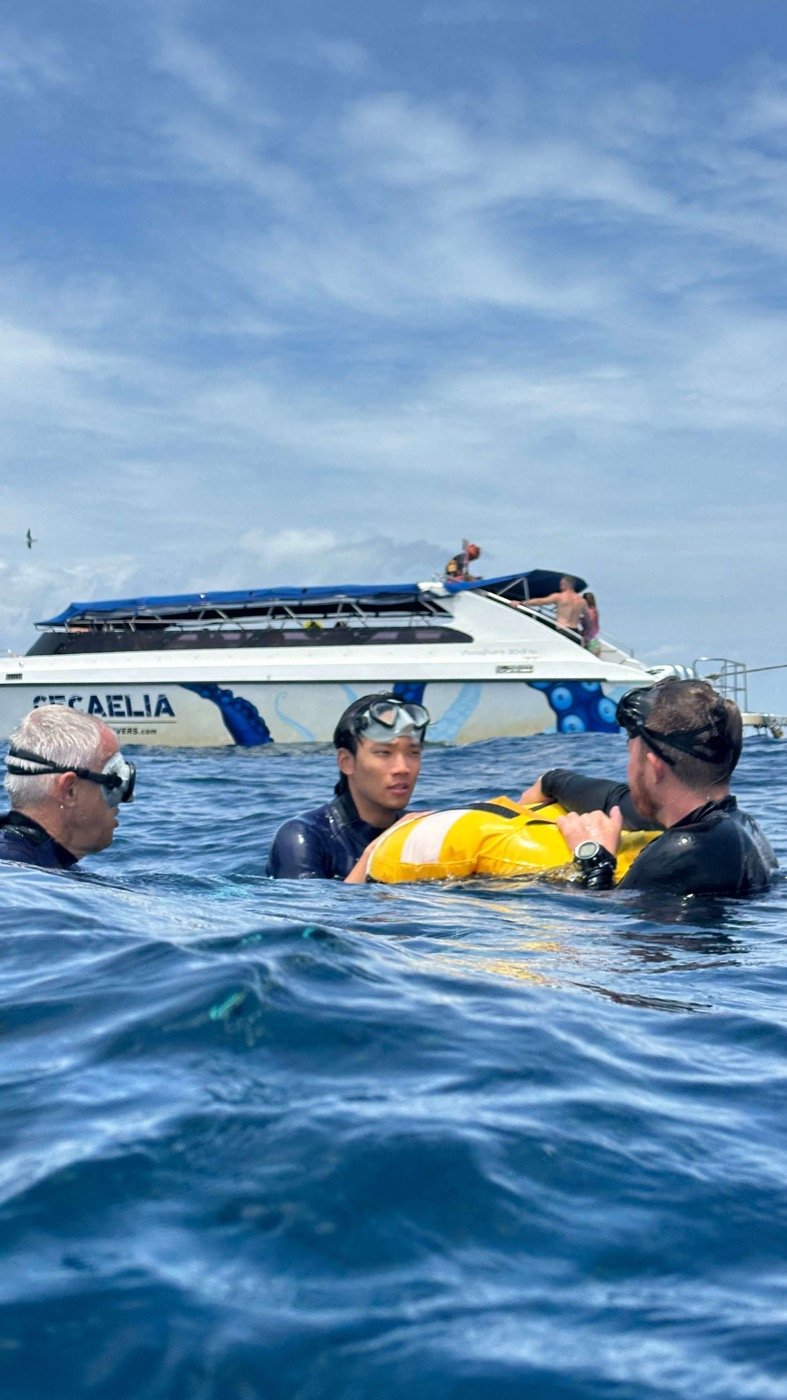
Is Freediving Safe? What You Need to Know
Is freediving safe? An honest look at the real risks, how proper training eliminates most of them, and what safety proto
Read More →