Marine Life You Will See Freediving in the Gulf of Thailand
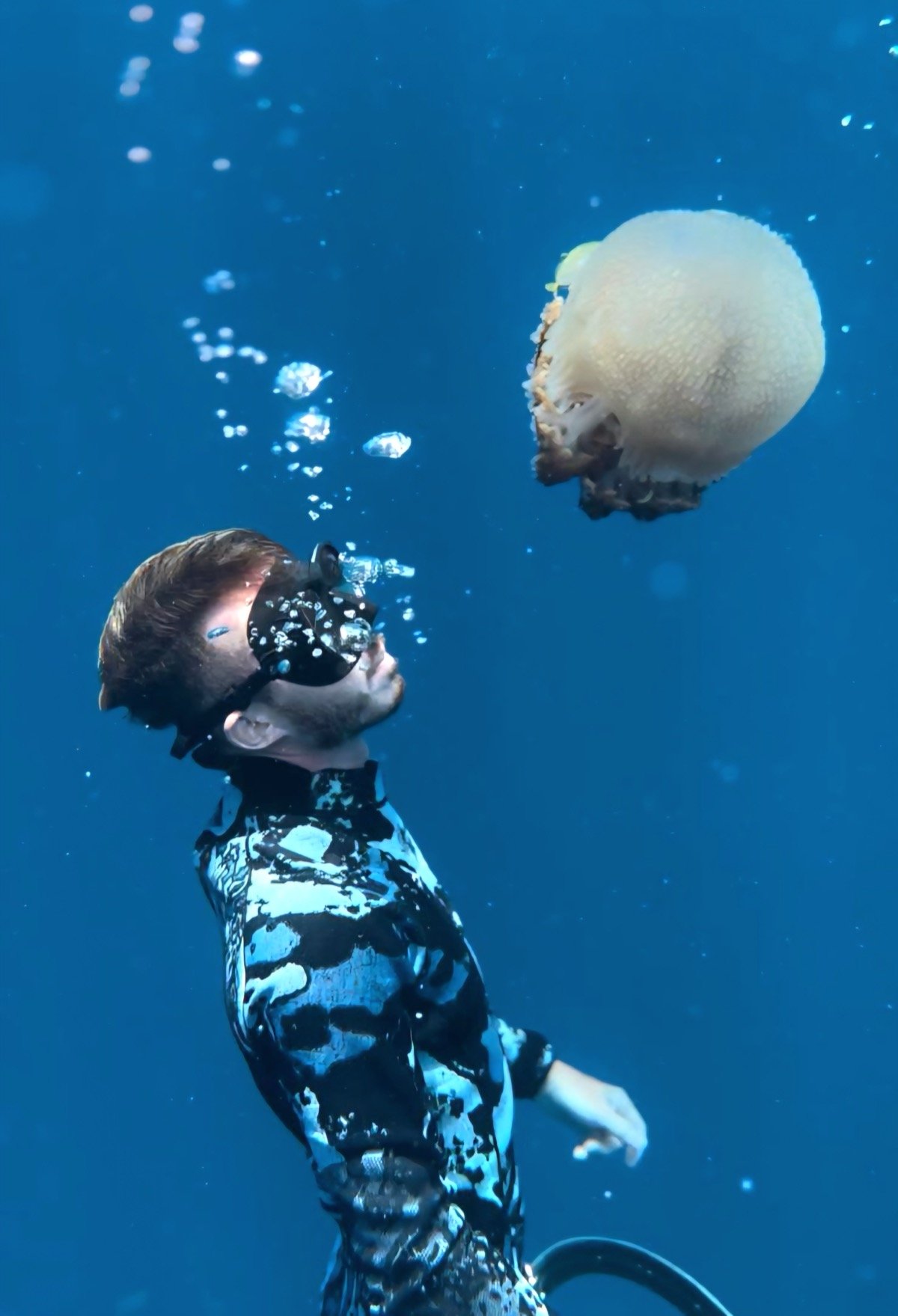
The Gulf of Thailand does not get the same attention as the Andaman Sea when people talk about marine life in Thailand. The Similan Islands, Richelieu Rock, and the Mergui Archipelago dominate the conversation. But the Gulf has its own underwater world, and if you are based on Koh Samui, you have access to some of the most varied freediving encounters in the country.
Sail Rock, the submerged pinnacle at the center of the Gulf between Koh Samui and Koh Tao, is the headline site. Shallow reef sites around Koh Tao offer a different kind of experience. And the warming season from March to May brings whale sharks through with regularity.
What you see changes based on depth, season, and how you move through the water. Freediving gives you a specific advantage over scuba: you produce no bubbles, you make almost no noise, and you move in a way that does not disturb marine life. The difference in animal behavior around a freediver versus a scuba diver is consistent and significant. Fish hold their ground. Turtles keep swimming. Whale sharks do not accelerate away from the sound of a regulator.
This guide covers the key species you can expect to encounter freediving around Koh Samui, where you are most likely to see them, and when.
Whale Sharks (March to May)
Whale sharks are not guaranteed at any dive site. But Sail Rock is one of the most consistent locations in the Gulf of Thailand for whale shark encounters during the warm season. March through May sees the highest frequency of sightings. Water temperature rises, plankton concentrations increase, and whale sharks follow the food.
These are the largest fish on the planet, reaching 12 meters in length. They are filter feeders with no interest in divers. A whale shark encounter while freediving is different from scuba. You can dive down alongside the animal and swim parallel to it without the noise and bubbles that cause the shark to change direction. Many freedivers report hovering alongside a whale shark for 30 to 60 seconds on a single breath.
Encounters at Sail Rock typically happen in the water column between 5 and 25 meters. The sharks often circle the pinnacle repeatedly, which means once you locate one, you can follow it for multiple dives.
There is no guarantee. But if you are planning a trip to Koh Samui between March and May, the possibility of sharing the water with a whale shark is real. The season is open right now.
Barracuda Schools (Year-Round)
Sail Rock's most reliable resident attraction is a large school of chevron barracuda. Unlike the solitary great barracuda found in shallower waters, chevron barracuda form dense schools that number in the hundreds. The school at Sail Rock circulates around the upper 15 meters of the pinnacle throughout the year regardless of season.
Barracuda schools look intimidating. They are not dangerous to divers. They move in tight formation, occasionally parting around a freediver who approaches too directly, then closing again behind. Watching the school from below, looking up through a spiral of silver fish with surface light filtering down, is one of the more memorable sights in the Gulf.
The school is most consistently found between 5 and 15 meters on the north side of the pinnacle. On calm days with good visibility, you can watch the school from the surface before you dive.
Sea Turtles
Green turtles are common around the Gulf of Thailand's dive sites. Sail Rock sees turtles regularly, though less frequently than the shallower reef sites around Koh Tao. Japanese Gardens and Twins, two of Koh Tao's southern reef sites accessible from Koh Samui on longer boat rides, have resident turtle populations that move through predictable areas of the reef.
Hawksbill turtles also appear, less frequently. They are smaller than green turtles and tend to feed on sponges and coral at shallower depths. Identifying the two species on a dive becomes straightforward after a few encounters.
Approaching a turtle while freediving requires patience rather than speed. If you descend directly toward a turtle or rush at it, it dives. If you descend slowly and allow the turtle to become aware of your presence gradually, it will often continue feeding or resting with you nearby. The approach works because you are quiet and produce no bubbles.
Giant Trevally and Batfish
Giant trevally are fast, aggressive hunters that patrol the water column around Sail Rock. You see them working below schools of smaller fish, accelerating in short bursts to pick off stragglers. A fully grown giant trevally reaches 1 meter in length and 40 kilograms. Encountering one at close range on a freedive gives you a sense of scale that photographs rarely capture.
Batfish, with their distinctive flat, round shape, congregate around the upper sections of the pinnacle. They are curious animals and will approach freedivers who remain still. Unlike most reef fish that retreat when a diver gets close, batfish tend to hold position or move toward you if you stop moving. They are common subjects in underwater photos at Sail Rock for this reason.
Yellowfin tuna and Spanish mackerel pass through the site in the cooler months between November and February. These are fast open-water fish. Encounters are brief. But seeing a school of tuna in the water column from 15 meters depth with clear visibility is difficult to replicate in many places.
Reef Fish at Shallower Sites
Below the pelagic action at Sail Rock and at the shallower reef sites, the marine life is less dramatic in scale but more varied in species. Lionfish shelter under coral overhangs. Moray eels occupy crevices in the reef structure. Blue spotted stingray rest on sandy patches between coral heads. Scorpionfish, nearly invisible against the rock, hold position on reef surfaces.
Fusiliers and anthias form the fish clouds around healthy coral structures that characterize tropical reef diving. Surgeonfish, parrotfish, and wrasse move through the reef in small groups throughout the day. These are the species you see most consistently on every dive regardless of conditions.
For freediving specifically, the shallow reef between 5 and 15 meters is where you spend most of your time during a course. The visibility is good, the depth is manageable, and the reef is active enough to hold your attention between training dives.
Why Freediving Changes What You See
The behavioral difference between marine life around freedivers versus scuba divers is consistent enough that most serious underwater wildlife photographers prefer freediving. The reason is mechanical. Scuba produces a continuous stream of bubbles rising through the water column. The sound is audible from a significant distance underwater. Fish and larger marine animals respond by increasing their distance from the source.
Freedivers enter the water with a single breath. The dive is quiet. Movement, when controlled, is smooth. Animals that would retreat from a scuba diver often hold position or approach a freediver who moves slowly and stays relaxed.
For whale sharks specifically, the difference is well documented among dive guides who work the site regularly. A whale shark that will not allow a scuba diver within 5 meters will sometimes allow a calm freediver to swim alongside it for extended periods. The same pattern holds for turtles, rays, and schooling fish.
This is not a reason by itself to begin freediving. But if you are interested in learning and marine life encounters are part of your motivation, the advantage is real and immediate from your first open water dives.
Best Time of Year for Specific Species
The Gulf of Thailand does not have a single dive season. Different species are most active or most present at different times of year.
Whale sharks are most reliably encountered from March through May. This is the peak season and the window where an encounter goes from unlikely to genuinely possible. June through August sees them less frequently but not rarely.
Barracuda schools are present year-round at Sail Rock. They are not seasonal.
Tuna and Spanish mackerel are most common during the cooler months from November through February when water temperatures drop slightly and pelagic fish move closer to the surface.
Sea turtles are present year-round at most sites. Encounter frequency depends more on dive site and time of day than on season.
The Gulf's main weather consideration is from October through December when conditions can be rough and boat trips to Sail Rock may not be possible on choppy days. The calm season from January through September is when most course students and fun divers visit.
How to See Gulf of Thailand Marine Life by Freediving
The Beginner Freediver course covers 3 days. By day 2, you are diving to 15 to 20 meters on a single breath. Day 3 takes place at an open water site, typically Sail Rock, where you apply what you have learned in a real environment with real marine life.
If you are not ready for the full certification course, the Discovery Freediving day is a single day introduction with no prerequisites and no certification requirement. You go underwater, you dive to 5 to 7 meters with instructor support, and you see what the Gulf of Thailand looks like from below the surface. It is the most accessible way to experience freediving and to find out whether the full course is something you want to pursue.
Both options run from Koh Samui with a maximum of 3 students per instructor. Message us on WhatsApp to check available dates. No deposit is required to hold a spot.
Check the Beginner Freediver course page for the full program details, or the Discovery Freediving page if you want to start with one day.
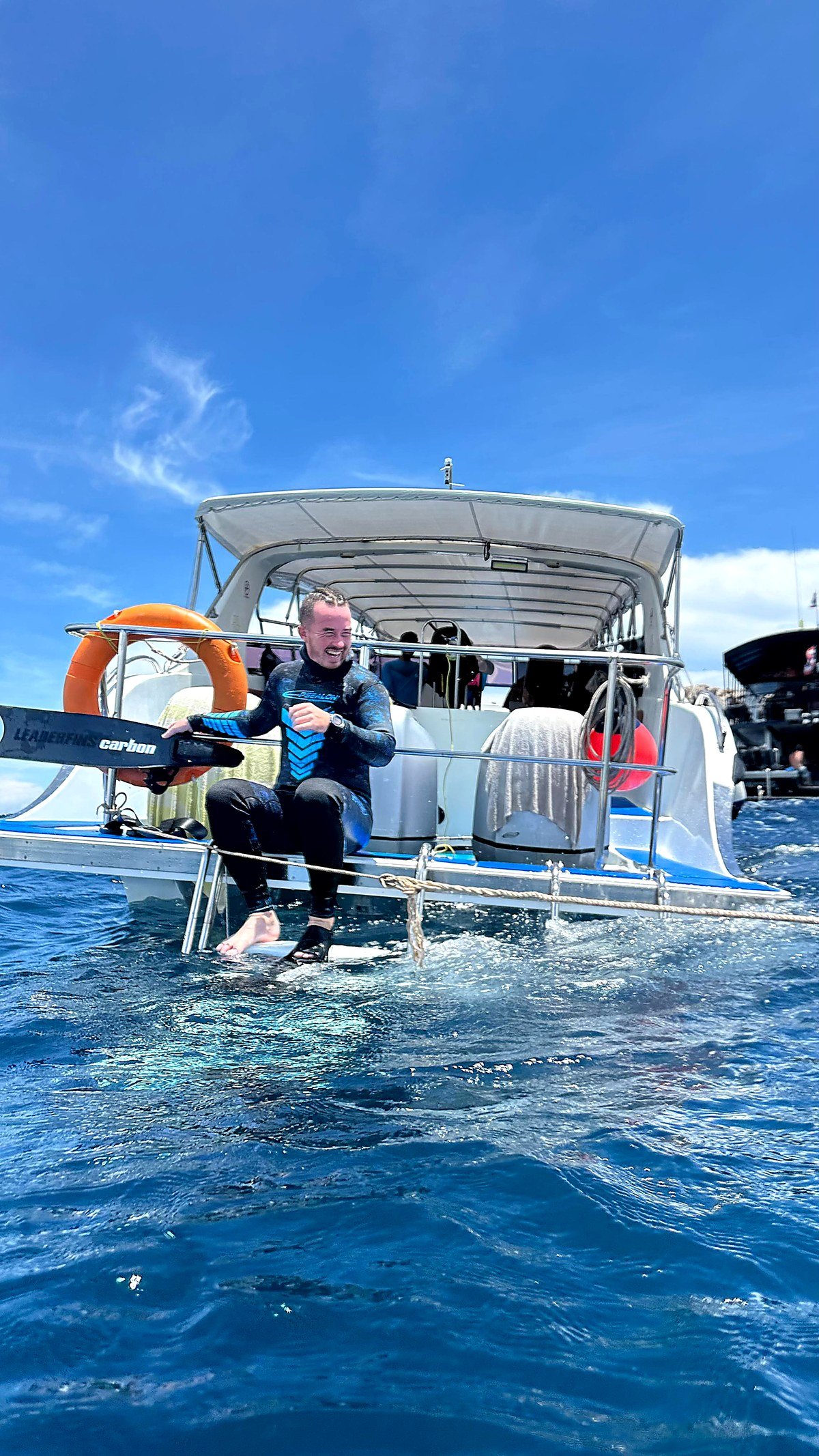
About Diego Pauel
Diego has been teaching freediving from Koh Samui since 2021. He holds instructor certification from Apnea Total and additional credentials across six certification bodies: Oxygen Advantage, Breatheology, International Breathwork Foundation (IBF), Breathing Cold, and GPBA. Plus emergency oxygen administration and first aid.
Learn More →Ready to try freediving?
Message Diego on WhatsApp to check availability for your dates. No deposit needed.
Check Availability on WhatsAppContinue reading
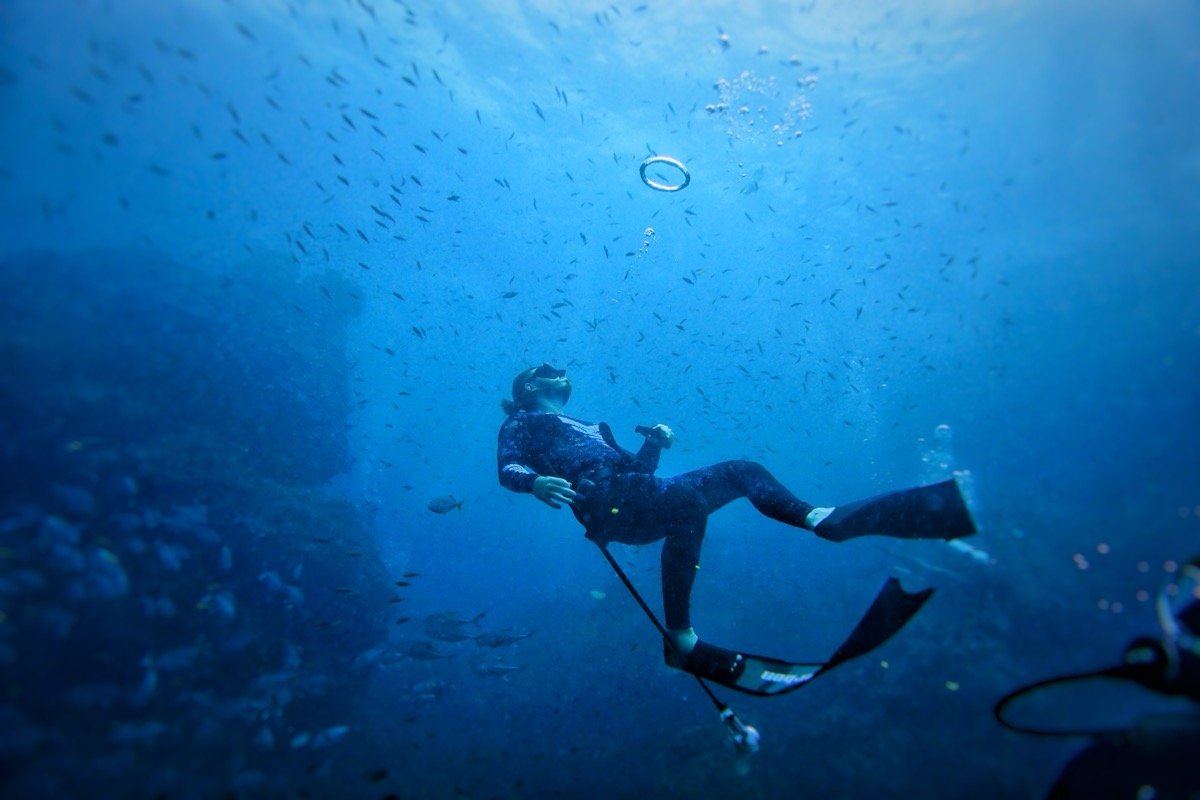
Sail Rock: Why Freedivers Love This Gulf of Thailand Dive Site
Sail Rock is the Gulf of Thailand's best dive site. Discover why freedivers love this submerged pinnacle, what marine li
Read More →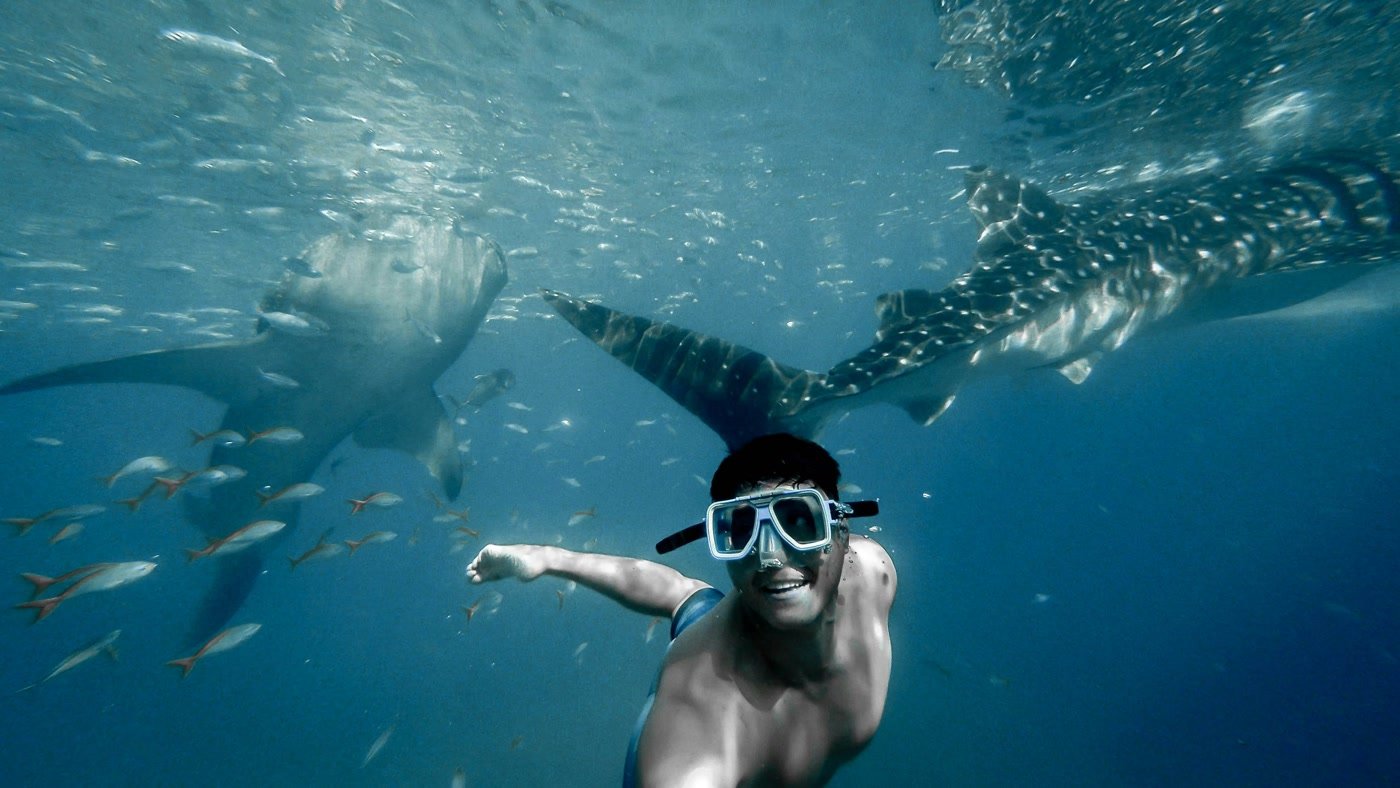
Whale Sharks at Sail Rock: What Freedivers Need to Know
Whale sharks visit Sail Rock between March and May. Here is what freedivers need to know about the season, the behavior,
Read More →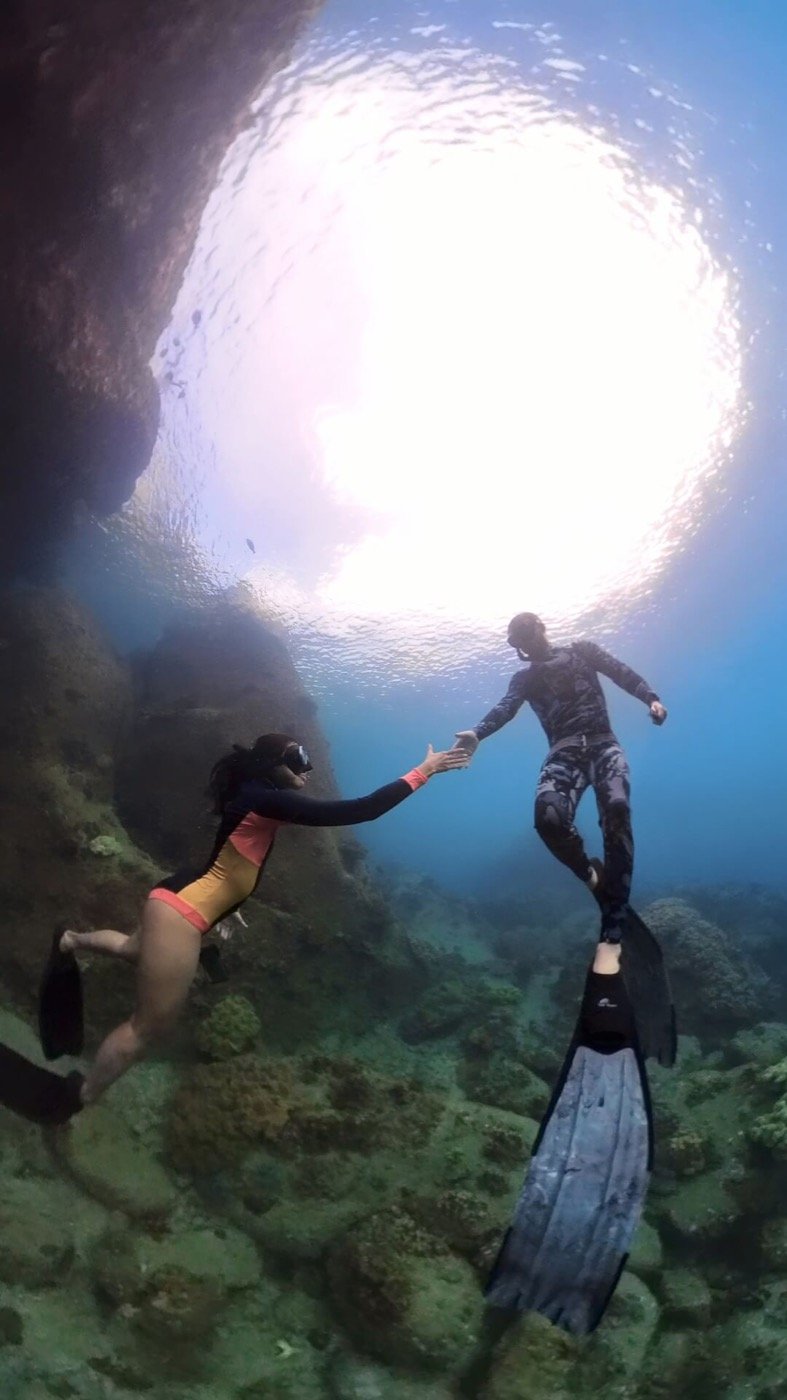
Freediving in Koh Samui: The Complete Guide
Everything you need to know about freediving in Koh Samui. Courses, dive sites, costs, best season, and what to expect f
Read More →