Freediving Finning Technique: How to Kick From the Hip and Stop Wasting Oxygen
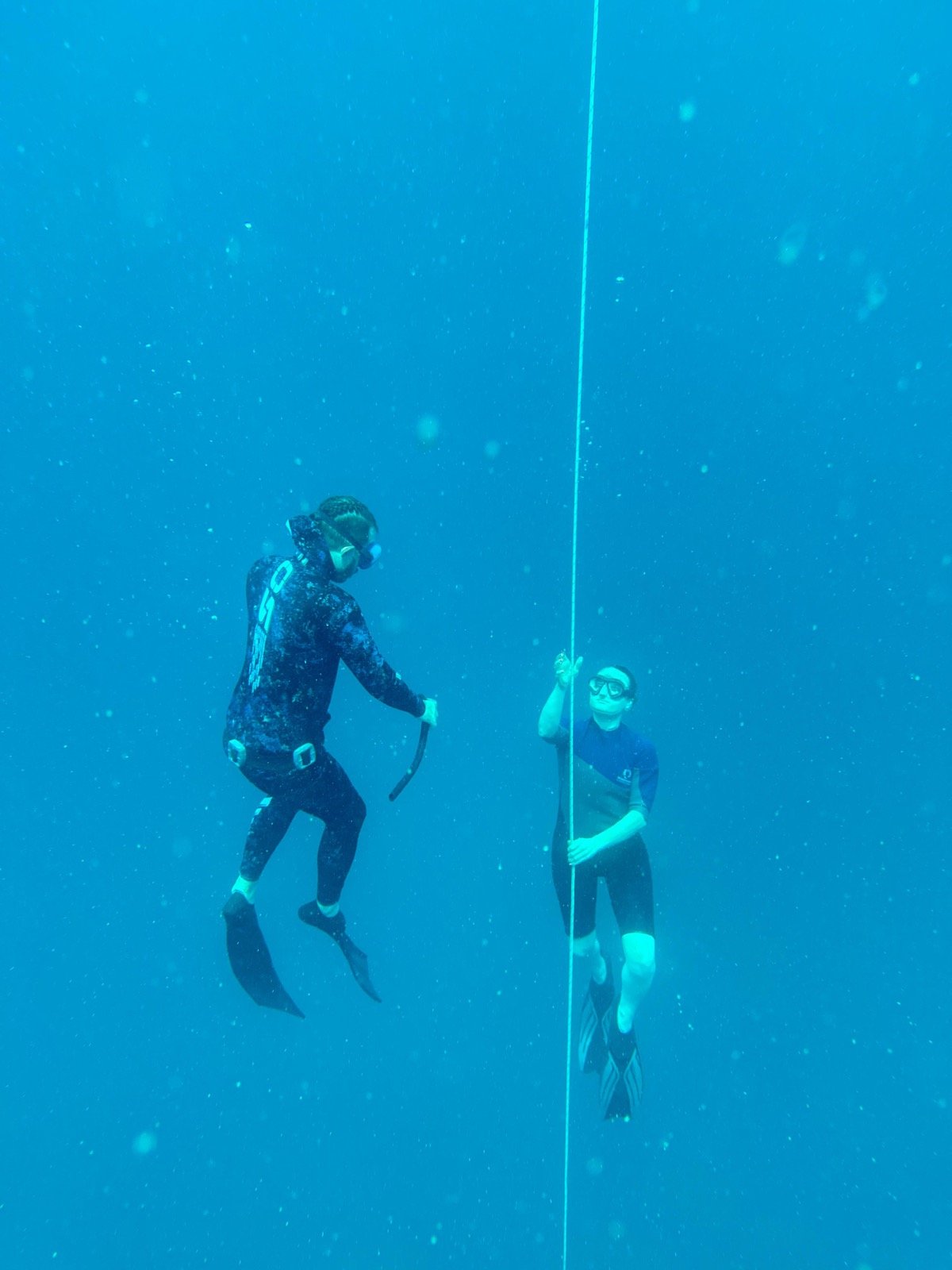
Short answer: an efficient freediving kick comes from the hip, not the knee. You keep your legs long and mostly straight, move them slowly through a wide, relaxed arc, and let the long blade of a freediving fin do the work. The goal is the fewest, slowest, smoothest kicks that move you through the water — because every kick burns oxygen, and oxygen is the one thing you cannot spare on a breath hold. Most beginners do the exact opposite: fast, frantic, bent-knee kicks that feel powerful but barely move them and quietly drain their breath hold. Fixing it is mostly about doing less, not more.
This is one of those things that looks effortless when an experienced freediver does it and feels impossible when you first try. It is not impossible — it is just unlearning the way you swam in a pool as a kid. Let me explain what the body is actually supposed to do.
Why finning technique decides how your dive feels
In freediving your muscles are your single biggest oxygen consumer, and your legs are your biggest muscles. So how you use your legs more or less determines how long and how comfortably you can stay down. A diver with a relaxed, efficient kick can cover the same distance on a fraction of the oxygen of a diver who is thrashing — same depth, same fins, completely different experience.
This connects directly to relaxation. A calm kick keeps your heart rate low and your oxygen consumption low, which is the whole game in freediving. A hard, anxious kick spikes both. Good finning is not really about going faster — it is about doing the same dive while spending less. That is why we treat it as a core skill on the beginner freediving course, not just a detail.
The efficient kick, step by step
Here is what a good freediving kick looks like:
- Power from the hip. The movement starts at your hip and flows down the leg like a wave. Your thigh leads, your lower leg and fin follow. Think of your whole leg as one long flexible blade, hinging at the hip.
- Long, mostly straight legs. Keep your knees soft but not bent. A small, natural bend is fine; a deliberate bicycle-pedalling motion is not. Bent knees turn your big, efficient leg muscles off and your small, oxygen-hungry ones on.
- Slow and wide. Slower, wider kicks move more water per stroke than fast, shallow ones. You want a relaxed, full arc — unhurried, almost lazy.
- Pointed toes, relaxed ankles. Let your ankles stay loose so the fin can flex and snap naturally at the end of each stroke. Stiff ankles fight the fin instead of using it.
- Streamlined everything else. Arms by your sides or extended ahead, head neutral, body in a straight line. Anything sticking out is drag, and drag is more kicks, and more kicks is more oxygen.
The feeling you are chasing is gliding. A good kick is followed by a moment of stillness as you glide, then the next kick. Kick, glide, kick, glide — not a constant churn.
Why long blade fins, and what they reward
Freediving fins are long for a reason. The long blade moves a large volume of water with each slow stroke, which is exactly the slow-and-efficient style you want. They are built to reward good technique — a smooth kick from the hip makes a long blade flex and propel you beautifully. They also punish bad technique, which is actually useful when you are learning: if you are kicking from the knee, a long fin will feel awkward and tiring, and that tells you something. Stiff scuba-style fins or short snorkelling fins hide your errors but make you work much harder for the same result.
The common errors that waste oxygen
Watch for these — they are the usual suspects:
- Kicking from the knee. The number-one fault. It feels like effort because it is effort, but it moves you very little. Move the power up to the hip.
- Kicking too fast. Fast kicks feel productive and aren't. They spike your heart rate and burn oxygen for almost no gain. Slow down deliberately.
- Tense ankles. Rigid ankles stop the fin flexing, so you lose most of the blade's propulsion.
- Big, splashy surface kicks. If your fins break the surface, you are kicking too high and pushing air, not water.
- Over-finning the descent. Past a certain depth you become negatively buoyant and start to sink on your own. Many beginners keep kicking hard the whole way down when they should stop, relax, and free-fall. Knowing when to stop kicking is its own skill — and a big part of how deep a beginner can comfortably go.
How to get it right
The honest truth is that finning technique is very hard to self-correct, because you cannot see your own legs and the errors feel like effort, which feels like progress. The fastest fix is someone watching you and giving you small corrections in the water — most people transform their kick in a single guided session. Pair that with the relaxed breathing techniques that keep your whole body calm, and the kick gets easy because your body is no longer fighting itself.
And as always: one person dives, one person watches. You practise finning, like everything else, with a trained buddy beside you. If you want to feel an efficient kick for yourself, the Discovery experience is a relaxed first day in the water, and the beginner course gives you the full technique with proper fins and real coaching. Message me if you are not sure where to start — I would rather point you to the right thing than sell you the wrong one.
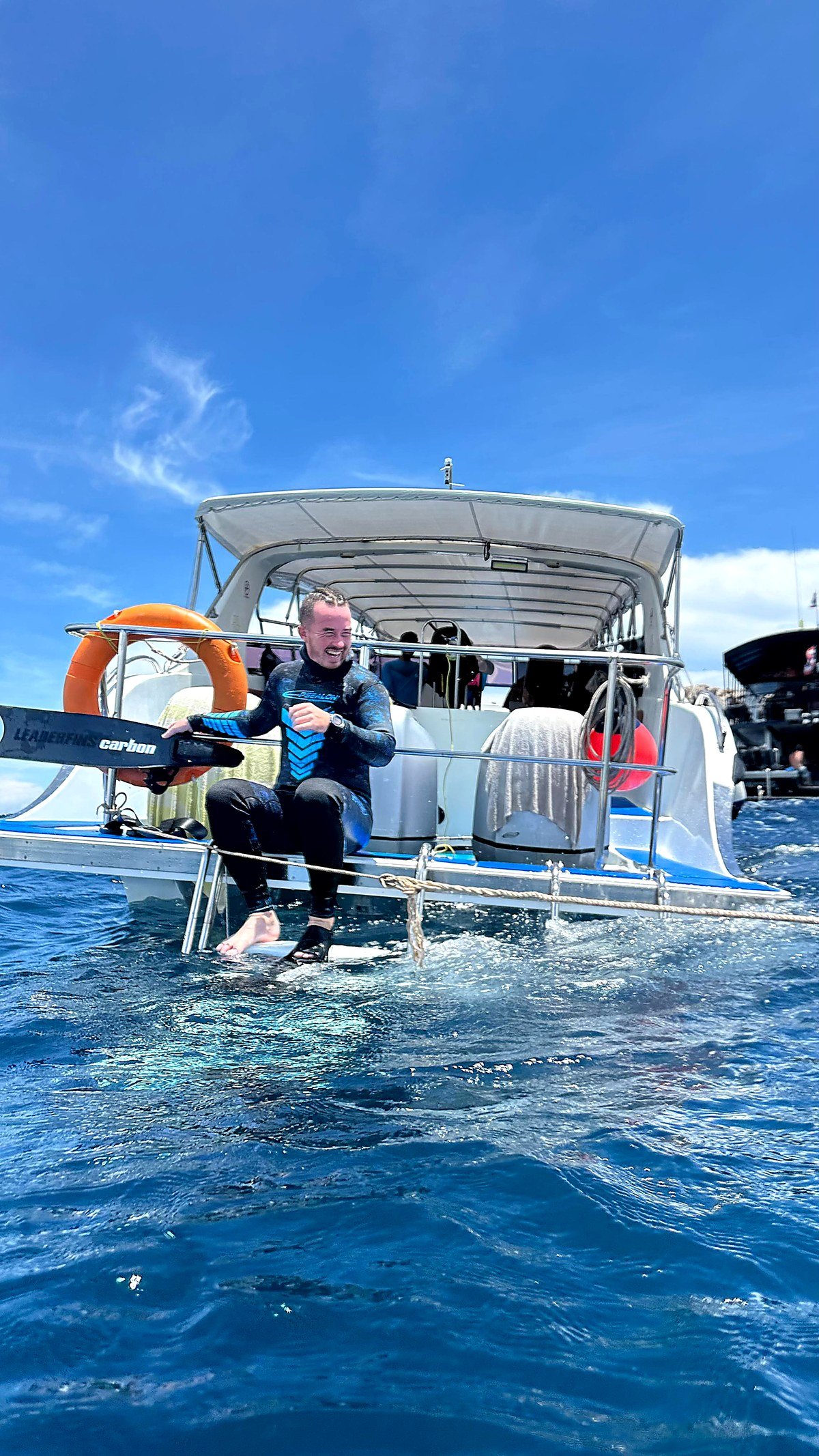
About Diego Pauel
Diego has been teaching freediving from Koh Samui since 2021. He holds instructor certification from Apnea Total and additional credentials across six certification bodies: Oxygen Advantage, Breatheology, International Breathwork Foundation (IBF), Breathing Cold, and GPBA. Plus emergency oxygen administration and first aid.
Learn More →Ready to try freediving?
Message Diego on WhatsApp to check availability for your dates. No deposit needed.
Check Availability on WhatsAppContinue reading
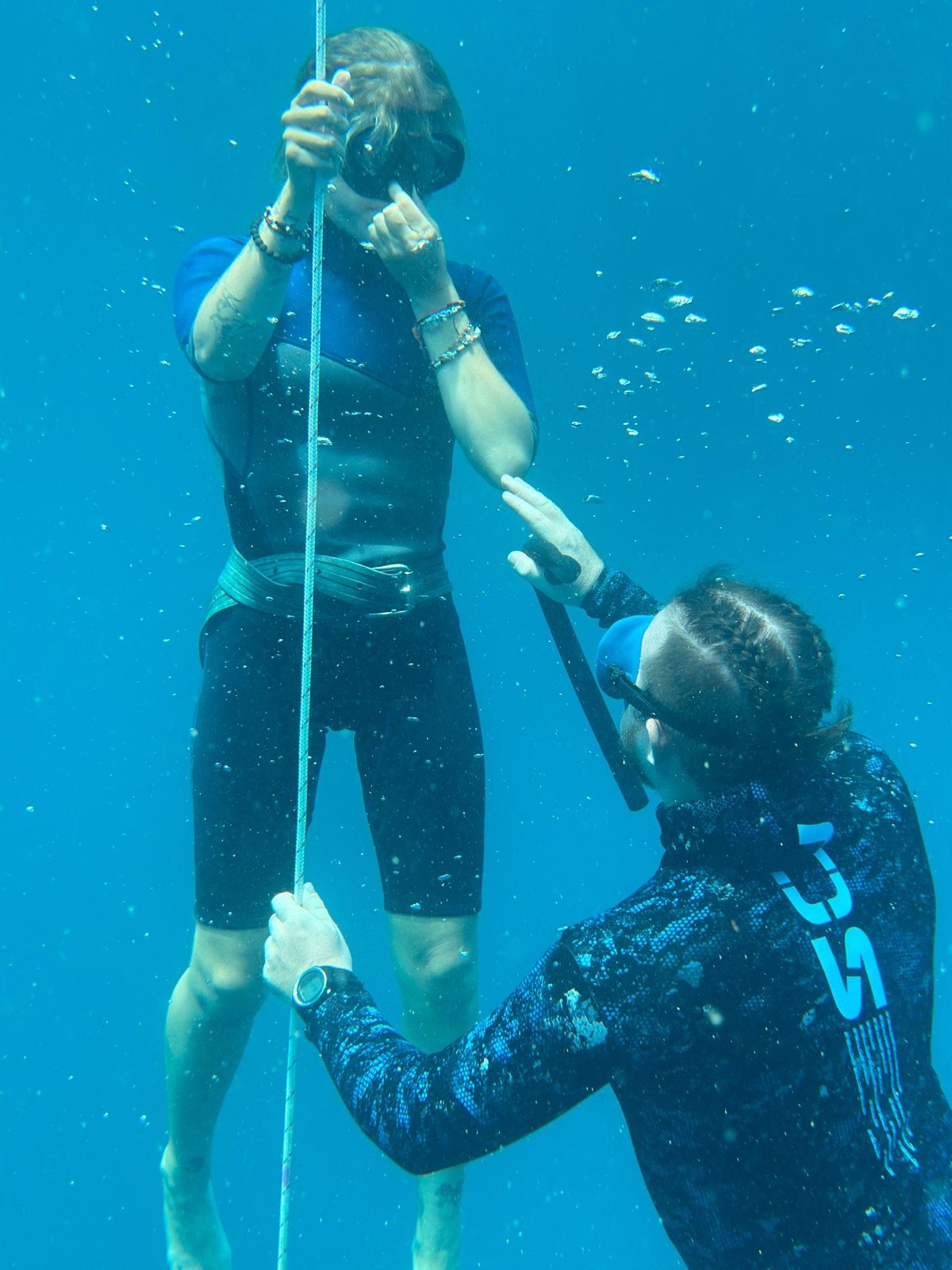
The Freediving Duck Dive: How to Get Under the Surface Without Wasting Energy
The duck dive is the first thing every freediver gets wrong and the easiest thing to fix. Here is exactly how to drop un
Read More →
Why You Can't Equalize Freediving — and How to Fix It
Can't equalize when freediving? An honest fix-it guide from a Koh Samui instructor. The most common reasons your ears wo
Read More →