Choosing Freediving Fins: Plastic, Fiberglass or Carbon?
Short answer: as a beginner, you do not need carbon fins, and buying them early is usually a waste of money. Start on soft-to-medium plastic blades — they are cheap, durable, and forgiving while you build technique. Fit matters more than material: a foot pocket that fits well will out-dive an expensive fin that pinches. Upgrade to fiberglass or carbon later, once you dive often enough to actually feel the difference. I have watched a lot of new divers spend big on carbon and then dive worse on them than they did on the school's plastic fins. Here is how to choose properly.
Fins are the gear item people get most excited about and most wrong. They look like the thing that makes you a "real" freediver. They are not — your technique is. But the right fin does make diving easier and more efficient, so let me break down what actually matters.
Why freediving fins are different
Freediving fins have long blades — much longer than snorkelling or scuba fins. The long blade moves a large volume of water with a slow, relaxed kick, which is exactly what you want when every movement costs oxygen. Short stiff recreational fins make you work hard and burn through your breath. So whatever you choose, you want a proper long blade. The real decision is the material and the stiffness.
Plastic vs fiberglass vs carbon
Plastic (polymer)
This is where almost every beginner should start, and there is no shame in it.
- Cheapest by a wide margin — often a quarter the price of carbon.
- Nearly indestructible — you can step on them, knock them on the boat, throw them in a bag.
- Forgiving — they reward a relaxed kick and do not punish the sloppy technique every beginner has at first.
- Heavier and slightly less efficient than fiberglass or carbon — but you will not notice that until your technique is good enough to be the limiting factor.
Plastic is the honest answer for a first fin. It lets you learn without worrying about damaging something expensive.
Fiberglass
The sensible middle step, and where a lot of divers happily stay for good.
- Lighter and more responsive than plastic — the blade returns energy more efficiently, so each kick gives you more glide.
- More durable than carbon — it flexes a long way before it breaks, which makes it less precious and good for travel and boat life.
- Mid-priced — a real performance jump without the carbon price tag.
If you have done a few courses, you are diving regularly, and the school's plastic fins now feel like the thing slowing you down, fiberglass is usually the smart upgrade.
Carbon
The light, fast, expensive top tier — and genuinely overkill for a beginner.
- Lightest and most efficient — superb energy return, beautiful to dive when your technique can use it.
- Fragile and fussy — carbon can crack from a sharp knock or being stepped on, and it does not love rough boat handling.
- Expensive — often double or more the price of fiberglass.
Carbon rewards a diver who already has a clean, relaxed kick and dives often enough to feel the small gains. On a beginner with a still-developing kick, those gains are invisible — you are paying a premium for a difference you cannot yet feel, in a blade you might crack on the boat. Get here eventually if you want; do not start here.
Blade stiffness matters as much as material
Within every material, blades come in soft, medium, and hard. This trips people up more than the material choice. Stiffness should match your leg strength and your diving:
- Soft blades suit lighter divers and beginners — easy to kick, forgiving, great for building a relaxed technique.
- Medium blades suit most recreational divers as their strength develops — a sensible all-round choice.
- Hard blades suit strong, heavy, or competitive divers pushing depth — and they will exhaust a beginner fast.
A common beginner mistake is buying a hard carbon blade because it sounds high-performance, then finding it tiring and stiff because their legs and technique are not there yet. Softer is friendlier when you are learning.
Foot pocket fit — the part people skip
Here is the thing I cannot stress enough: fit beats everything. The best blade in the world is useless in a foot pocket that pinches or slips. A pocket that is too tight cramps your feet and ruins your relaxation; too loose and you lose power and get blisters. Try fins on with the socks you will actually dive in — neoprene socks add bulk and change the size you need. A well-fitting medium-plastic fin will out-dive an ill-fitting carbon every single time. Many serious divers eventually buy interchangeable blades and a separate pocket so they can dial in both. You do not need that yet — just get the fit right.
So what does a beginner actually need?
Soft or medium plastic long blade fins, in a foot pocket that fits comfortably over the socks you will dive in. That is it. They are cheap, tough, forgiving, and they will take you well past your first courses. When you are diving regularly and can feel them holding you back, step up to fiberglass. Carbon can wait until you are sure it is worth it — and by then you will know exactly what you want.
The best move of all is to try before you buy. On a course you dive the school's fins for days and get a real feel for blade length and stiffness before spending anything. If you are still sorting out the rest of your kit, the what to pack guide covers what to bring and what the school provides.
If you are not certified yet, that is the place to start — the beginner course includes fins and all your gear so you can learn what suits you before buying. Want to test the water first? The Discovery experience is a single supervised day with everything provided. Message me and tell me your weight and how often you plan to dive, and I will give you a straight fin recommendation — no upsell.
About Diego Pauel
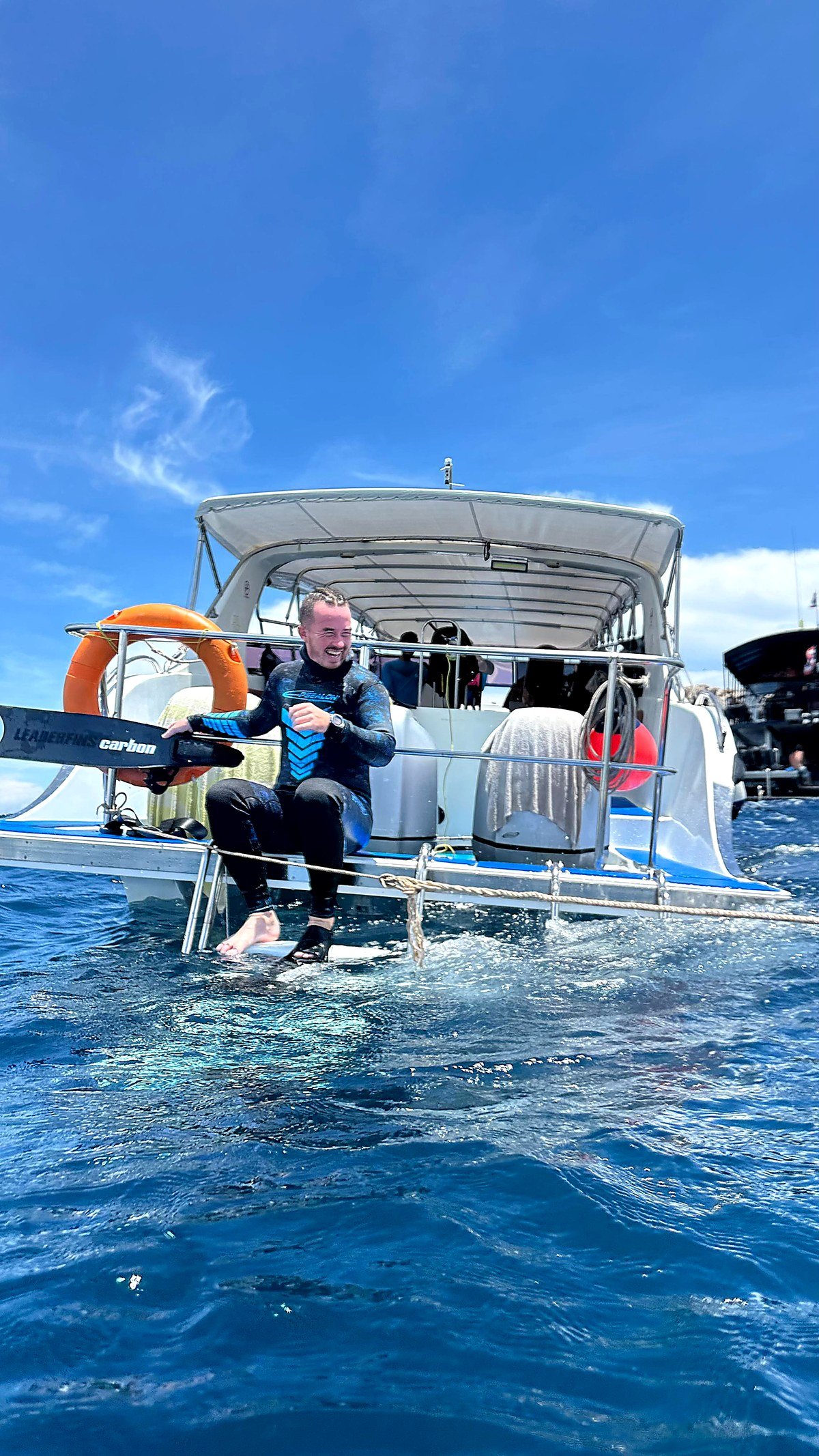
Diego has been teaching freediving from Koh Samui since 2021. He holds instructor certification from Apnea Total and additional credentials across six certification bodies: Oxygen Advantage, Breatheology, International Breathwork Foundation (IBF), Breathing Cold, and GPBA. Plus emergency oxygen administration and first aid.
Learn More →Ready to try freediving?
Message Diego on WhatsApp to check availability for your dates. No deposit needed.
Check Availability on WhatsAppContinue reading
Freediving Gear for Beginners: What You Actually Need
A Koh Samui instructor breaks down freediving gear for beginners — mask, snorkel, fins, wetsuit, weight belt, lanyard.
Read More →
How Much Does a Freediving Course Cost in Thailand? (2026 Prices)
Complete pricing guide for freediving courses in Thailand — Koh Tao, Koh Samui, Koh Lanta, Phuket. Compare AIDA, PADI,
Read More →
Freediving Wetsuit Guide for Warm Tropical Water
A freediving wetsuit guide for the warm Gulf of Thailand, from a Koh Samui instructor. Why even 29-degree water needs a
Read More →