The Freediving Buddy System: One Up, One Down
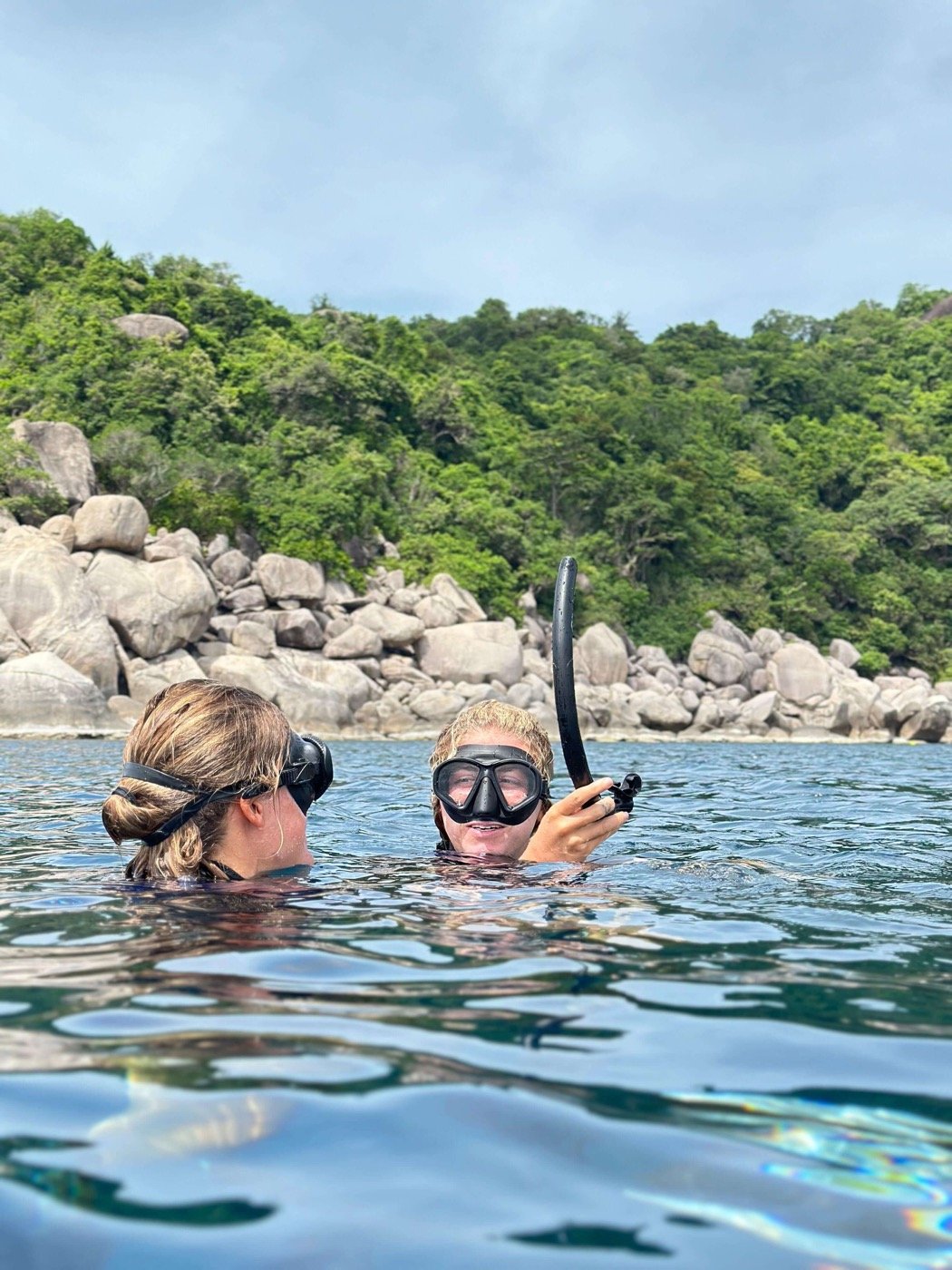
Short answer: the freediving buddy system means one person dives while the other watches, every single time — one up, one down. The diver at the surface follows their partner's dive, meets them as they ascend, and watches them closely for a full thirty seconds after they surface, because that is exactly when a blackout is most likely. It is the simplest rule in freediving and the most important one. Master it and you have managed the one serious risk in the sport on every dive you ever do. Let me walk you through how it actually works, the way I teach it in the water.
If you have read why freediving is dangerous when done wrong, you know the headline risk is blackout — a loss of consciousness from low oxygen that gives almost no warning. The buddy system is the entire answer to that risk. It is not a backup plan; it is the plan.
What "one up, one down" really means
It is exactly what it sounds like. When two freedivers train together, only one of them is underwater at any moment. The other is at the surface, fully focused, doing nothing else. Not adjusting their own gear, not scrolling through the dive in their head, not looking at the boat — watching their partner. Then you swap. One up, one down, turn by turn.
The mistake beginners make is thinking the surface person is "resting." They are not. The person at the surface has the more important job. The diver is just diving. The buddy is the safety net, and a safety net that is looking the other way catches nothing.
How to safety a diver on the surface
Here is the routine, step by step. This is what you practice on a course until it becomes automatic:
- Watch the descent and turn. You keep your eyes on your buddy as they go down, or follow the line they are diving. You want to know roughly where they are and when they turn to come back up.
- Meet them on the ascent. For deeper dives, the safety diver drops down a few metres to meet the diver in that last, most vulnerable stretch of the ascent and accompanies them to the surface. The final metres are where oxygen is lowest and where blackout most often strikes.
- Stay face-to-face at the surface. As they surface, you are right there, close enough to reach them instantly. You watch their face. You want to see clear eyes, controlled recovery breaths, and a clean "I'm okay" signal.
- Make them give the signal. The diver removes their mask, breathes, gives the okay sign, and says "I'm okay" out loud. Words and a sign, not just a thumbs up — because a diver about to samba often cannot speak clearly. If the signal does not come, you act.
The thirty-second watch
This is the part people underestimate, so I will say it plainly: a blackout can happen after the diver has surfaced and taken a breath or two. The oxygen takes a moment to reach the brain on the way back up, and the surface is statistically the most dangerous place in the whole dive. So you watch your buddy for a full thirty seconds after they come up. Eyes on their face, hands ready. Do not turn away to start your own breathe-up. Do not look at the view. Thirty seconds, every time.
Those thirty seconds are exactly when a tired or distracted buddy is tempted to relax. That temptation is the failure point in nearly every real incident. The discipline to keep watching when it feels unnecessary is what separates a safe freediver from a lucky one.
If something goes wrong
If your buddy sambas or blacks out at the surface, the response is calm and practiced — not panicked. You support their head, keep their airway above water, remove their mask, and use the blow-tap-talk method: blow across their face, tap their cheek, say their name and tell them to breathe. A diver who blacks out near the surface with an attentive buddy almost always takes a breath and recovers within seconds. It looks alarming the first time you see it in training. It is genuinely manageable when you know what to do.
You learn and practice this rescue on a real person, in the water, on a beginner freediving course. That is most of what the certification actually is — not a depth test, but the skills that make depth safe.
Why you never freedive alone
Everything above only works if someone is there. This is why the rule is absolute: you never freedive alone, ever. Not "I'll just do one quick dive." Not in a calm pool. Not because you feel strong today. The overwhelming majority of freediving fatalities share one detail — there was no trained buddy watching. A blackout is survivable. A blackout alone is not. That is the entire reason the buddy system exists, and it is non-negotiable for me, for my students, and for anyone I would call a real freediver.
It is also worth saying that this is one of the reasons people are surprised by how calm and controlled a proper course feels. You are never out there on your own edge. There is always someone whose only job is to make sure you are fine.
Learn it properly
The buddy system is simple, but it has to be learned correctly and practiced until it is automatic — reading about it is not the same as doing it. If you want to try freediving in a fully supervised setting first, the Discovery experience puts you in the water with me handling all the safety. If you want to become a competent, self-sufficient buddy yourself, the full range of courses builds exactly that. Message me if you want to talk through which one fits you — and whether you have a buddy to train with, or need me to pair you up.
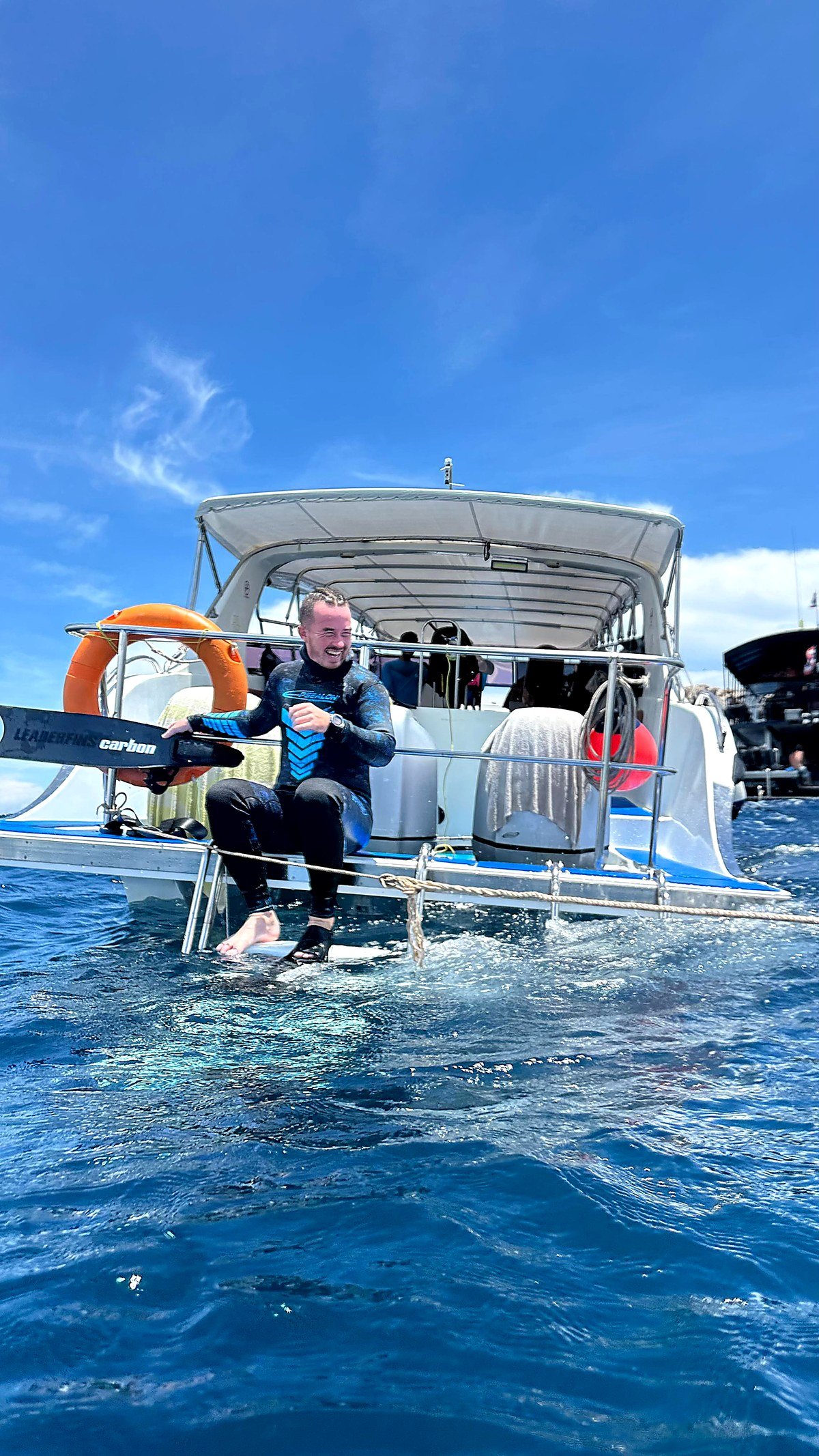
About Diego Pauel
Diego has been teaching freediving from Koh Samui since 2021. He holds instructor certification from Apnea Total and additional credentials across six certification bodies: Oxygen Advantage, Breatheology, International Breathwork Foundation (IBF), Breathing Cold, and GPBA. Plus emergency oxygen administration and first aid.
Learn More →Ready to try freediving?
Message Diego on WhatsApp to check availability for your dates. No deposit needed.
Check Availability on WhatsAppContinue reading
5 Fears Every Beginner Freediver Has (and Why They Are Wrong)
Afraid you cannot hold your breath, equalize, or stay calm underwater? Every beginner freediver has the same 5 fears. He
Read More →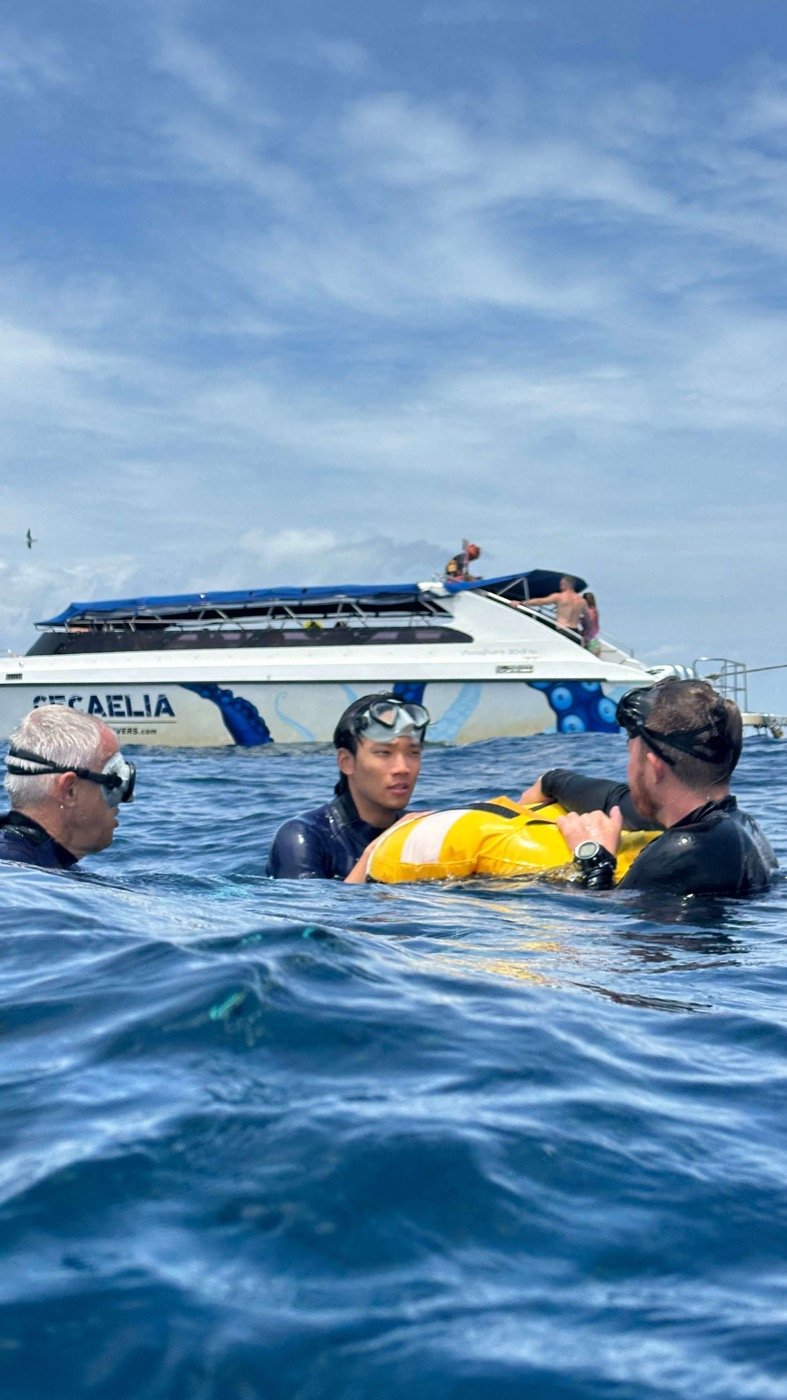
Shallow Water Blackout and Samba in Freediving, Explained
What are shallow water blackout and samba in freediving? An honest explanation from a Koh Samui instructor: why they hap
Read More →
Can You Freedive with a Cold?
The honest answer to whether you can freedive with a cold, congestion, or sinus issues. What the risks are, when it is s
Read More →