Freediving Gear for Beginners: What You Actually Need
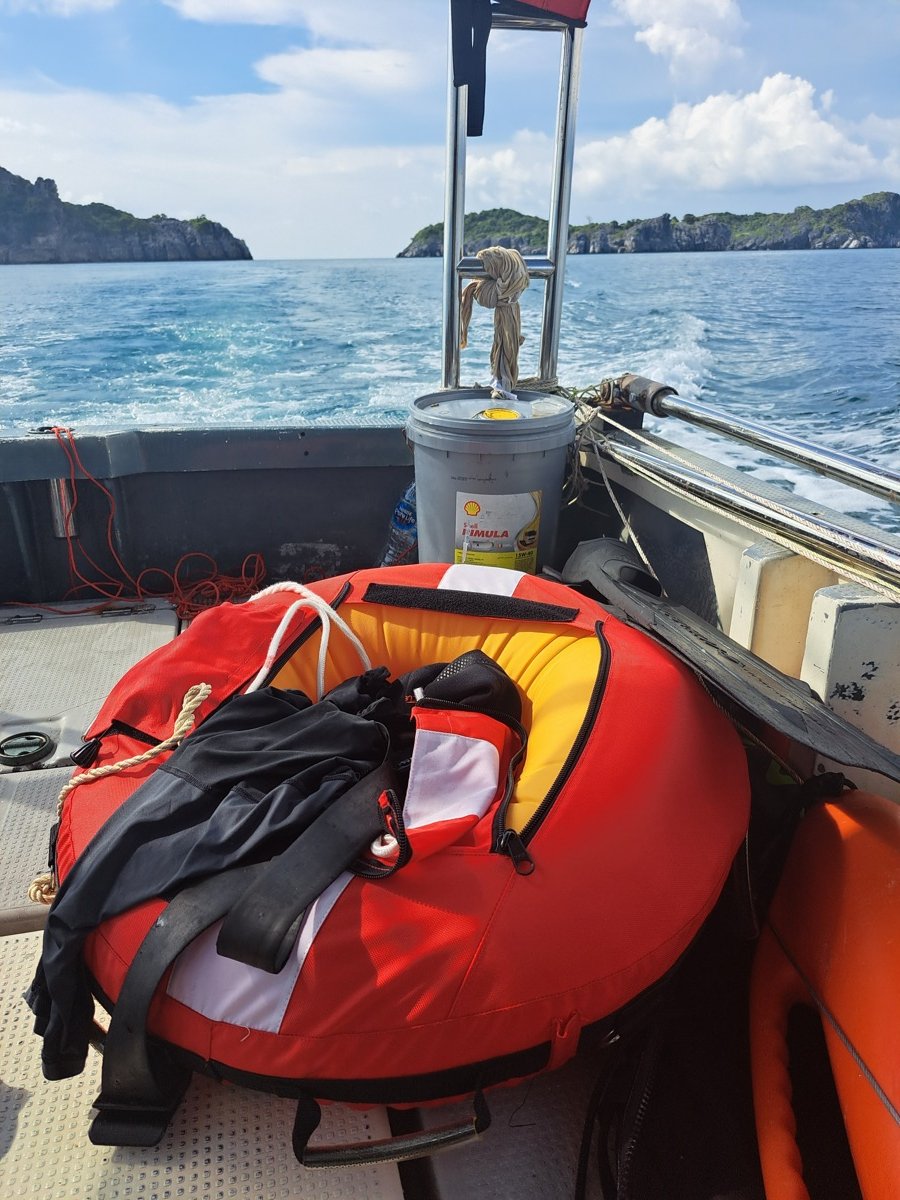
Short answer: you do not need to buy any freediving gear to start. Your course provides everything — mask, snorkel, fins, wetsuit, weights, and safety equipment. The only thing worth buying early is a low-volume mask, because a mask that fits your face changes how the whole sport feels. Everything else can wait until you actually know you love this. I tell every new student the same thing: rent and borrow until your gear starts holding you back. That moment comes later than you think.
This is the question I get on the dock from people who have just booked a course and are already eyeing a wishlist online. Let me walk through the gear the way I would on the boat — honestly, piece by piece, with what to rent and what to actually buy.
What a course already provides
Before you spend a single baht, know this: a proper beginner course gives you all of it. On our courses you get a low-volume freediving mask, a snorkel, long blade fins sized to your feet, a 3mm wetsuit, a weight belt with weights calibrated to you, a training line and buoy, and emergency oxygen on every boat. It is all cleaned, checked, and swapped if it does not fit.
So the real question is not "what do I need to buy to start" — it is "what should I buy once I know I want to keep diving." Those are very different lists.
The gear, piece by piece
Mask
The mask is the one item I tell people to buy first if they buy anything. A freediving mask has a low internal volume — the air pocket in front of your eyes is small, so you waste less of your breath equalising it as you go down. A normal snorkelling mask is fat with air and fights you the deeper you go. A good low-volume mask is cheap (well under the cost of fins), packs into a daypack, and a face that seals properly makes everything calmer. Buy this one.
Snorkel
Almost an afterthought. A simple J-shaped snorkel with no valves, no fancy purge, nothing to fail. You only use it on the surface between dives — you always remove it before you descend, because a snorkel in your mouth during a blackout is a hazard. Buy the cheapest plain one or use the school's. This is not where your money goes.
Fins
Long blade freediving fins are the expensive, exciting item everyone wants to buy. Resist for now. As a beginner you cannot tell the difference between a stiff plastic fin and a carbon fin yet, and the price gap is enormous. Rent or use the school's fins for your first courses. When you are diving regularly and your technique is solid, then you choose blades — I wrote a whole separate guide on choosing freediving fins because it deserves real thought.
Wetsuit
Even in our warm 29-degree Gulf water, a wetsuit matters for a long session — it keeps you warm enough to stay relaxed, and relaxation is the whole game in freediving. Freediving wetsuits are a different animal from surf or scuba suits: thinner, stretchier, two-piece, often open cell on the inside for warmth. For a first-timer, use the school's. If you buy one later, get the thickness right for tropical water — I cover exactly that in the wetsuit guide.
Weight belt and weights
A rubber freediving weight belt sits on your hips and holds lead weights that offset the buoyancy of your wetsuit and lungs. The amount is personal — it depends on your body, your suit thickness, and how much air you carry. Your instructor calibrates this for you on Day 1. Do not buy weights blind; the right number changes with your wetsuit anyway. Rent or use the school's until you have your own suit and know your number.
Lanyard
A lanyard is a short leash that clips you to the descent line so you never drift away from it in low visibility or current. It is a safety item, not a beginner item — you use it for line diving and depth work, not for the shallow fun dives where you start. The course covers when and why you use one. Buy it when you start doing dedicated depth training, not before.
What to rent versus buy — the honest order
- Buy first: a low-volume mask. Cheap, personal, and it improves every single dive.
- Buy second (much later): a wetsuit that fits, once you are diving often and want your own warmth and comfort.
- Buy later still: fins, once you can feel the difference and know your style.
- Rent or borrow as long as you can: weights, belt, snorkel, lanyard. These either depend on your other gear or you barely notice the brand.
The mistake I see most is someone spending a small fortune on a full carbon-fin, custom-suit kit before their second course, then discovering the fins are too stiff and the suit is the wrong thickness. Gear bought ahead of skill is usually gear bought twice. Let your diving tell you what you need.
A few practical notes
Try before you buy whenever you can — a mask that seals on your friend's face may leak on yours, and a fin that suits a heavy diver may be too stiff for you. Most of what makes a dive good is technique and relaxation, not equipment. And if you are still packing for your trip, the what to pack guide covers everything else you actually need to bring, which is less than you think.
The takeaway
Do not let gear be the thing standing between you and the water. You need nothing to start — that is the beauty of freediving as a sport. Show up, use the kit that comes with the course, and learn what your body and your dives actually ask for. Then buy slowly and buy well.
If you want to feel it before spending anything, the Discovery experience puts you in the water for a supervised day with all gear provided. Ready for the full skill set? The beginner course includes every piece of equipment in this article and a certification you keep for life. Message me if you want a straight answer on what is worth buying for the kind of diving you have in mind.
About Diego Pauel
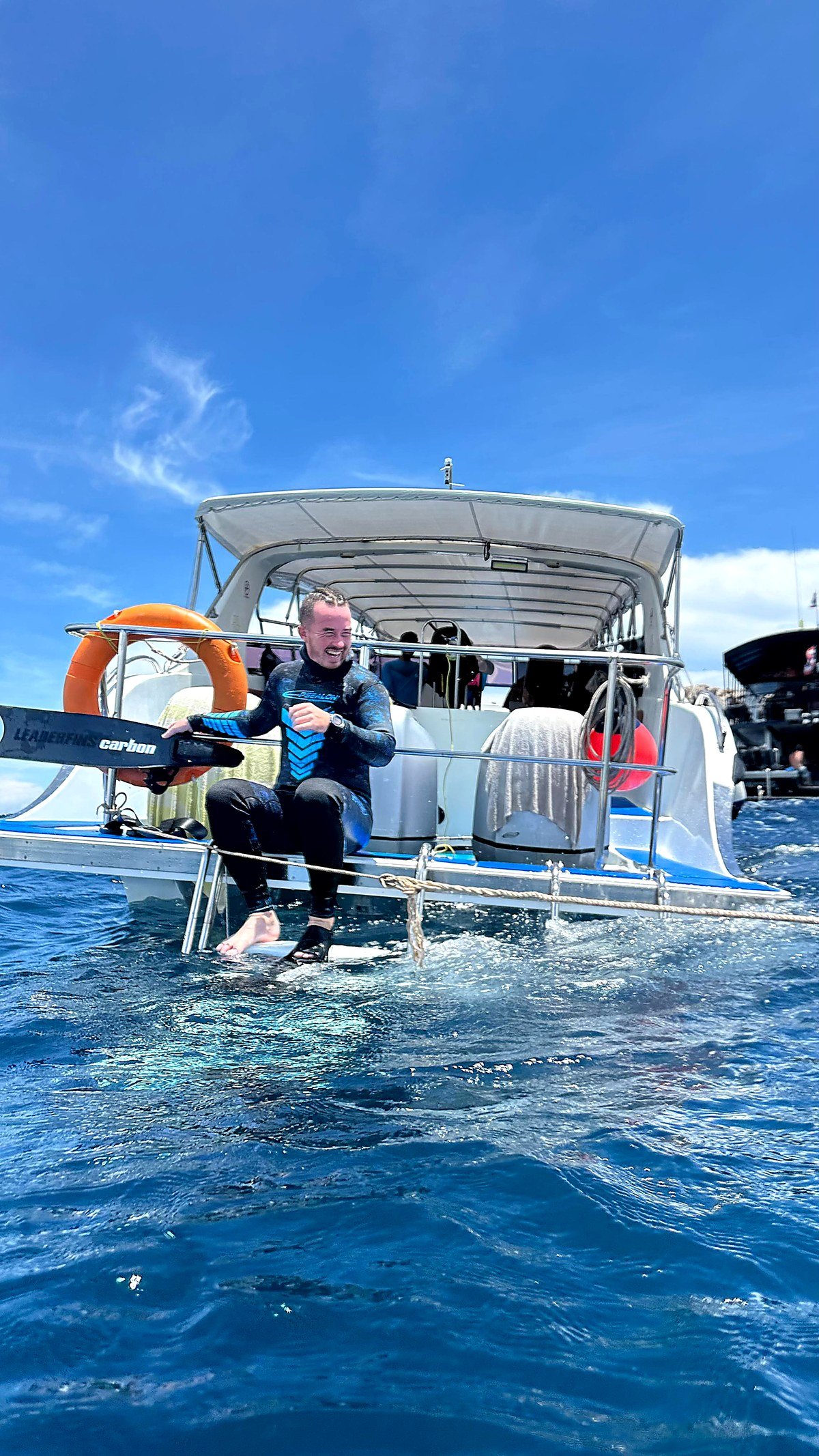
Diego has been teaching freediving from Koh Samui since 2021. He holds instructor certification from Apnea Total and additional credentials across six certification bodies: Oxygen Advantage, Breatheology, International Breathwork Foundation (IBF), Breathing Cold, and GPBA. Plus emergency oxygen administration and first aid.
Learn More →Ready to try freediving?
Message Diego on WhatsApp to check availability for your dates. No deposit needed.
Check Availability on WhatsAppContinue reading
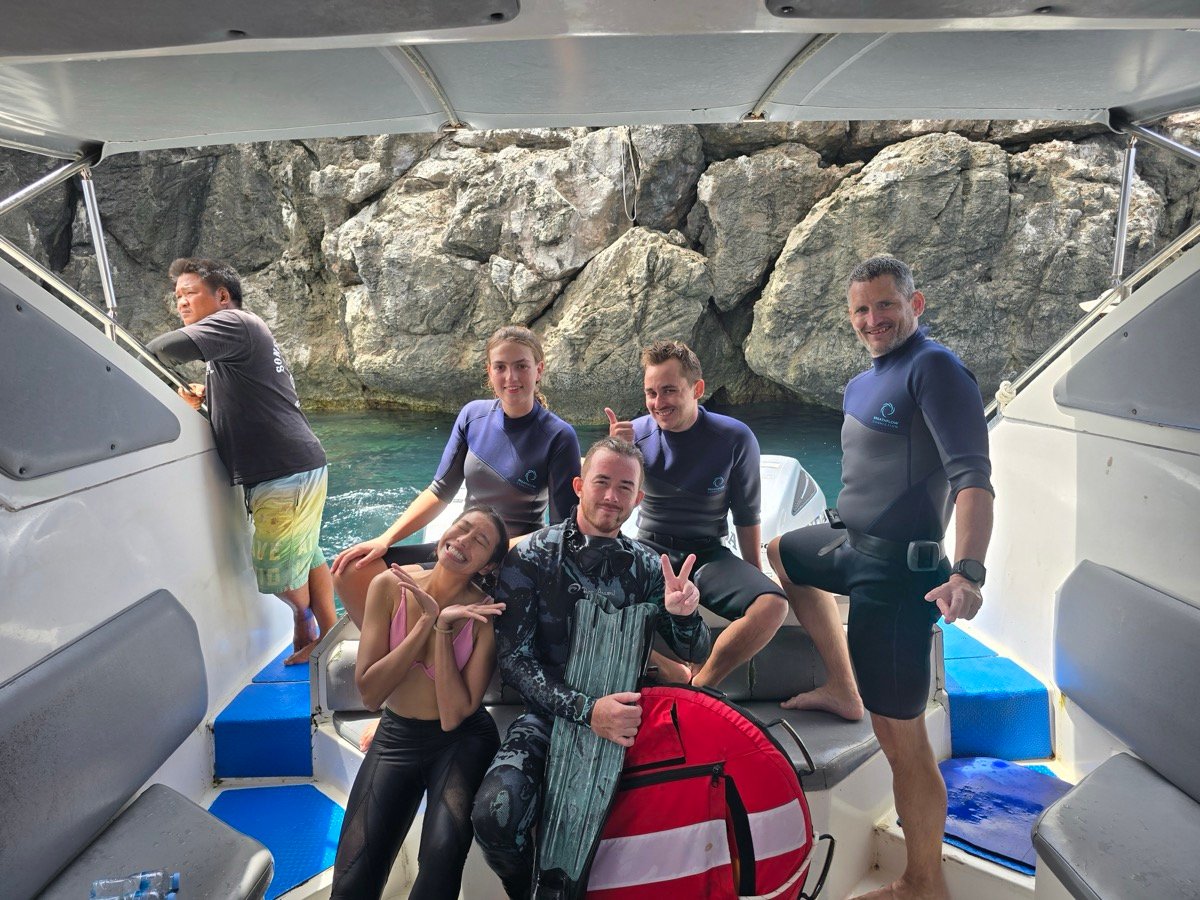
How to Combine a Freediving Course With a Koh Samui Holiday
You do not have to choose between a holiday and learning to freedive in Koh Samui. A 3-day course slots neatly into a we
Read More →
Best Time of Year to Freedive in Koh Samui
When is the best time to freedive in Koh Samui? A season by season guide (updated for 2026) covering visibility, water t
Read More →
Getting to Koh Samui: Flights, Ferries and Transfers for Your Freediving Trip
The fastest way to Koh Samui is a direct flight from Bangkok (about one hour) straight to the island airport. The cheape
Read More →