Is Freediving Dangerous? An Honest Answer
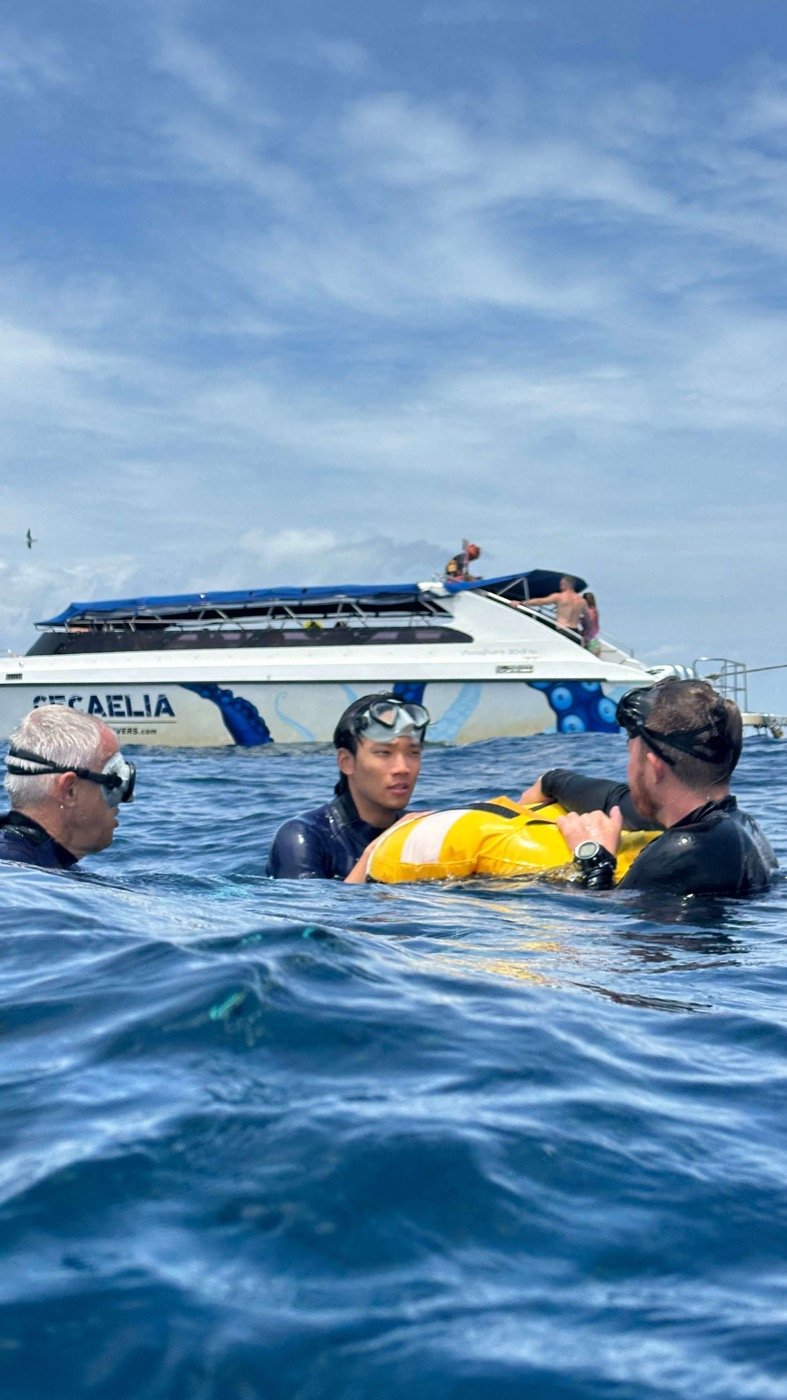
Short answer: freediving is dangerous when it is done wrong — alone, untrained, and pushing for depth or time. Done the way it is taught on a proper course — with a trained buddy, conservative limits, and the safety skills that take one weekend to learn — it is one of the calmest and most controlled things you can do in the water. The danger is almost never the water itself. It is the gap between what a person thinks they can do and what they have actually been trained to handle. Close that gap and the risk drops dramatically.
I get asked this more than any other question, usually by someone who has watched a deep-diving video and felt their stomach drop. So let me answer it the way I would on the boat, honestly, without either scaring you off or pretending there is nothing to respect.
What the real risk actually is
There is essentially one serious risk in recreational freediving, and it has a name: blackout. When you hold your breath and your oxygen drops low enough, your body can shut off consciousness to protect the brain. It is not painful and it gives almost no warning to the diver. On land it would simply be a faint. Underwater, with nobody watching, it is the thing that turns freediving from a sport into a tragedy.
Here is the part that matters: blackout is almost entirely preventable, and when it does happen it is almost entirely survivable — if a trained buddy is within arm's reach. A freediver who blacks out at the surface or in shallow water and is supported by an attentive buddy typically recovers within seconds, breathes, and is completely fine. The same diver alone does not get that second chance. This single fact is why the entire safety system of freediving is built around one rule.
The one rule that removes most of the danger
Never freedive alone. One person dives, one person watches. Always.
This is the buddy system, and it is not a suggestion — it is the foundation everything else is built on. On a course you learn how to be a good safety buddy: where to position yourself, how to watch for the warning signs, how to support a diver on the surface, and how to perform a rescue if it is ever needed. It is not complicated and it is not frightening to learn. It is a calm, practiced routine. Once you have it, the headline risk of the sport is managed on every single dive.
The people who get hurt freediving are overwhelmingly in one of two groups: spearfishers diving alone for hours, and untrained swimmers playing breath-hold games in a pool with friends who do not know what to watch for. Both share the same missing ingredient — nobody trained is watching.
How a course actually removes the risk
A beginner freediving course is, more than anything, a safety course with beautiful scenery. Over a few days you learn the things that turn a risky activity into a controlled one:
- Recognising your own limits. You learn what the early signals of low oxygen feel like, and — crucially — to surface long before they become a problem. Good freedivers are conservative freedivers.
- Proper breathing. Hyperventilating before a dive is one of the most dangerous mistakes a beginner can make, because it tricks the body into suppressing the urge to breathe while oxygen keeps dropping. You learn why never to do it, and what to do instead.
- The buddy system, for real. Not the idea of it — the actual mechanics of watching, supporting, and rescuing, practiced until it is automatic.
- Equalisation and relaxation. Most beginner discomfort comes from forcing things. Learning to equalise gently and stay relaxed makes the whole experience safer and far more enjoyable.
This is why a certified beginner course exists, and why we cap our groups at three students per instructor. Safety scales with attention, and attention does not stretch across a crowd.
What freediving is NOT
The footage that makes freediving look terrifying — divers descending past 100 metres on a single breath — is competitive freediving. That is a tiny, highly specialised corner of the sport, done by athletes with years of training, full safety teams, and medical support. It has about as much to do with recreational freediving as Formula 1 has to do with your drive to work.
Recreational freediving — the kind you would learn here, the kind you would do on a fun dive at Sail Rock — usually happens in the first 10 to 20 metres, well within comfortable limits, with a buddy beside you and a guide nearby. It is slow, quiet, and deeply relaxing. Most students are surprised by how calm it feels, not how intense.
So, should you be worried?
You should respect it. Respect is healthy and it makes you a better, safer diver. But you do not need to be afraid of freediving any more than you need to be afraid of the sea itself. The fear that brings people to this question is almost always a fear of the unknown — and a course turns the unknown into a set of simple, practiced skills.
If you want to feel that for yourself before committing to a full certification, the Discovery experience is a single supervised day in the water where the only thing you are responsible for is relaxing. If you already know you want the full skill set, the beginner course gives you everything in this article and a certification you keep for life.
Freediving is not dangerous when you are trained, supervised, and conservative. It is the lack of those three things that is dangerous — and all three are completely within your control. Message me if you want to talk through whether it is right for you. I would rather answer ten honest questions than have you put it off because of a scary video.
About Diego Pauel
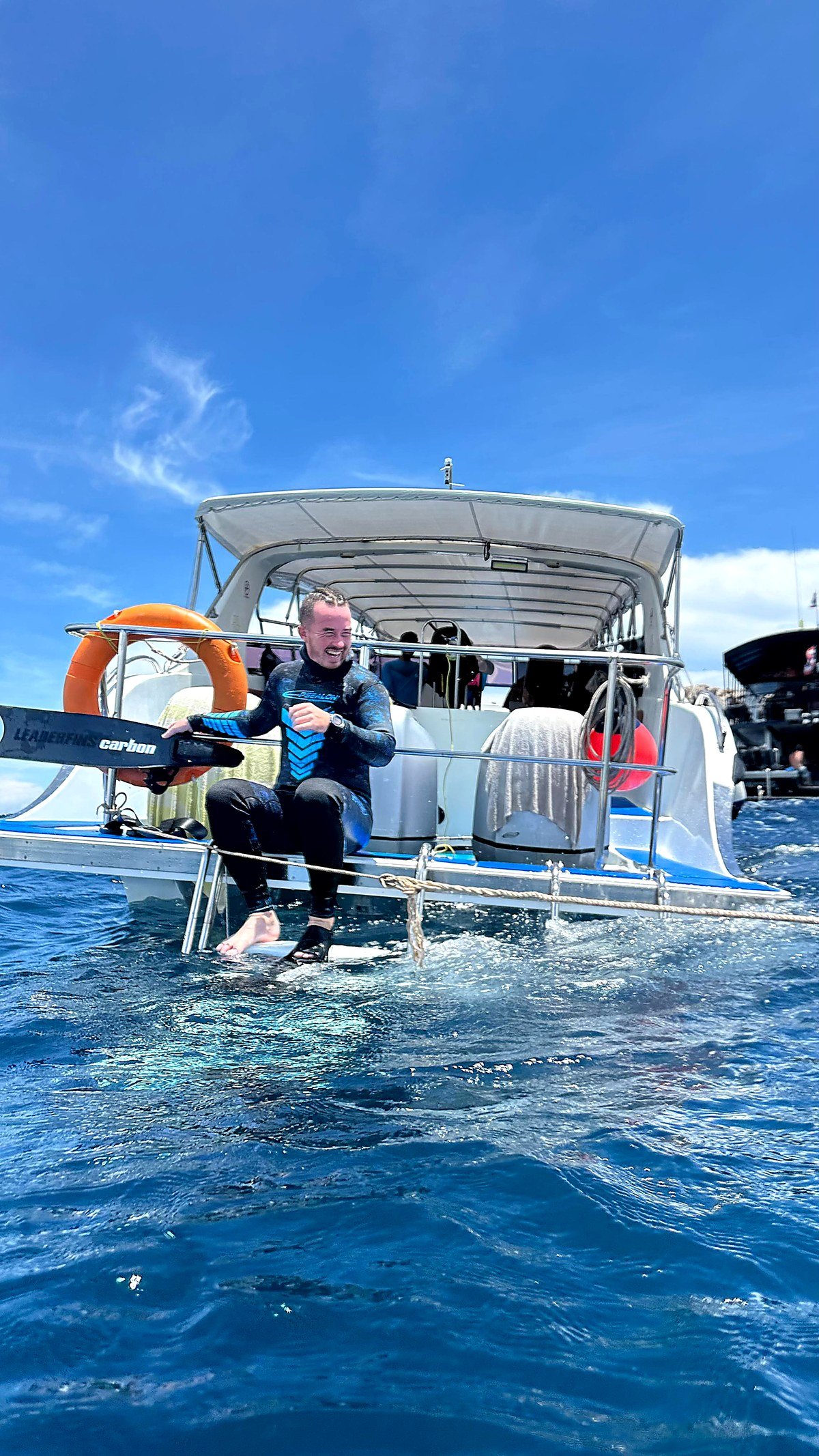
Diego has been teaching freediving from Koh Samui since 2021. He holds instructor certification from Apnea Total and additional credentials across six certification bodies: Oxygen Advantage, Breatheology, International Breathwork Foundation (IBF), Breathing Cold, and GPBA. Plus emergency oxygen administration and first aid.
Learn More →Ready to try freediving?
Message Diego on WhatsApp to check availability for your dates. No deposit needed.
Check Availability on WhatsAppContinue reading
Can You Freedive with a Cold?
The honest answer to whether you can freedive with a cold, congestion, or sinus issues. What the risks are, when it is s
Read More →
Shallow Water Blackout and Samba in Freediving, Explained
What are shallow water blackout and samba in freediving? An honest explanation from a Koh Samui instructor: why they hap
Read More →
The Freediving Buddy System: One Up, One Down
How does the freediving buddy system work? A Koh Samui instructor explains one up, one down: how to safety a diver on th
Read More →