Shallow Water Blackout and Samba in Freediving, Explained
Short answer: shallow water blackout is a loss of consciousness caused by low oxygen, usually striking near the surface at the end of a dive — and samba (loss of motor control) is the milder warning version of the same thing. Both come from hypoxia, made worse by over-breathing and pushing past your limits. The good news is that with proper training and a one-up-one-down buddy watching you, both become a non-event: you are caught, supported, and breathing again within seconds. This is the single most important safety topic in freediving, so let me explain it the way I would on the boat — honestly, without the scare-story drama, but without sugar-coating it either.
If you have read my post on whether freediving is dangerous, you already know the headline: the one genuinely serious risk in this sport is blackout. Everything below is the detail behind that sentence.
What blackout and samba actually are
Your brain runs on oxygen. When you hold your breath, the oxygen in your blood slowly gets used up. If it drops low enough, your body does something protective — it shuts off consciousness so that your remaining oxygen is reserved for your heart and brain. That is a blackout. On land it would just be a faint. Underwater, with nobody watching, it is the thing that turns the sport into a tragedy.
It is called shallow water blackout because it most often happens in the last few metres of the ascent or right at the surface. As you rise, the pressure around you drops, the oxygen in your lungs becomes less available, and that final stretch is exactly when your levels are lowest. The cruel part is that you are almost home when it happens.
Samba — the freediver's nickname for loss of motor control — is the step before a full blackout. The diver surfaces but cannot quite control their movements: shaking, jerky head, a vacant look, unable to hold their mask or do their recovery breaths cleanly. It is the body's last warning light. A diver who sambas is telling you, very clearly, that they went too close to the edge.
Why they happen
Blackout and samba are not random and they are not bad luck. They have causes, and every one of them is avoidable:
- Pushing past your limits. Chasing a personal best, holding on for one more second, ignoring the urge to breathe. The diver who always stops early never gets near a blackout. Good freedivers are conservative freedivers.
- Hyperventilating before a dive. This is the dangerous one because it feels helpful. Taking lots of fast, deep breaths before going down does not add meaningful oxygen — it just blows off carbon dioxide. And carbon dioxide is what triggers your urge to breathe. So you remove your early warning system while your oxygen keeps dropping silently. You can black out before you ever feel like you need air. Learning proper breathing technique is the direct antidote to this.
- Repeated dives without enough surface recovery. Diving again before your body has fully reloaded on oxygen stacks the deficit.
- Diving alone. Not a cause of blackout, but the reason a survivable event becomes a fatal one. A diver who blacks out with a trained buddy beside them almost always recovers within seconds. The same diver alone does not get that second chance.
How training turns it into a non-event
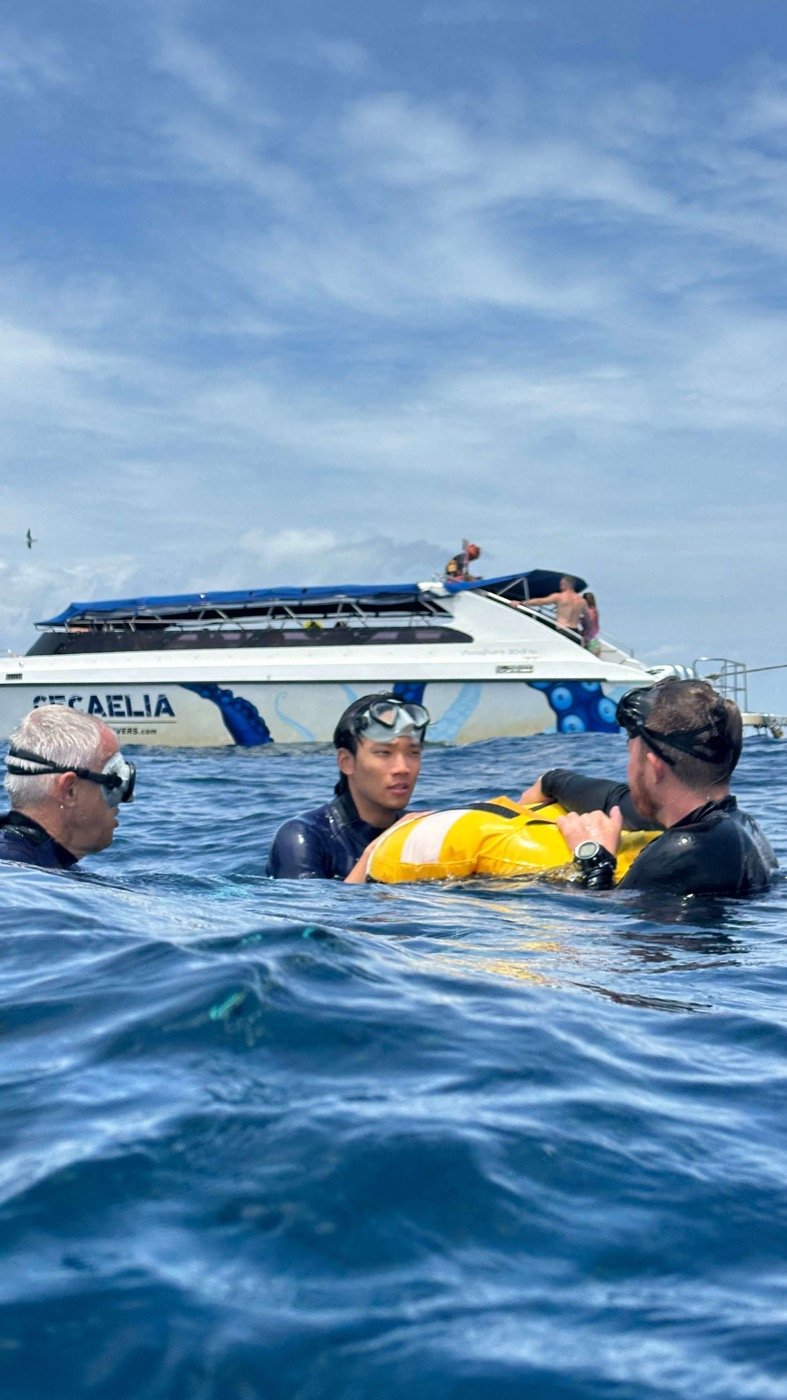
Here is the part that should reassure you. A blackout near the surface, with an attentive buddy within arm's reach, is genuinely manageable. The diver loses consciousness, the buddy supports their head above water, removes the mask, blows across their face or taps their cheek and says their name — and the diver typically takes a breath and comes back within a few seconds, often without even realising what happened. It looks dramatic the first time you see it in training. It is not, when you are trained for it.
That is the whole point of a course. A beginner freediving course is, more than anything, a safety course with beautiful scenery. You learn to recognise your own limits and surface long before trouble. You learn why never to hyperventilate. And you practice the rescue itself, in the water, with a real person, until it stops being frightening and becomes a calm, automatic routine.
The rule that makes all of this safe: one up, one down
One person dives, one person watches. Always. You never freedive alone.
This is the buddy system, and it is the foundation everything else sits on. When you dive, your buddy waits at the surface, follows your ascent, and watches you for a full thirty seconds after you surface — because a blackout or samba can strike after you have come up and taken a breath or two. Those thirty seconds of attention are non-negotiable. They are when most blackouts happen, and they are exactly when a tired buddy is tempted to look away. Don't.
I cover exactly how to do this — positioning, the surface support, the rescue — in my post on the safety system behind freediving. If you only take one thing from this article, take this: the people who get hurt freediving are overwhelmingly diving alone, or playing breath-hold games with friends who do not know what to watch for. Trained, supervised, conservative divers are not the ones in the statistics.
So should this scare you off?
No — but it should earn your respect, and respect makes you a safer diver. Blackout is the reason freediving has the safety culture it has, and that culture works. The skills that prevent it and the skills that handle it both take one weekend to learn, and once you have them, the headline risk of the sport is managed on every single dive.
If you want to feel that for yourself in a fully supervised setting, the Discovery experience is a single day in the water where the only thing you are responsible for is relaxing — I handle the safety. If you want the full skill set, including the rescue training in this article, the beginner course gives you everything. Either way, message me with your questions first. I would always rather answer them honestly than have you learn this stuff the wrong way from a video.
About Diego Pauel
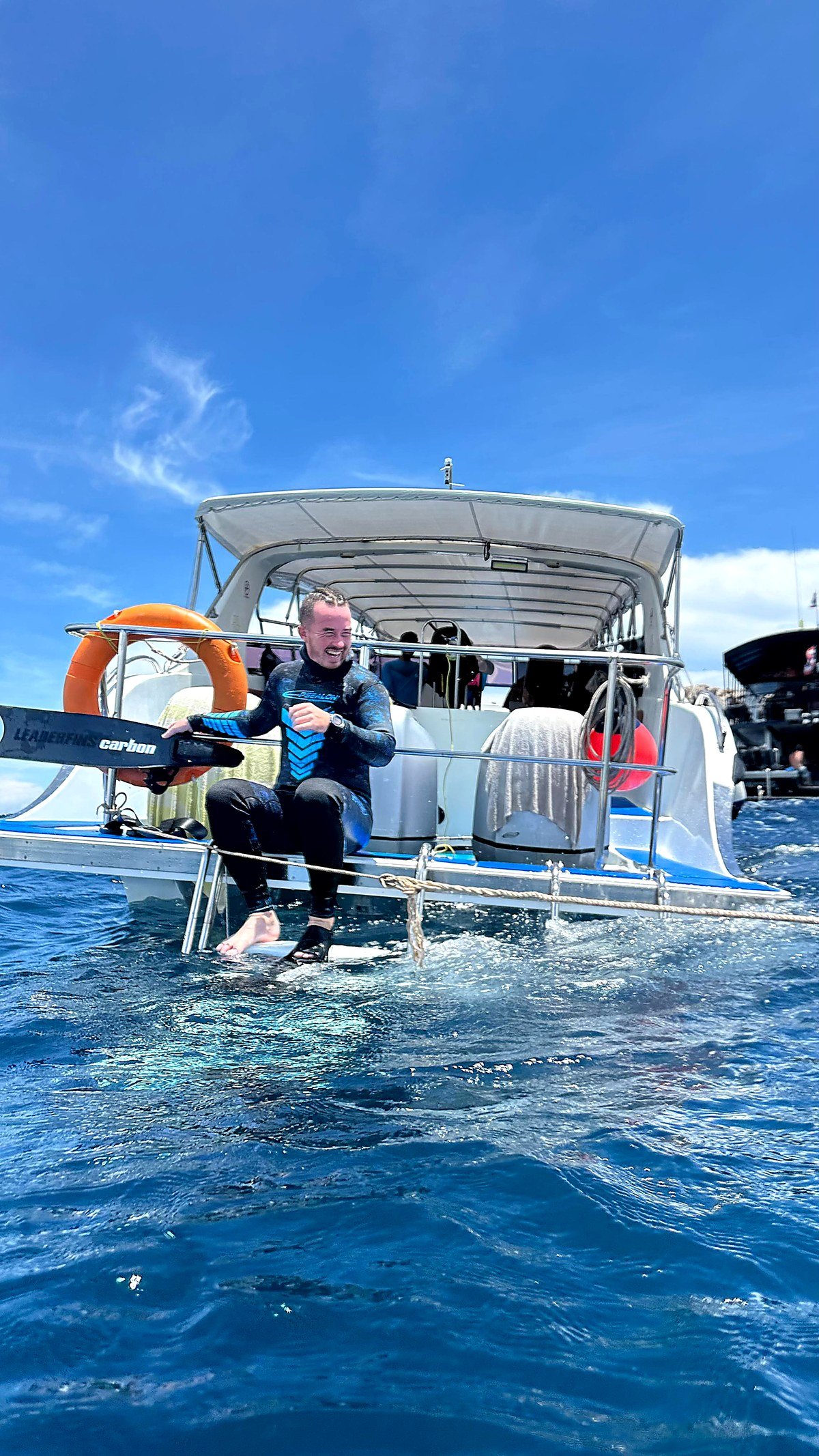
Diego has been teaching freediving from Koh Samui since 2021. He holds instructor certification from Apnea Total and additional credentials across six certification bodies: Oxygen Advantage, Breatheology, International Breathwork Foundation (IBF), Breathing Cold, and GPBA. Plus emergency oxygen administration and first aid.
Learn More →Ready to try freediving?
Message Diego on WhatsApp to check availability for your dates. No deposit needed.
Check Availability on WhatsAppContinue reading
Is Freediving Dangerous? An Honest Answer
Is freediving dangerous? The honest answer from a Koh Samui instructor: the real risk is doing it untrained and alone. D
Read More →
Is Freediving Safe? What You Need to Know
Is freediving safe? An honest look at the real risks, how proper training eliminates most of them, and what safety proto
Read More →
The Freediving Buddy System: One Up, One Down
How does the freediving buddy system work? A Koh Samui instructor explains one up, one down: how to safety a diver on th
Read More →