Mouthfill Equalization for Freediving, Explained
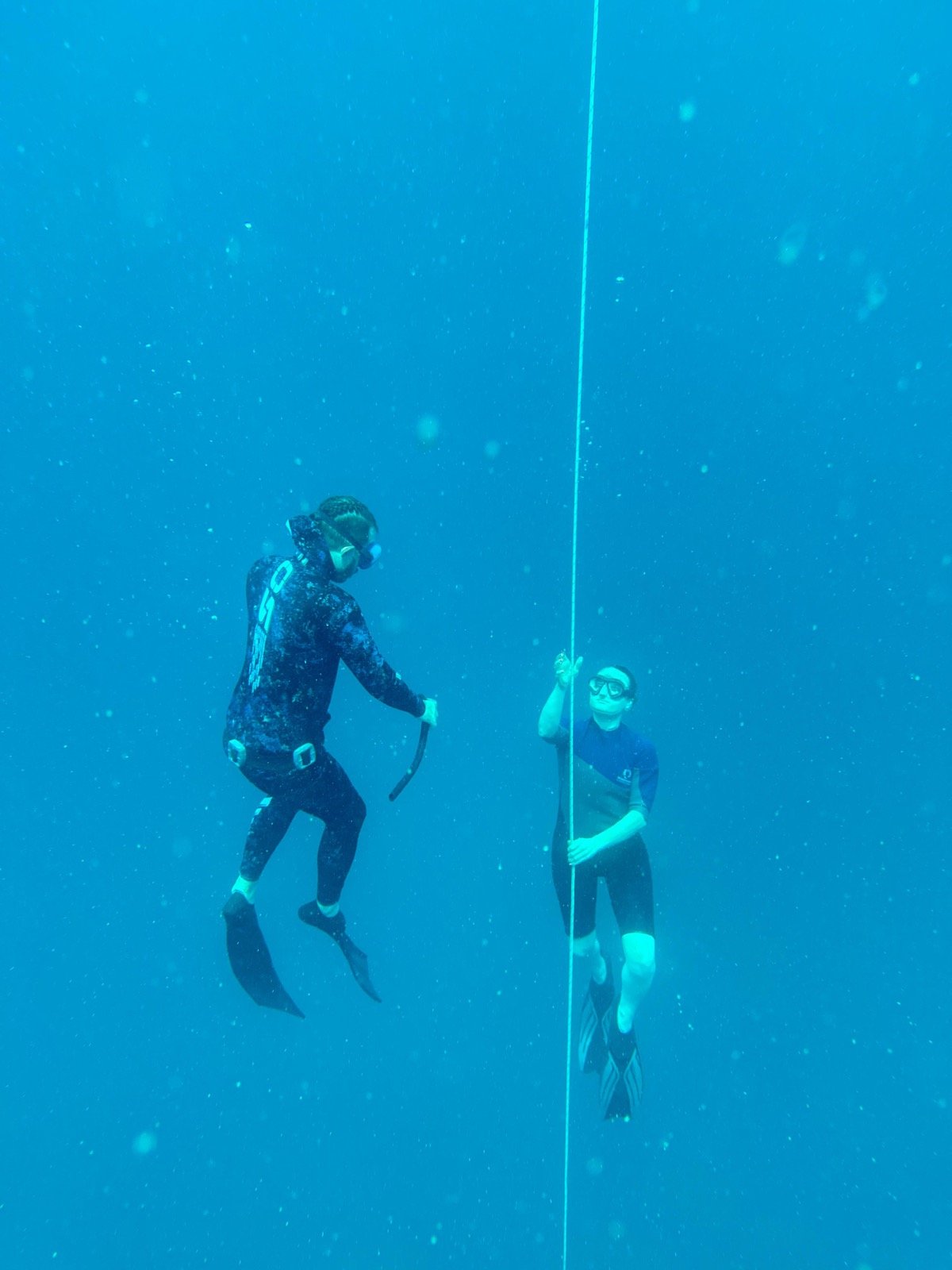
Short answer: mouthfill is an advanced equalisation technique for deep freediving. You take a large pocket of air from your lungs into your mouth before you run out of usable air at depth, then equalise from that reserve all the way down. It exists for one reason — past a certain depth your lungs are so compressed that ordinary Frenzel can no longer pull air up to equalise, and mouthfill is what lets you keep going. For most recreational freedivers, this is a technique you will not need for a long time, and that is completely fine. It is a depth tool, not a beginner tool.
I get asked about mouthfill more and more, usually by people who have read about it online and worry they need it on day one. They do not. So let me explain it honestly — what it actually is, when it genuinely becomes necessary, and why it is something you grow into rather than rush.
First, why Frenzel eventually runs out
Everything starts with Frenzel. If you are not solid on it yet, read our Frenzel explained simply guide first, because mouthfill is built directly on top of it.
With Frenzel you use your tongue as a piston to push air from your mouth and throat into your ears. The air it uses comes up from your lungs and airway. The problem is depth. As you descend, water pressure compresses your lungs. At 10 metres they are half their surface volume, at 30 metres a quarter, and deeper still they shrink further. At some point your lungs are so squeezed that there simply is not enough air left to feed your Frenzel. You reach down to equalise and nothing comes. That is the wall mouthfill is designed to get you past.
What mouthfill actually is
Mouthfill solves the problem by storing air where pressure cannot take it away. At a comfortable depth — well before your lungs are too compressed — you take a deliberate, large mouthful of air up from your lungs and hold it in your mouth and throat, cheeks slightly full, soft palate and glottis managed so it stays put.
From that point you stop drawing on your lungs entirely. Every equalisation for the rest of the descent comes from that trapped pocket of air. Your tongue keeps compressing this reserve to feed your ears, even as the rest of your body and lungs are squeezed by pressure around you. Done well, a single good mouthfill can carry a diver many metres deeper than Frenzel alone could.
The skill is in managing that pocket: keeping the air sealed, using it efficiently so it lasts, and staying completely relaxed while you do it. None of that is intuitive, which is exactly why it is taught slowly.
When do you actually need it?
Here is the honest part. Most recreational freediving happens in the first 10 to 20 metres, and Frenzel handles that beautifully. Frenzel reliably works to around 25 to 30 metres for most divers. So you genuinely need mouthfill only when your target depth starts to push past where Frenzel can keep up — typically somewhere in the 25 to 35 metre range, depending on the person.
If you are a beginner, or you dive for fun on the reef and at Sail Rock, you do not need mouthfill. Trying to learn it before your Frenzel and relaxation are rock solid usually just creates tension and confusion. There is no shame in not needing it yet — it means you are diving within a comfortable, sensible range. If you are still figuring out how progress works, our guide on how long it takes to learn freediving sets honest expectations.
How mouthfill is learned — slowly and in stages
Mouthfill is taught progressively, and each layer is built before the next is added. Rushing it is how people give themselves ear and sinus problems, so good instructors are deliberately patient here.
- Solid Frenzel first. If you cannot Frenzel hands-free and reliably, mouthfill is not the next step. Frenzel is the non-negotiable foundation.
- Dry practice of the charge. You learn to take and hold the mouthful of air on land, managing the soft palate and glottis so the pocket stays sealed, without involving your lungs.
- Shallow, controlled water work. You practise taking the mouthfill at a set depth and equalising from it, with no depth pressure and full attention on technique.
- Gradual depth, conservatively. Only once the mechanics are automatic do you slowly extend depth, a little at a time, never forcing a dive when the equalisation does not feel easy.
This is the kind of skill that benefits enormously from an instructor watching you, because so much of it happens hidden inside your mouth and throat where you cannot see what is going wrong. Self-teaching mouthfill from videos is slow, frustrating, and easy to get wrong.
A word on safety
Deeper diving means more to respect, not less. The same rules hold harder than ever: never dive alone, always with a trained buddy, and never force an equalisation. If air will not move, you stop and turn — depth is never worth a barotrauma. None of the deep-diving techniques change the foundations; they sit on top of them.
Where to start
If mouthfill is on your radar, the path is simple: master Frenzel and relaxation first, then build depth gradually with proper coaching. We teach equalisation step by step across our freediving courses, from a first beginner course through the depth work where mouthfill becomes relevant. Message me and tell me your current depth and goals, and I will tell you honestly where you should start — no rush to advanced techniques you do not need yet.
About Diego Pauel
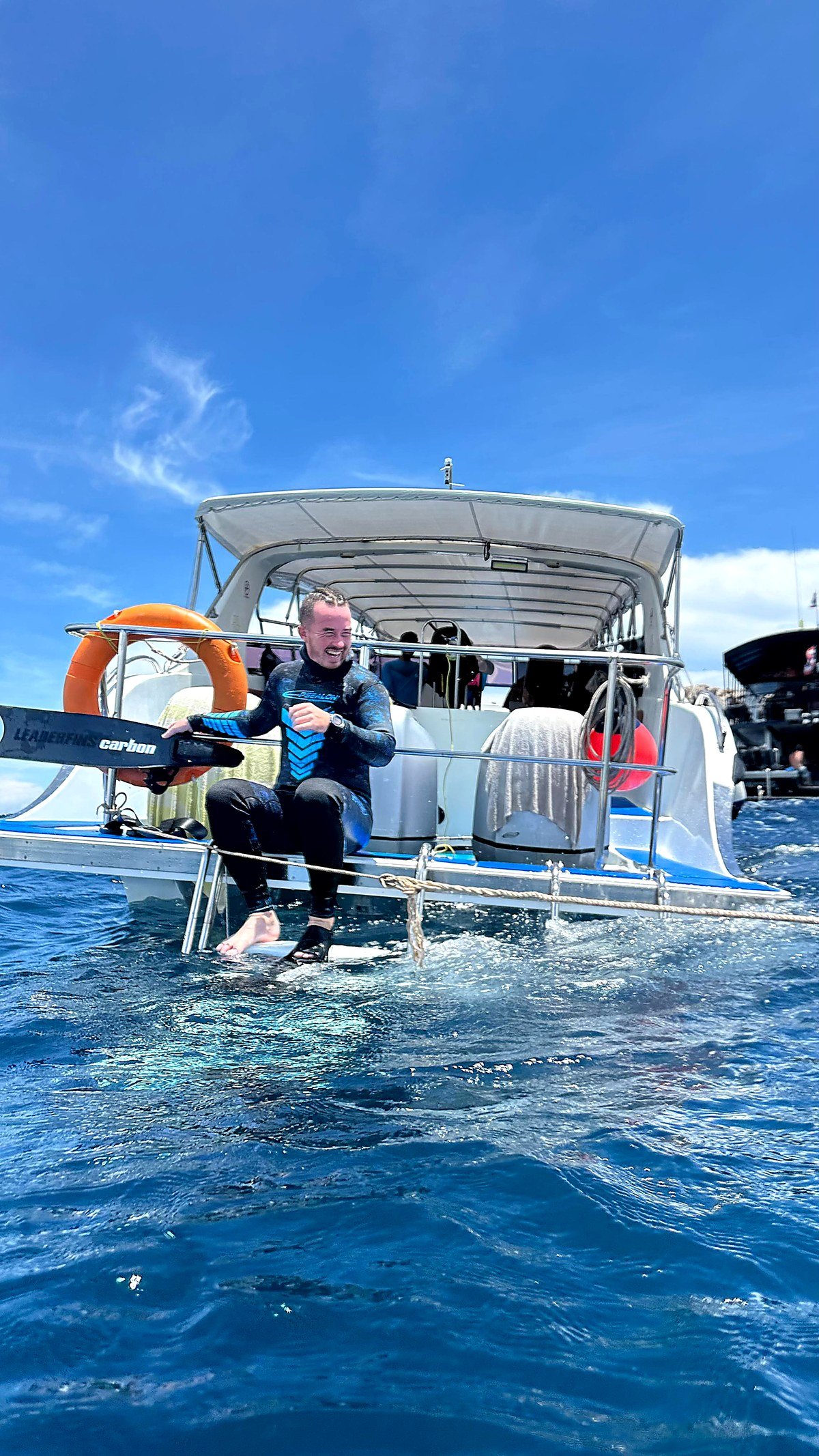
Diego has been teaching freediving from Koh Samui since 2021. He holds instructor certification from Apnea Total and additional credentials across six certification bodies: Oxygen Advantage, Breatheology, International Breathwork Foundation (IBF), Breathing Cold, and GPBA. Plus emergency oxygen administration and first aid.
Learn More →Ready to try freediving?
Message Diego on WhatsApp to check availability for your dates. No deposit needed.
Check Availability on WhatsAppContinue reading
Frenzel Equalization Explained Simply
Learn Frenzel equalization for freediving. Step by step dry exercises, common mistakes, and why this technique lets you
Read More →
How Deep Can a Beginner Freedive?
How deep can you dive after a beginner freediving course? Most students reach 15 to 20 meters in 3 days. Here is what de
Read More →
How Long Does It Take to Learn Freediving?
How long it takes to learn freediving, certification by certification. Realistic timelines for first breath hold, Level
Read More →