What a Freediving Course Day Actually Looks Like, Hour by Hour
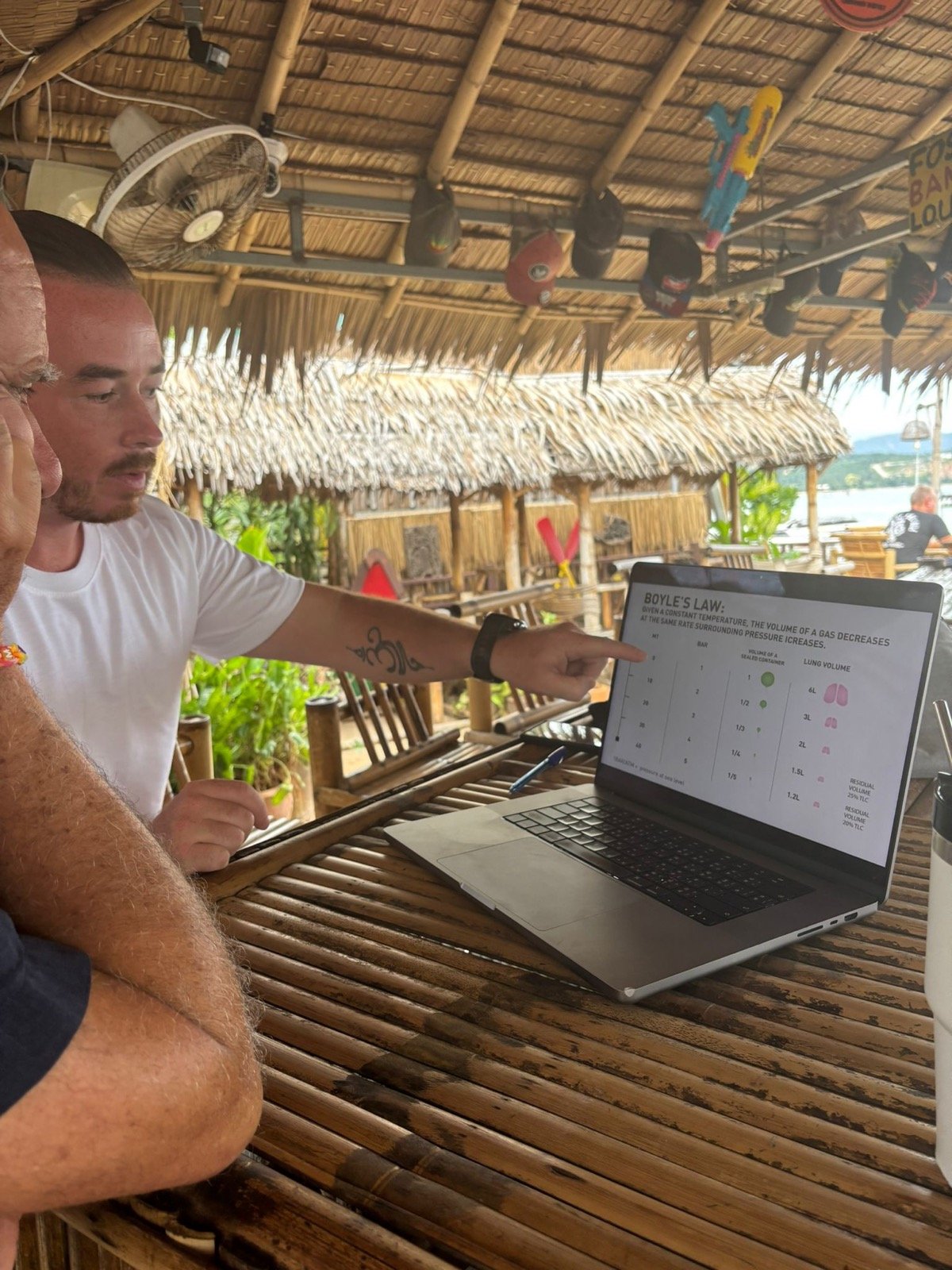
Short answer: a course day runs roughly like this — a couple of hours of theory in the morning, a breathing and relaxation session, then confined-water skills in the shallows, and finally open water on the line over the reef near Koh Samui. It is not a fitness bootcamp and it is not eight hours of being underwater. Most of the day is calm, slow, and surprisingly social. You spend far more time breathing, talking, and floating than you do diving. Below is what an actual day looks like, hour by hour, so you can turn up knowing exactly what is coming.
People book a course and then quietly panic about what they have signed up for. So let me walk you through a normal day the way it really unfolds on the boat and in the water, not the brochure version.
Morning: theory, the part nobody dreads as much as they expect
We usually start mid-morning. The first block is theory, and I know that word makes people picture a dull classroom. It is not that. We sit somewhere comfortable, often near the water, and I talk you through what is actually happening inside your body when you hold your breath.
- The dive reflex. Your body has a set of automatic responses — slower heart rate, blood shift — that make breath-holding far easier than you would think. Understanding this is genuinely reassuring.
- Pressure and your ears. Why your ears feel it as you go down, and why equalising early and gently is the whole game.
- The urge to breathe. What it really means, why it is not the emergency it feels like, and why it is not the same as running out of oxygen.
- Safety. The buddy system, recovery breathing, and what we do if anything ever goes wrong. This is the spine of the whole course.
This block runs around two hours, broken up with demonstrations and questions. By the end you understand your own body better than most people who have been in the water their whole lives. If you want the deeper version, my post on breathing techniques for beginners covers a lot of what we go through here.
Late morning: breathing and relaxation on land
Before anyone gets wet, we practise breathing dry. This matters more than people expect. You learn the breathe-up — the slow, calm sequence you do before every dive — and the recovery breaths you take the moment you surface. We do it lying down, fully relaxed, no pressure.
This is also where I explain the one thing you must never do: hyperventilate. Over-breathing before a dive is dangerous because it tricks your body into staying quiet while your oxygen drops. You will leave the day knowing exactly why, and what to do instead.
Midday: into the confined water
After a light break — and I do mean light, you do not want a heavy stomach in the water — we move into the shallows. On Koh Samui this is usually a calm, sheltered bit of bay rather than a pool. Warm water, somewhere you can stand, nothing intimidating.
Here you practise the actual skills:
- Static breath-hold at the surface. Floating face down, completely relaxed, while I time you and talk you through it. Almost everyone surprises themselves here.
- Equalisation. Getting the technique reliable in shallow water before any real depth is involved.
- The duck dive. The fold-and-kick movement that starts every descent. It feels clumsy at first for everyone — that is normal.
- Rescue and buddying. How to watch your partner, support them at the surface, and bring them up if needed. We practise this until it feels automatic.
Nobody is chasing depth or numbers in this block. It is about getting comfortable and making the skills feel ordinary.
Afternoon: open water on the line
This is the part most people remember. We head out over the reef and dive along a line — a rope dropping from a buoy at the surface down into the blue. The line is your handrail. You follow it down, equalise as you go, turn, and follow it back up, with me right there beside you the whole time.
Beginners usually spend their time in the first ten to fifteen metres, well within easy limits. It is slow and quiet down there. Most students tell me afterwards that the thing that surprised them was not the depth — it was how calm it felt. If you want a sense of that feeling before committing, my post on trying freediving for the first time on Koh Samui describes that first descent well.
How long does the whole thing take?
A single course day runs roughly five to seven hours door to door, including the boat time and breaks. A full beginner certification is normally spread across a few of these days, because the skills settle better with a night of sleep in between. If you are curious how the whole arc fits together, I broke it down in how long it takes to learn freediving.
So, what should you expect?
Expect a calm, unhurried day with far more breathing and floating than hard diving. Expect to feel slightly awkward on the duck dive and genuinely proud of your first breath-hold. Expect me to keep groups small — capped at three students — so you are actually watched, not lost in a crowd.
If this sounds like your kind of day, the beginner freediving course gives you the full skill set and a certification you keep for life. If you would rather just taste it first without the theory and paperwork, the Discovery experience is a single supervised day where your only job is to relax. Either way, message me and I will tell you honestly which one fits you.
About Diego Pauel
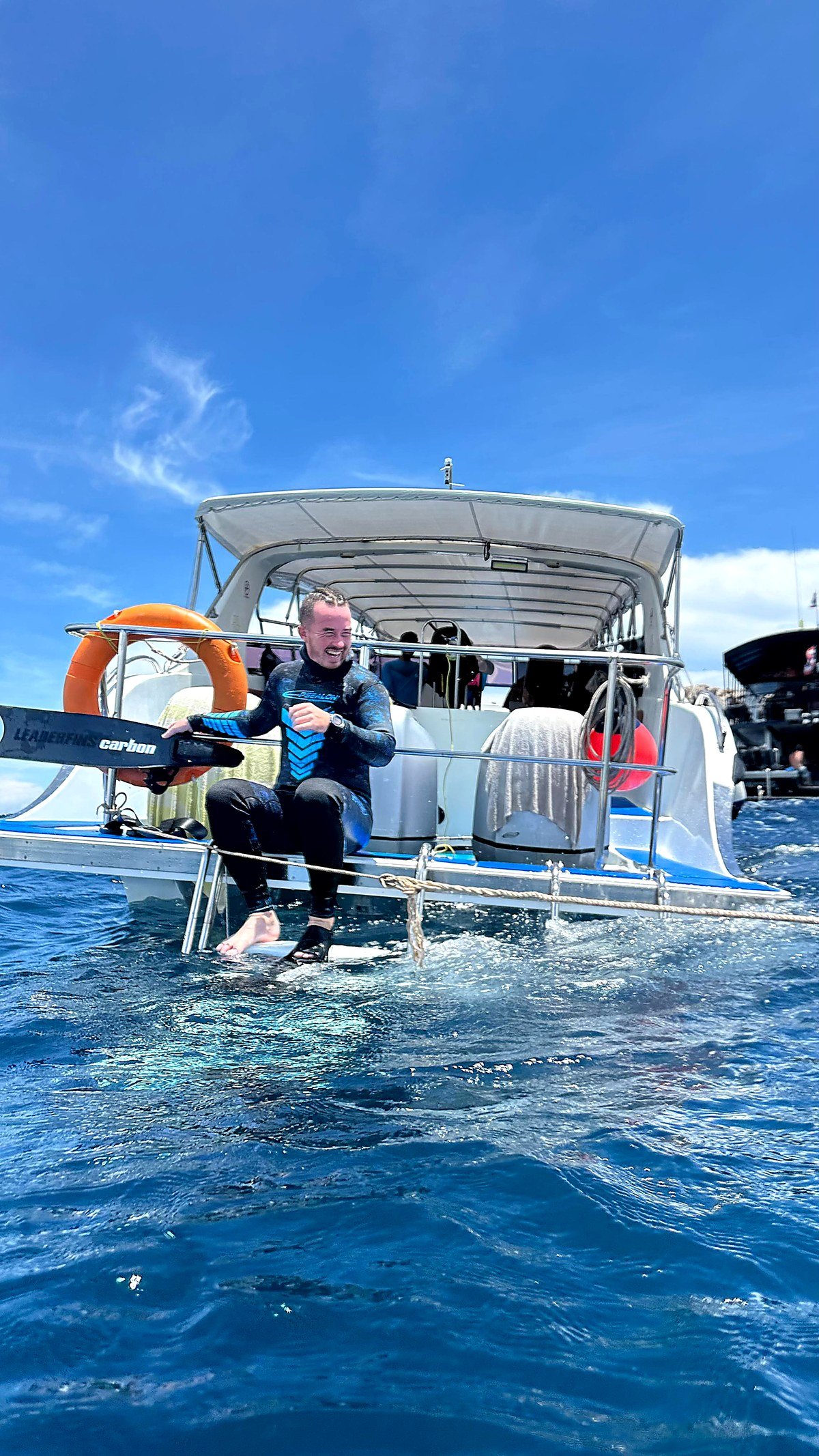
Diego has been teaching freediving from Koh Samui since 2021. He holds instructor certification from Apnea Total and additional credentials across six certification bodies: Oxygen Advantage, Breatheology, International Breathwork Foundation (IBF), Breathing Cold, and GPBA. Plus emergency oxygen administration and first aid.
Learn More →Ready to try freediving?
Message Diego on WhatsApp to check availability for your dates. No deposit needed.
Check Availability on WhatsAppContinue reading
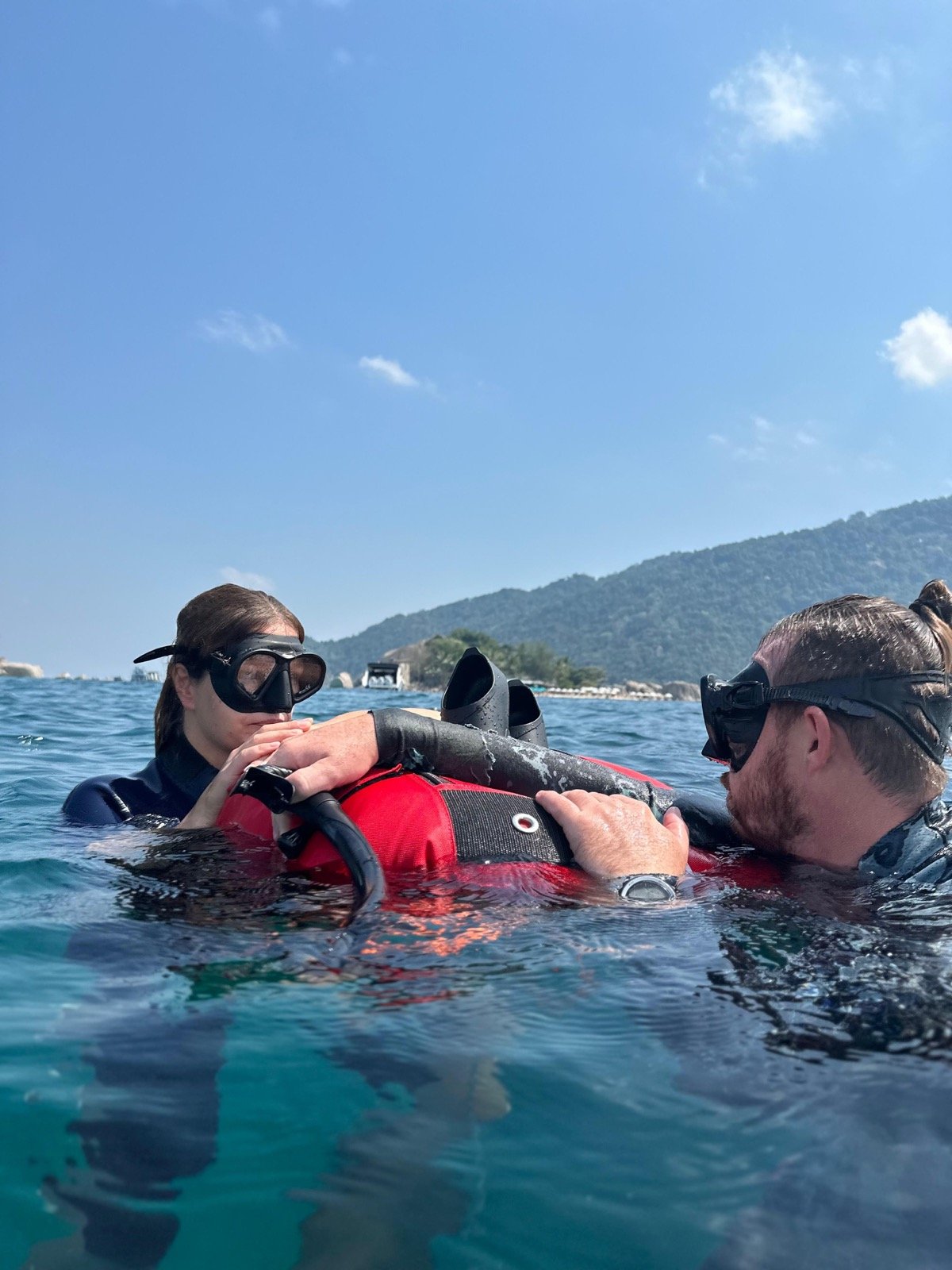
What It Feels Like to Freedive for the First Time
An honest, sensory account of what your first freedive actually feels like. The nerves, the silence at depth, the surpri
Read More →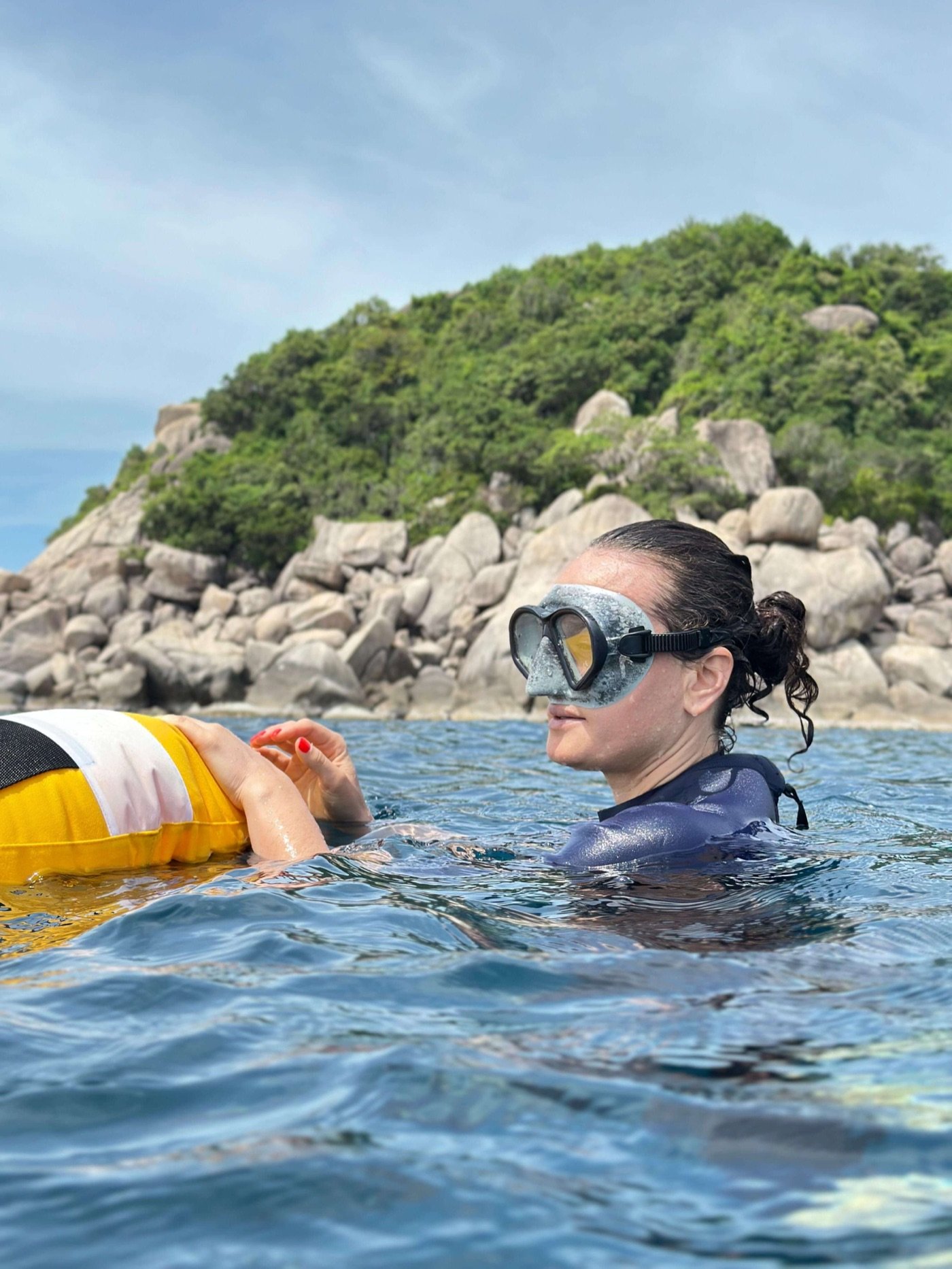
Can You Freedive If You Are Not a Strong Swimmer?
Can you freedive if you are not a strong swimmer? Honest answer from a Koh Samui instructor: you need basic comfort in d
Read More →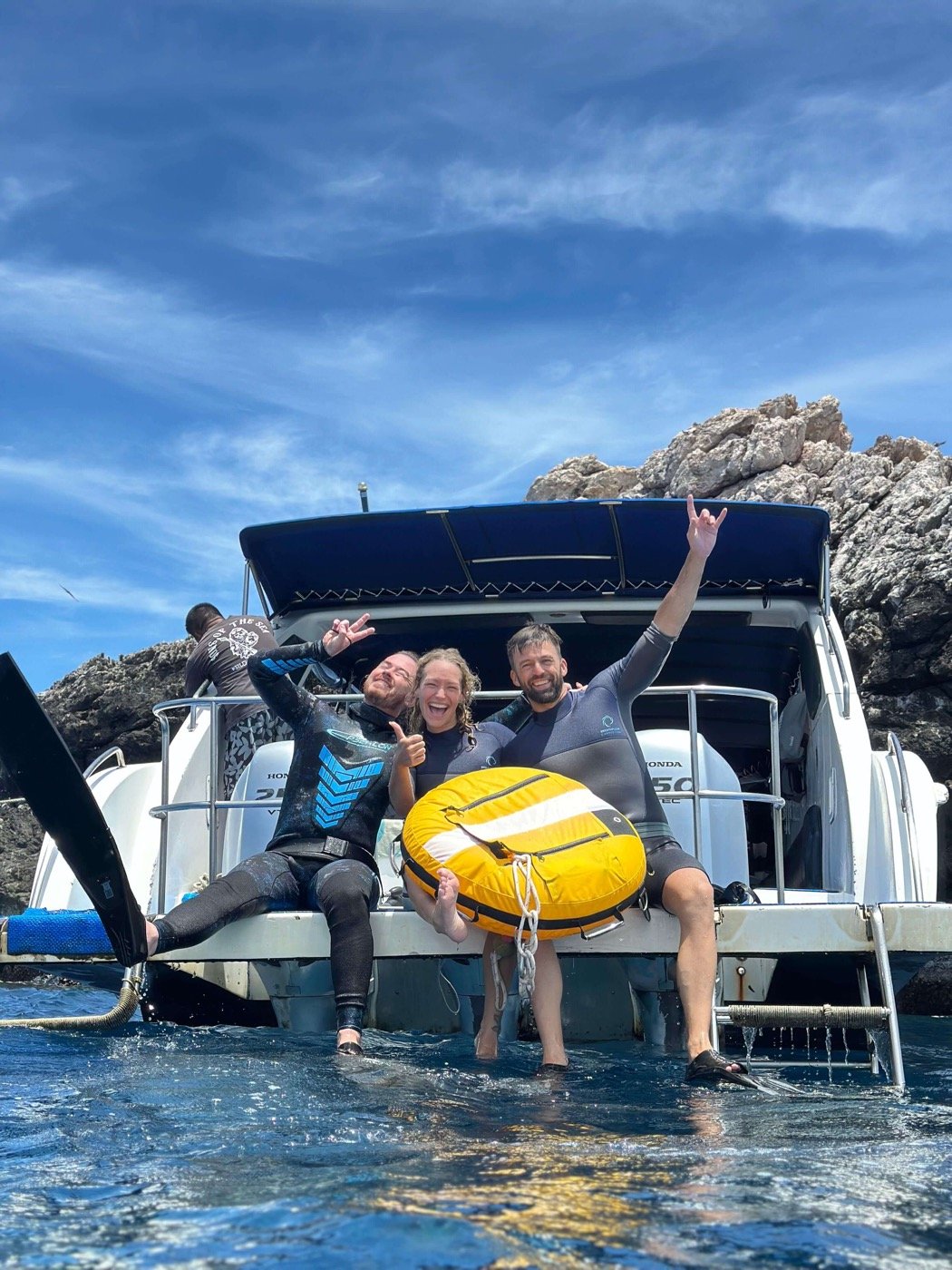
What to Expect from a Freediving Course in Thailand
A day by day breakdown of what happens during a freediving course in Thailand. What you will learn, how deep you will go
Read More →