Freediving Wetsuit Guide for Warm Tropical Water
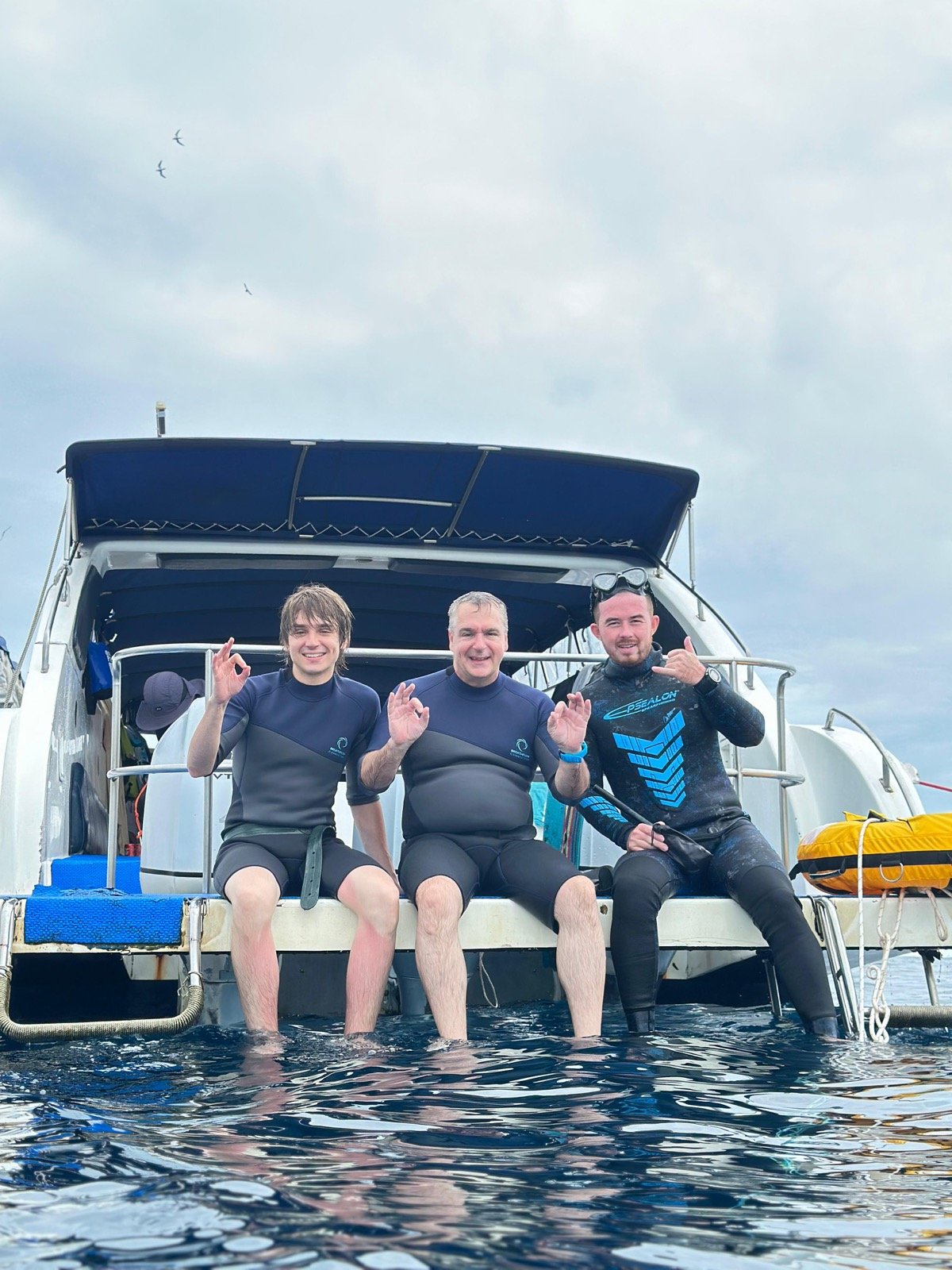
Short answer: even in the warm Gulf of Thailand you want a thin freediving wetsuit — a 1.5mm to 3mm is plenty for our 29-degree water. The suit is not really about cold; it is about staying warm enough over a long session to stay relaxed, and relaxation is what makes you dive well. Open cell suits are warmer and stretchier than lined ones but need lube to put on and more care; for most beginners in warm water a 1.5mm to 2mm is the sweet spot. Above all, get the fit right — a baggy suit flushes cold water and steals your warmth. Let me explain why the warmest water in the world still calls for a suit, and how to choose one.
People are surprised when I hand them a wetsuit on a 30-degree day. The water feels like a bath when you jump in. So why bother? Because a freediving session is not a quick swim — it is hours of floating still, repeating dives, with your body barely moving between them. That is when the warmth question changes completely.
Why warm water still needs a suit
Water pulls heat out of you around 25 times faster than air, even when it feels warm. On a single fun dive you would not notice. But over a two-hour session, lying still on the surface between dives, your body slowly loses heat — and a slightly cold diver is a tense diver. Tension is the enemy of freediving: it raises your heart rate, burns oxygen faster, and shortens your breath-holds. So in the tropics the wetsuit's job is not survival warmth, it is comfort warmth — keeping you relaxed enough to dive your best for the whole session. That is why we put even our warm-water students in a 3mm for long boat days.
What thickness for tropical water
For the Gulf of Thailand around Koh Samui, where the water sits near 29 degrees most of the year, you want something thin:
- 1.5mm — great for the warmest months and shorter sessions. Light, easy to move in, easy to pack.
- 2mm — the all-round tropical sweet spot for most divers. Enough warmth for a full session without feeling restrictive.
- 3mm — for longer boat days, divers who feel the cold easily, or anyone doing repeated deep dives. This is what we provide for course sessions because it covers the widest range of students comfortably.
You do not need the 5mm and 7mm suits you see for cold-water diving — they would cook you here and make you far too buoyant, meaning more lead on your belt and more work on every descent. In the tropics, thinner is genuinely better. Our water temperature is remarkably stable year-round, so you rarely need to think seasonally — if you want the detail, the best time of year guide covers conditions month by month.
Open cell vs lined
This is the choice that confuses new buyers most. It refers to the inside of the suit — the side against your skin.
Open cell
- Warmer — the raw neoprene grips your skin and seals out water, so there is almost no cold flush. This is why serious freedivers prefer it.
- Stretchier and more comfortable — it moves with you, which helps you stay relaxed and breathe freely.
- Fiddly to put on — bare neoprene grabs dry skin, so you slide in using a lube (diluted soap or conditioner and water). It also tears more easily if you are rough with it.
Lined (closed cell)
- Easy to put on — the fabric lining slides over dry skin, no lube needed.
- More durable and beginner-friendly — handles boat life and careless handling better.
- Slightly less warm and less stretchy than open cell — a fair trade for the convenience early on.
My honest take for a first warm-water suit: a lined 1.5mm to 2mm is the easiest, most forgiving choice, and plenty warm for here. If you fall in love with the sport and want maximum warmth and stretch, go open cell next — just be ready for the lube ritual and the extra care.
Why fit matters more than anything
Here is the part that beats thickness and material combined: a wetsuit only keeps you warm if it fits. The warmth comes from a thin layer of water trapped against your skin that your body heats up and holds. If the suit is baggy, that water keeps flushing out and being replaced by cold water — you might as well wear nothing. A suit that is too tight, on the other hand, restricts your breathing and your chest expansion, which for a freediver is a real problem.
A good freediving suit fits like a second skin: snug everywhere, no big pockets of loose neoprene at the lower back, armpits, or behind the knees, but never so tight it limits a full, relaxed breath. Because of this, freediving suits are usually two-piece — high-waisted pants and a hooded jacket that overlap at the middle for a better seal and easier fitting than a one-piece. Many divers eventually go custom-fit for exactly this reason. For a first suit, try several sizes on and prioritise the snug-but-breathable fit over the brand or the looks.
The takeaway
For warm tropical diving you want a thin suit — 1.5mm to 3mm — that fits snugly so it actually traps warmth, in lined neoprene to start because it is forgiving, stepping up to open cell later if you want maximum warmth and stretch. The goal is never to be cold, because a warm diver is a relaxed diver, and a relaxed diver dives longer, deeper, and more safely. There is no need to overbuy thickness here; thinner and well-fitted beats thick and baggy every time.
The simplest way to find your size is to use a few on a course before buying your own. If you are still planning your kit, the what to pack guide covers what the school provides and what to bring. Not certified yet? The beginner course includes a fitted 3mm suit and all your gear, so you can feel what works before spending. Want a gentle first taste? The Discovery experience is a supervised day with everything provided. Message me with your height and weight and I will tell you the thickness and fit I would put you in — no upsell, just what keeps you warm and relaxed in our water.
About Diego Pauel
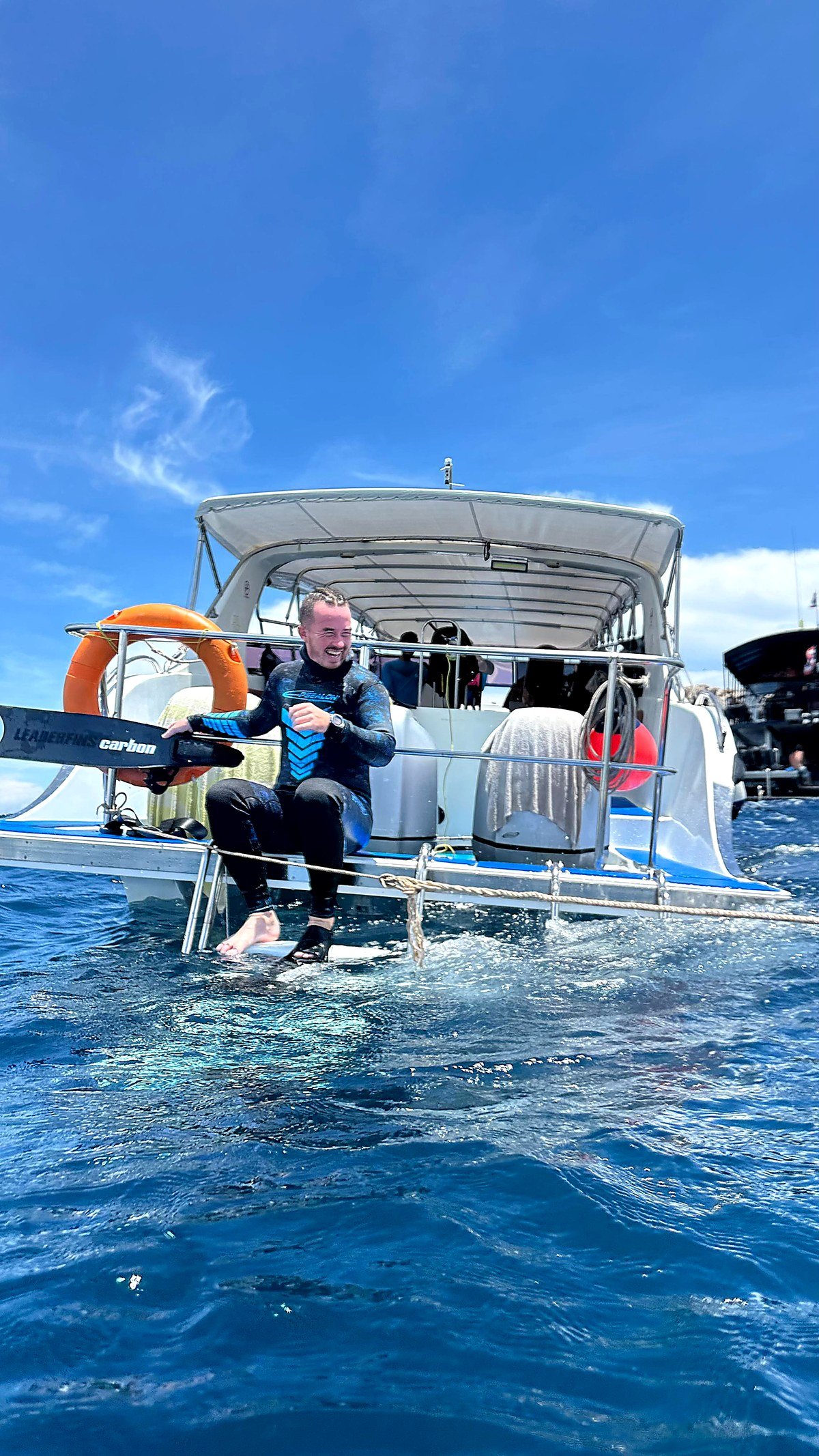
Diego has been teaching freediving from Koh Samui since 2021. He holds instructor certification from Apnea Total and additional credentials across six certification bodies: Oxygen Advantage, Breatheology, International Breathwork Foundation (IBF), Breathing Cold, and GPBA. Plus emergency oxygen administration and first aid.
Learn More →Ready to try freediving?
Message Diego on WhatsApp to check availability for your dates. No deposit needed.
Check Availability on WhatsAppContinue reading
Getting to Koh Samui: Flights, Ferries and Transfers for Your Freediving Trip
The fastest way to Koh Samui is a direct flight from Bangkok (about one hour) straight to the island airport. The cheape
Read More →
How Much Does a Freediving Course Cost in Thailand? (2026 Prices)
Complete pricing guide for freediving courses in Thailand — Koh Tao, Koh Samui, Koh Lanta, Phuket. Compare AIDA, PADI,
Read More →
Koh Samui Freediving Itinerary: A 5-Day Trip Plan
A realistic 5-day Koh Samui freediving itinerary: when to arrive, how to space a 3-day course, what to do on rest days,
Read More →