How to Hold Your Breath Longer for Freediving
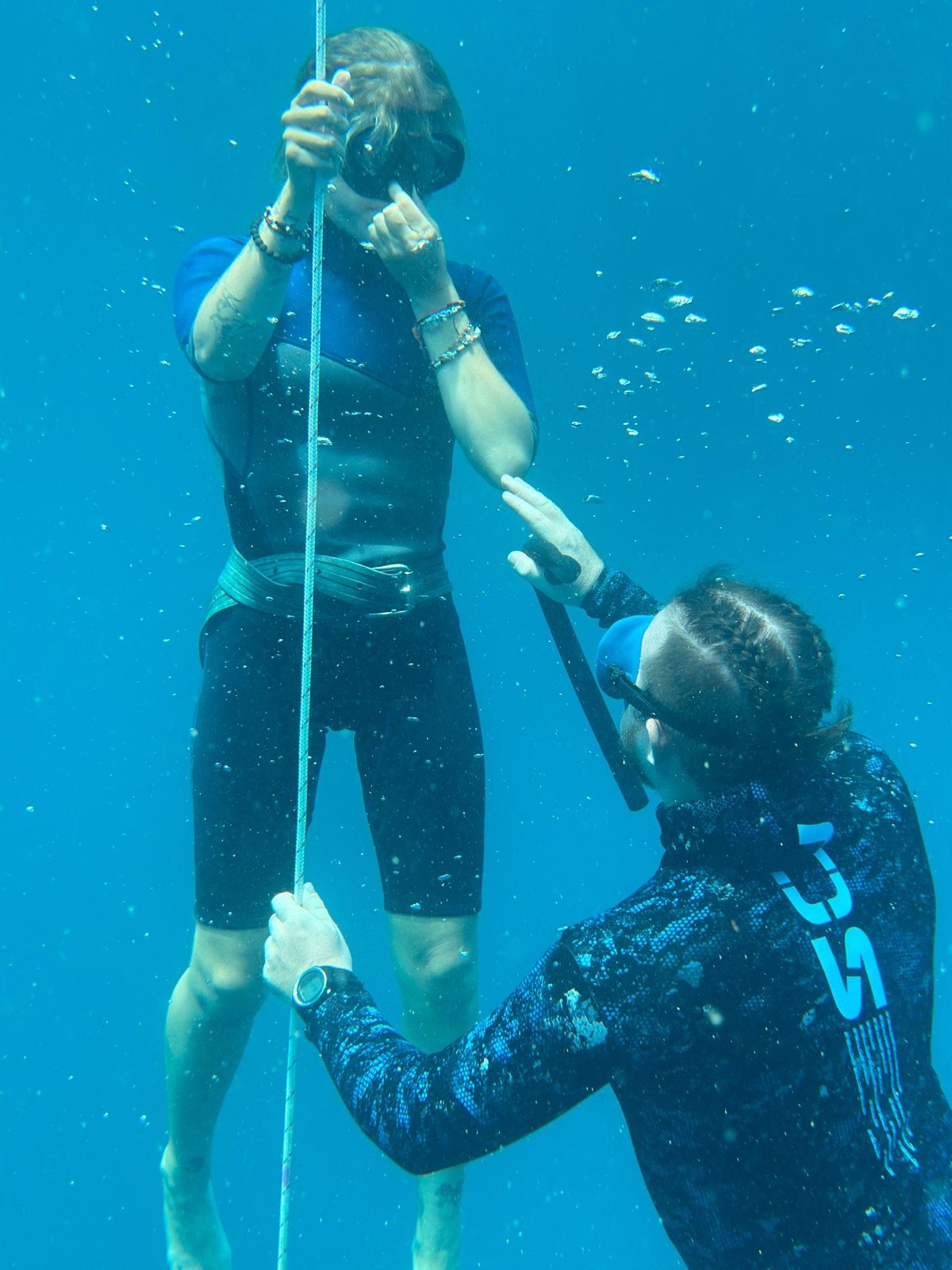
Short answer: you hold your breath longer mainly by relaxing more, not by forcing it. The biggest gains for a beginner come from lowering tension and slowing the heart rate, then slowly teaching your body to tolerate the build-up of carbon dioxide. Lung size matters far less than people think — most of the work is calming the mind and the nervous system. The urge to breathe you feel is not "out of oxygen." It is your body reacting to rising carbon dioxide. Learn to stay calm with that feeling and your breath-hold grows on its own.
I get asked this all the time, usually by someone who tried holding their breath in the shower, hit 45 seconds, and panicked. So let me explain it the way I would on the boat — honestly, and with the safety part front and centre, because this is the one topic where bad advice on the internet genuinely hurts people.
What actually limits your breath-hold
Two things are happening when you hold your breath: oxygen slowly drops, and carbon dioxide steadily rises. Here is the part most people get wrong — the desperate urge to breathe is driven by the rising carbon dioxide, not by low oxygen. That means the feeling that screams "breathe now!" arrives long before you are actually low on oxygen. Most of learning to hold your breath longer is learning to stay relaxed through that false alarm.
This is also why relaxation beats lung capacity. A tense body burns oxygen fast. A calm body, with a low heart rate and quiet muscles, sips it slowly. I have seen relaxed beginners out-hold nervous athletes with twice the lung volume. Calm is the skill.
The foundation: relaxation and breathing
Before any "training," get the basics right. A good breath-hold starts a full minute or two before you stop breathing, with slow, low, diaphragmatic breathing that drops your heart rate and settles your mind.
- Breathe from the belly, slowly. Long, soft exhales calm the nervous system. The exhale is where relaxation lives, so make it longer than the inhale.
- Never hyperventilate. Fast, hard breathing before a hold feels like it helps, but it dangerously delays your urge to breathe while your oxygen keeps dropping. This is the single most dangerous beginner mistake. Do not do it. Our breathing techniques for beginners guide covers the right way in detail.
- Relax the body part by part. Jaw, shoulders, hands, legs. Tension anywhere is oxygen you are spending for no reason.
- One slow final breath. A calm, full — not maximal, straining — breath in, then hold. Straining to cram in air just creates tension.
CO2 and O2 tolerance tables
Once relaxation is solid, freedivers use two kinds of breath-hold tables. They train two different things, and it helps to understand which is which.
CO2 tables
A CO2 table trains your tolerance to that urge-to-breathe feeling. You do a series of breath-holds of the same length, but you shorten the rest between each one. Less recovery means more carbon dioxide each round, so you teach your body and mind to stay calm with discomfort. CO2 tables are the workhorse for building comfort and confidence.
O2 tables
An O2 table trains your body to function with lower oxygen. Here the rest stays the same but each breath-hold gets a little longer. These are more demanding and carry more risk, which is exactly why they come later, under guidance, and never carelessly.
Do these dry — on the couch or a bed — never in water on your own. A dry table done lying down is safe and effective. The same table in water without a trained buddy is how blackouts become tragedies. I will come back to that.
Technique in the water
In the water, efficiency stretches your breath-hold further than raw lung power ever will.
- Move slowly and smoothly. Lazy, deliberate fin kicks. Rushing burns oxygen.
- Equalise early and gently. Forcing your ears creates tension and wastes a breath-hold. If your ears fight you, our guide to equalising while freediving and the Frenzel technique breakdown will help.
- Stay streamlined and relaxed. Loose body, minimal drag, mind quiet.
What is actually realistic
Let me be honest about numbers, because the internet sets wild expectations. Most untrained adults manage somewhere around 30 to 60 seconds. After a proper beginner course and a little practice, two to three minutes of relaxed static breath-hold is a very realistic target — and that is far more than you need for enjoyable recreational freediving. The four, five, six-minute holds you see online belong to athletes with years of training. You do not need anywhere near that to have a wonderful time underwater.
Progress is also not linear. Some weeks you improve, some weeks you do not, and pushing harder usually makes it worse, not better. Patience and relaxation win.
The safety rule you never break
Never practise breath-holding in water alone. One person holds, one trained person watches. Always.
This is not me being cautious for the sake of it. A breath-hold blackout in water gives almost no warning and, with nobody watching, no second chance. Dry tables on land are safe to do solo. The moment water is involved, you need a trained buddy within arm's reach — every single time. If you want the full picture on this, read our honest take on whether freediving is safe.
Want to do this properly?
The fastest, safest way to extend your breath-hold is to learn it correctly from the start, with someone watching and correcting you. On a beginner freediving course we build your relaxation, breathing, and breath-hold together, in the water, safely. If you just want to feel what a calm, supported breath-hold is like before committing, the Discovery experience is a single supervised day where your only job is to relax. Message me if you want to talk through where to start.
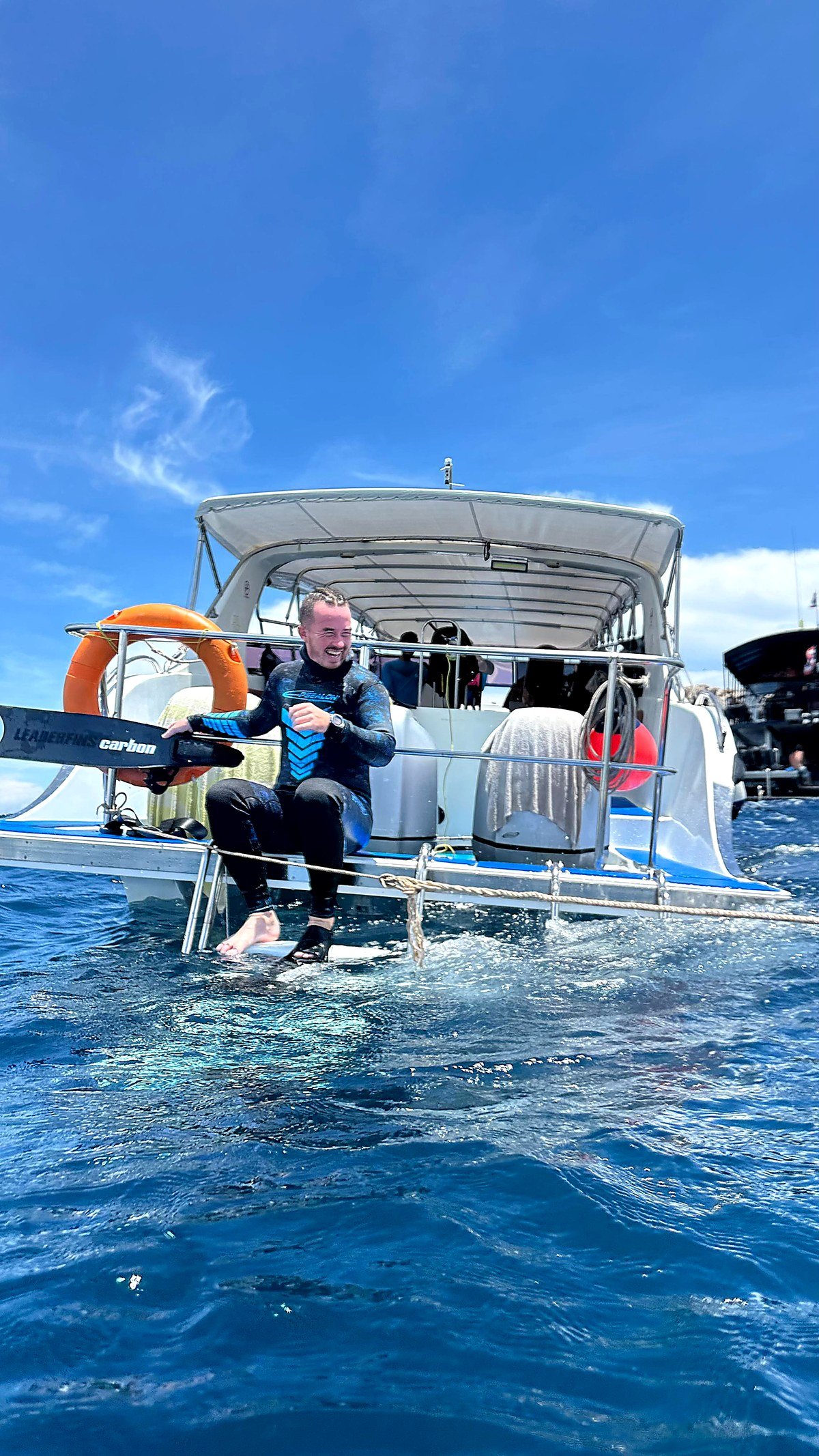
About Diego Pauel
Diego has been teaching freediving from Koh Samui since 2021. He holds instructor certification from Apnea Total and additional credentials across six certification bodies: Oxygen Advantage, Breatheology, International Breathwork Foundation (IBF), Breathing Cold, and GPBA. Plus emergency oxygen administration and first aid.
Learn More →Ready to try freediving?
Message Diego on WhatsApp to check availability for your dates. No deposit needed.
Check Availability on WhatsAppContinue reading
How Long Does It Take to Learn Freediving?
How long it takes to learn freediving, certification by certification. Realistic timelines for first breath hold, Level
Read More →
Mouthfill Equalization for Freediving, Explained
What is mouthfill equalization in freediving? An honest explanation from a Koh Samui instructor: it is the advanced tech
Read More →
Freediving Breathing Techniques for Beginners
Learn the breathing techniques that freedivers use before, during, and after every dive. Diaphragmatic breathing, the br
Read More →