Why You Can't Equalize Freediving — and How to Fix It
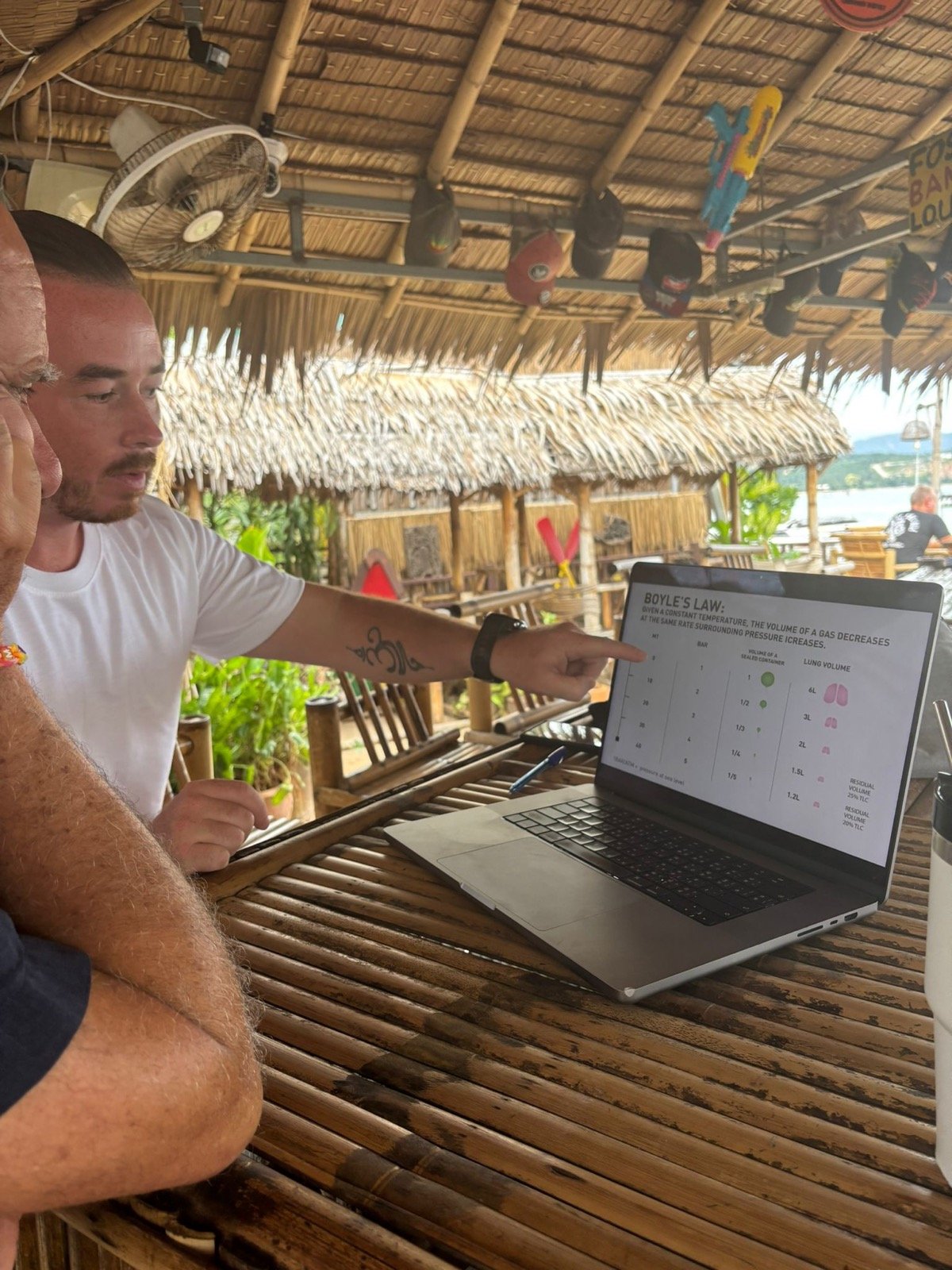
Short answer: if you cannot equalise while freediving, it is almost always one of four things — you are using the wrong technique, you are equalising too late, you are forcing it too hard, or you are congested. The fix is rarely "try harder." Usually it is the opposite: equalise earlier, gentler, and switch from blowing against your nose to using your tongue. And the most important rule of all — when your ears hurt, you stop. You never, ever force it. Sore ears are not a hurdle to push through; they are your body telling you to back off before you cause an injury.
Equalisation is the single most common thing that frustrates new freedivers, and I get this question constantly. The good news is that the problems are predictable, and almost every one of them is fixable. Let me walk through them the way I would on the boat.
Mistake 1: using the wrong technique
Most people who "can't equalise" are trying to Valsalva — pinch the nose and blow hard from the chest. That works for a while in the shallows, but the moment your lungs compress with depth, there is no longer enough air pressure to force the ears open, and you hit a wall. Blowing harder does nothing.
The fix is to learn Frenzel, where your tongue acts as a piston to push air into your ears instead of your lungs. It works far deeper and uses almost no effort. This single switch solves more equalisation problems than anything else. Our Frenzel explained simply guide walks you through it step by step with dry exercises you can do before you ever get in the water, and the broader guide to equalising while freediving covers the whole picture.
Mistake 2: equalising too late
This is the most common one, and it is brutal because by the time you feel it, you are already behind. If you wait until your ears hurt before equalising, the pressure difference has already collapsed your Eustachian tubes shut, and now nothing you do will open them.
The fix is to equalise early and often — start before you even feel anything, on the surface, and then every metre or so as you descend. Stay ahead of the pressure, never chase it. Gentle and frequent beats hard and late, every time.
Mistake 3: forcing it too hard
Trying harder is the instinct, and it backfires twice. First, forcing creates whole-body tension, which makes your soft palate and throat clamp up and actually closes the air path you need open. Second, hard equalisation is how people give themselves ear and sinus injuries.
The fix is to relax, especially your throat, jaw, and soft palate, and use the smallest gentle push that works. Equalisation should be a soft click or pop, not a strain. If you are gritting your teeth, you are doing it wrong.
Mistake 4: congestion
Sometimes the technique is fine and the body simply is not cooperating. A cold, allergies, sinus congestion, even a big dairy-heavy meal can swell the tissue around your Eustachian tubes and make equalisation hard or impossible.
- Do not dive congested. If you are blocked up, your ears will be too. Wait until you are clear.
- Avoid decongestant sprays as a workaround. They can wear off mid-dive and cause a reverse block on the way up, which is worse than not diving at all.
- Hydrate and warm up. Being well hydrated keeps mucus thinner and tissues happier.
- Some days are just bad ear days. Even healthy divers get them. Respect it and dive another day.
A few smaller fixes worth trying
- Head position. Tilting your chin down or looking slightly up can pinch your Eustachian tubes. Keep your neck relatively neutral, especially in the first metres.
- One ear won't clear. Asymmetric equalisation is very common. Tilt the stubborn ear toward the surface and try again gently.
- Descend feet-first at first. Going down feet-first is much easier to equalise than head-first, and it is a great way to build confidence before you invert.
- Practise on land. Most equalisation is won dry, on the couch, before you are anywhere near the water.
The rule that matters most: never force it
If you feel pain, stop descending. Pain is the line, and you do not push through it — ever.
Forcing past sore ears risks barotrauma — a real ear injury that can keep you out of the water for weeks and, in bad cases, do lasting damage. No depth, no dive, no personal best is worth that. If you cannot equalise on a given descent, you turn around, come up slowly, and try again or call it a day. Backing off is not failing; it is exactly what good, experienced freedivers do. For the bigger safety picture, read our honest take on whether freediving is safe.
Get it sorted with someone watching
Equalisation problems are so much faster to fix with an instructor beside you, because most of what goes wrong is hidden inside your mouth, throat, and ears where you cannot diagnose it yourself. On a beginner freediving course we work on your equalisation directly, in the water, at your own pace — and almost everyone who "can't equalise" turns out to be one small adjustment away from clearing comfortably. If you would rather just try it gently first, the Discovery experience is a relaxed supervised day to feel it out. Message me and tell me what your ears are doing, and I will help you figure out which of these four it is.
About Diego Pauel
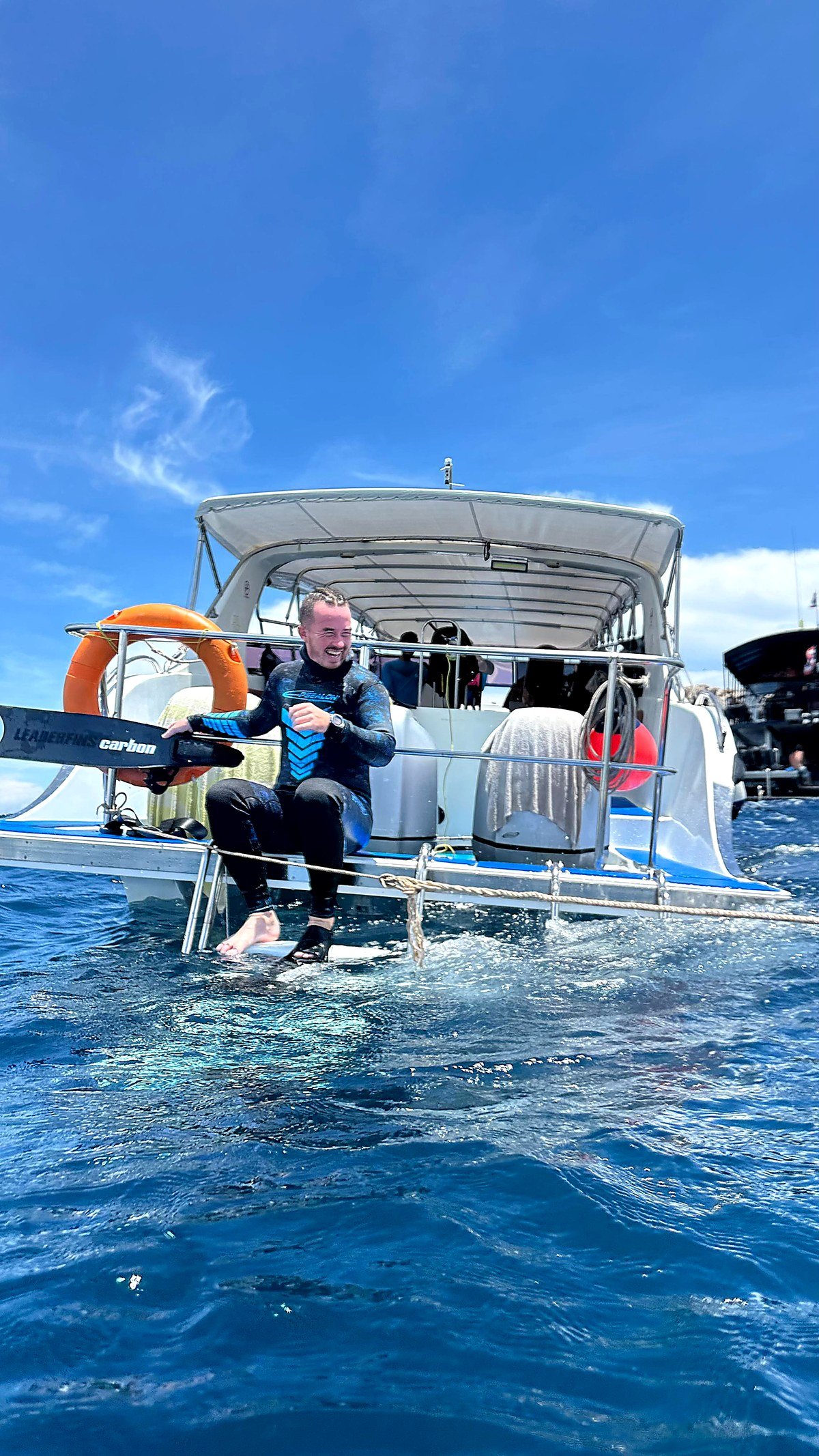
Diego has been teaching freediving from Koh Samui since 2021. He holds instructor certification from Apnea Total and additional credentials across six certification bodies: Oxygen Advantage, Breatheology, International Breathwork Foundation (IBF), Breathing Cold, and GPBA. Plus emergency oxygen administration and first aid.
Learn More →Ready to try freediving?
Message Diego on WhatsApp to check availability for your dates. No deposit needed.
Check Availability on WhatsAppContinue reading
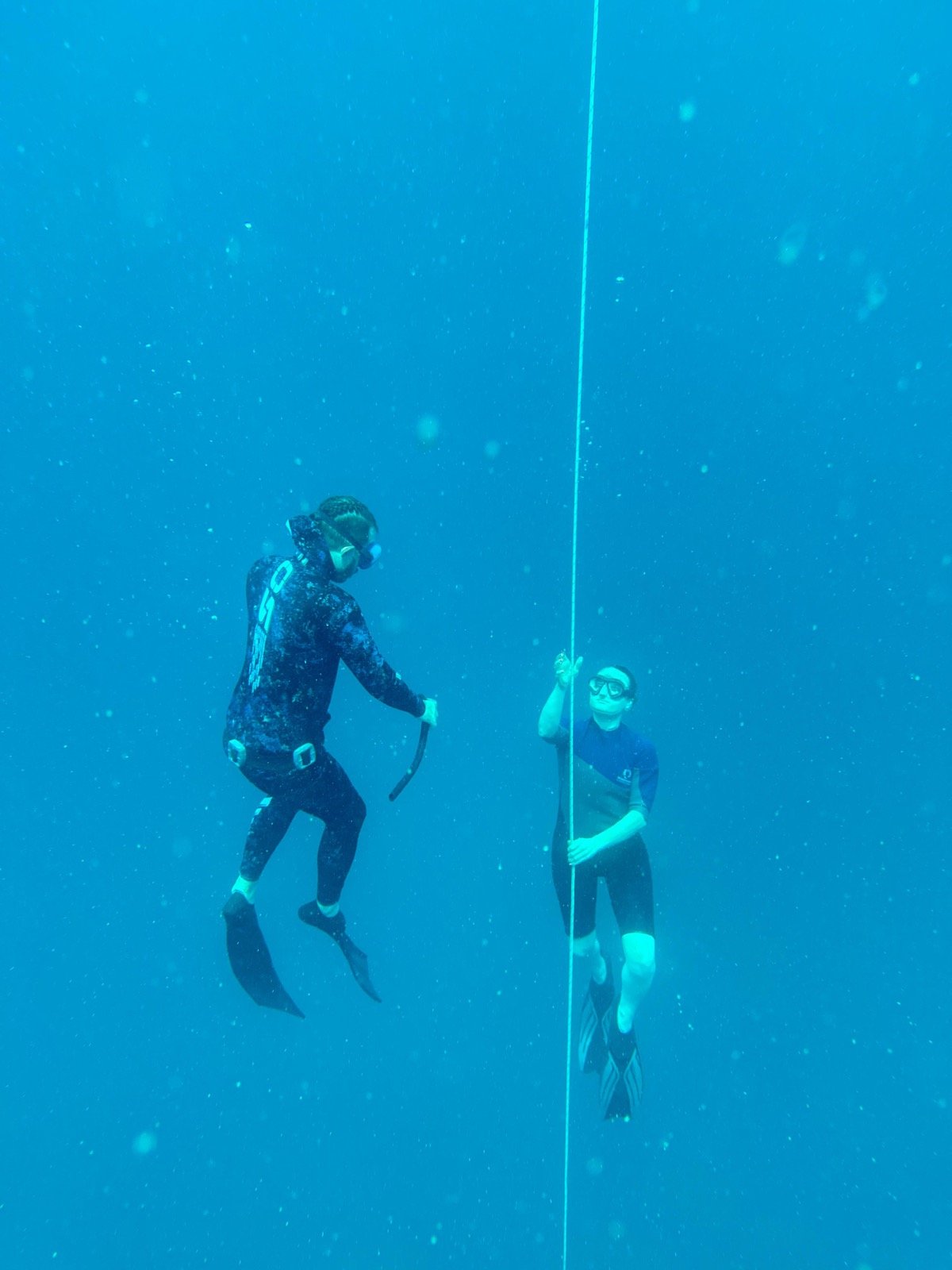
Freediving Finning Technique: How to Kick From the Hip and Stop Wasting Oxygen
Most beginners burn through their breath hold by kicking wrong — bending the knees, kicking too hard, and fighting the
Read More →
How Deep Can a Beginner Freedive?
How deep can you dive after a beginner freediving course? Most students reach 15 to 20 meters in 3 days. Here is what de
Read More →
Mouthfill Equalization for Freediving, Explained
What is mouthfill equalization in freediving? An honest explanation from a Koh Samui instructor: it is the advanced tech
Read More →